2026 Best Modern Hotel Furniture for Global Buyers?
Choosing Modern Hotel Furniture in 2026 means balancing guest comfort, visual identity, durability, and operational demands. For global buyers, a polished product photo is only a starting point. A lounge chair must feel inviting after a long flight, withstand repeated use, and remain practical to clean. Small details matter: rounded table edges, replaceable upholstery, sturdy joints, and finishes that do not show every fingerprint.
Dieter Rams, the influential industrial designer, offered a useful design principle: “Good design is as little design as possible.” It is not a hotel-specific rule, but it encourages buyers to question needless complexity. Does a dramatic lobby sofa support real use, or only look striking in a photograph? Does a compact guest-room desk work for both a laptop and room-service tray? These are practical questions, not glamorous ones.
There is no single perfect furniture package for every property. A coastal resort, an urban business hotel, and a small boutique inn face different needs. That matters. This guide examines leading Modern Hotel Furniture options through material choices, comfort, customization, maintenance, and sourcing considerations. It also highlights the trade-offs buyers should confirm with suppliers, including lead times, replacement-part availability, and finish samples. One honest caution: a sample can look convincing in a showroom, yet feel different under warm hotel lighting. Check it in context. The aim is not to chase a trend, but to select furniture that serves guests well and holds up in daily operation.
What Defines Modern Hotel Furniture in 2026?
Modern hotel furniture in 2026 is less about a fashionable silhouette and more about how a room works. A compact writing desk should support a laptop, while a bedside table keeps charging within reach without adding cable clutter. Upholstery needs to withstand frequent cleaning, and chair legs should stay steady on hard floors. Flexibility matters, too: lightweight pieces can help staff reset a room quickly. Yet “modern” does not mean minimal at any cost. A sleek chair that feels uncomfortable after ten minutes is still a poor choice.
Material choices increasingly reflect guest expectations. Booking.com’s 2024 Sustainable Travel Report, based on a survey of more than 31,000 travelers across 34 countries, found that 83% considered sustainable travel important. That finding is not a furniture specification, but it signals why buyers may ask about recycled content, repairability, and product lifespan. Ask suppliers for material details and maintenance guidance, not just attractive product photos. Survey responses also do not guarantee what guests will choose in practice.
Tips: Test a sample chair for comfort, stability, and cleanability before ordering in volume. Check drawer clearance, bed access, and charging-point reach in a full-size mock-up. Small details matter. I would also leave room for local preferences; a design that feels calm in one market may seem bare in another.
Which Furniture Categories Serve Hotel Rooms and Shared Spaces?
Hotel rooms need more than a bed and a desk. A practical furniture plan usually includes a bed frame, bedside tables, a wardrobe, luggage bench, desk, and chair. Each piece should fit the room’s layout and daily use. For example, a luggage bench near the entrance gives guests a place to open a suitcase without blocking the bed. Rounded corners and easy-clean surfaces can also help staff maintain rooms between stays.
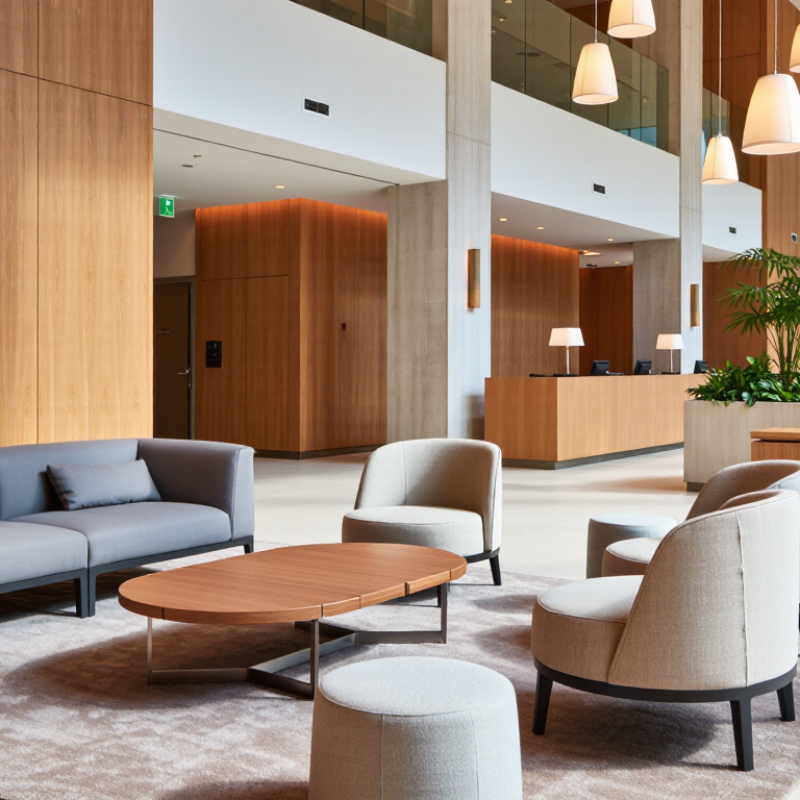
Shared spaces call for different categories. Lobbies often need reception counters, sofas, lounge chairs, coffee tables, and occasional side tables. Dining areas may require tables, stackable chairs, and banquettes, while meeting rooms benefit from modular tables and supportive seating. Keep clear walking routes between pieces. A beautiful arrangement can still feel awkward when guests must squeeze past a chair.
Materials and construction matter across both settings. Furniture in busy hotels faces repeated use, spills, and frequent cleaning, so sturdy joints and repairable finishes are useful considerations. Check dimensions, weight, and replacement-part availability before ordering. Small details count. Still, no single specification guarantees a good result; room layouts and guest habits vary, and I would review a sample in the intended lighting before committing to a large order.
How Do Design, Materials, and Durability Shape Furniture Choices?
For global hotel buyers, furniture must look calm under bright lobby lights and survive constant use. A sculpted lounge chair may photograph well, yet loose joints and pale fabric show wear quickly. Design should follow the guest journey: rounded edges near busy walkways, supportive seating in waiting areas, and bedside tables with room for a phone and water glass. Small details matter. A drawer that catches can irritate guests more than an unusual finish delights them.
Material choices shape both maintenance and replacement cycles. The UN Environment Programme’s Global Resources Outlook 2024 reports that global resource extraction has tripled over the past five decades, making longer product life an important procurement consideration. Solid timber, repairable upholstery, and replaceable glides can help extend service life, though no material is durable in every climate. Humidity, cleaning chemicals, and direct sunlight all change performance. Test samples under real operating conditions. A beautiful fabric swatch is not a durability test.
The U.S. Environmental Protection Agency’s 2018 materials report estimated that furniture and furnishings generated 12.1 million tons of municipal solid waste in the United States. That figure is dated, but it signals the scale of disposal. Buyers can request clear specifications for abrasion resistance, cleaning, spare parts, and repair access. Ask suppliers for documented test results, not just “commercial grade” claims. And inspect a finished sample. Even careful specifications sometimes miss the way a chair feels after a long shift.
How Should Hotels Match Furniture to Property Type and Guest Needs?
A hotel’s furniture should fit the way guests use the property, not just the photographs in its brochure. A city business hotel may need compact desks, supportive chairs, and bedside charging access. In a resort, guests may value deep lounge seating, shaded outdoor tables, and storage for wet clothing. Small choices matter. A narrow suitcase bench can keep luggage off the bed, while rounded table edges help in tight family rooms.
Guest needs vary by room type, length of stay, and mobility. Extended-stay rooms benefit from a proper dining surface and durable drawers; boutique properties may prioritize flexible seating that works for reading or conversation.
Specify materials for real conditions: high-traffic corridors need scuff-resistant finishes, and humid climates call for moisture-tolerant construction. Ask housekeeping staff to test whether chairs move easily and surfaces clean without awkward gaps. Their feedback is practical.
Do not assume one furniture package suits every floor. A mock-up room can reveal that a desk blocks a wardrobe door or a lounge chair crowds the walkway. That is useful, even if it means revising the plan.
Measure circulation with luggage in place, and consider guests using mobility aids. Comfort is not only about softness; seat height, arm support, and clear routes can shape a stay. Aesthetics still matter, but they should survive daily use.