What Are the 7 Best Modular Home Financing Options?

Buying a modular home can feel surprisingly familiar: you choose a floor plan, compare finishes, and picture where the kitchen table will go. Financing is less simple. The home may be built in a factory, delivered in sections, and assembled on land you already own—or still need to buy. Those details can affect which loan fits and when funds are released.

This guide explores seven modular home financing options, including construction-to-permanent loans, construction-only loans, conventional mortgages, and government-backed programs. Each has different rules, costs, and eligibility requirements. Some lenders understand factory-built construction well. Others may ask for extra documents or use different timelines. Ask early. Small details matter.

Before choosing, check whether the loan covers both land and construction, how draws are paid, and when permanent mortgage payments begin. Compare the annual percentage rate, fees, down payment, and required reserves—not just the advertised rate. A builder’s estimate can also change, so leave room for delays or cost increases. This is easy to underestimate.

The best option depends on your credit, income, location, land ownership, and the project’s construction plan. Loan terms and program rules can change, and not every lender offers every product. Use the options below as a starting point, then confirm current requirements directly with lenders and qualified housing professionals. A little doubt is useful here. It can prompt better questions before you sign.
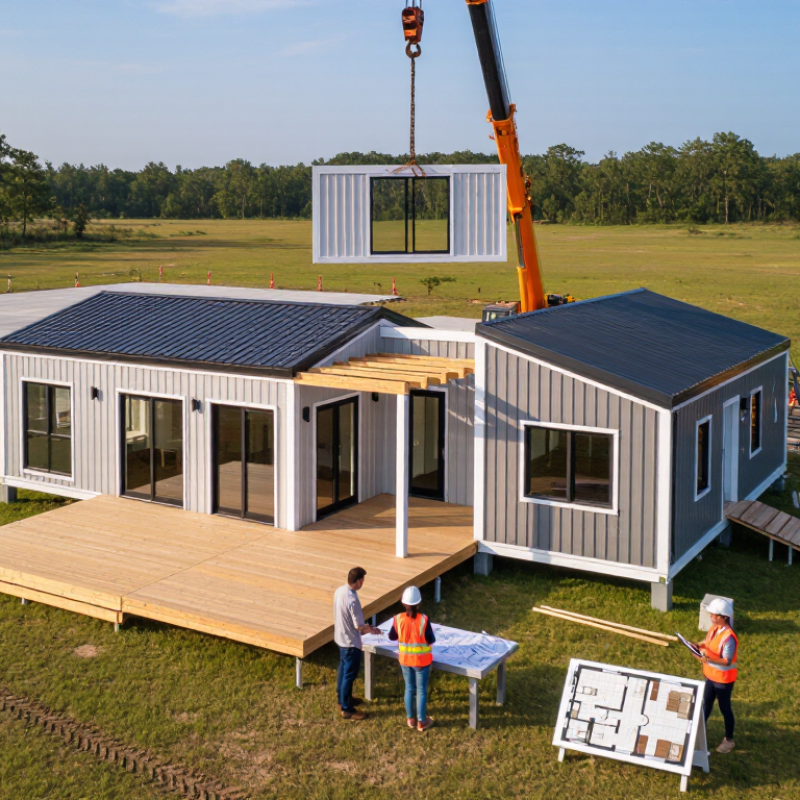
What Are the 7 Best Modular Home Financing Options?

How Modular Home Financing Differs from Traditional Home Loans

Modular homes are built in sections at a factory, then transported and assembled on a prepared site. That changes when money is needed. A traditional home loan usually funds a completed property, while a modular project may need financing before the home is finished.

Common routes include a construction-to-permanent loan, a construction-only loan, separate land and building loans, or a land-and-build package. Buyers may also use a conventional mortgage after installation, or explore eligible government-backed financing. A personal loan can cover a smaller gap, but its costs and repayment terms may differ sharply. These are not interchangeable choices.

Expect extra paperwork. A lender may request factory plans, a signed builder contract, permits, a site appraisal, and details about the foundation. Funds may be released in stages as work progresses. Ask whether the loan covers transport, utility connections, site preparation, and the final installation. Small omissions can become expensive.

Timing matters. If the factory schedule slips, interest or temporary housing costs may continue. Not every lender handles modular construction, and requirements vary by location and project. Compare the total fees, rate-lock period, draw schedule, and conversion terms before signing. I would not assume the lowest advertised rate is the cheapest option; the paperwork can hide a few surprises.

Seven Financing Options for Modular Home Buyers

What Are the 7 Best Modular Home Financing Options?

Seven Financing Options for Modular Home Buyers

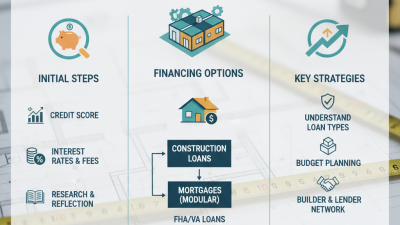
Modular buyers can explore seven routes: construction-to-permanent loans, construction-only loans, conventional mortgages, FHA-insured loans, VA-backed loans, USDA loans, and land-home package financing. A construction-to-permanent loan funds the build, then converts to a mortgage after completion. Construction-only financing covers the building phase; buyers arrange a separate mortgage later. That second step can mean extra costs and uncertainty.

Conventional, FHA, VA, and USDA mortgages may work when the completed home meets program and property requirements. Eligibility, down payment rules, credit standards, and location restrictions vary. Land-home packages may combine a lot purchase and construction costs, but not every lender offers them. Confirm that the lender accepts modular construction, the builder, and the planned foundation. Ask when funds are released; factories often need scheduled payments before delivery.

Tips: Compare written estimates, not just advertised rates. Include land, permits, site preparation, delivery, and utility connections in your budget. Keep cash for changes—unexpected soil work can disrupt even a careful plan. Check loan terms with a qualified lending professional before signing.

What Are the 7 Best Modular Home Financing Options? — Seven Financing Options for Modular Home Buyers

Financing Option Best Suited For How It Typically Works Key Considerations
1. Conventional Mortgage Buyers purchasing a completed modular home on land, or refinancing one that is already installed. A mortgage secured by the home and land. The home generally needs to be permanently affixed and treated as real property. Approval commonly depends on credit, income, down payment, appraisal, property condition, and lender requirements. Ask whether the lender accepts modular construction.
2. Conventional Construction-to-Permanent Loan Buyers who need funds for both construction and the long-term mortgage. One loan can finance construction and convert to a permanent mortgage when the home is complete, subject to the loan terms. May require construction plans, a budget, builder approval, inspections, and funds released in stages. Availability and conversion terms vary by lender.
3. FHA Construction Financing Eligible buyers seeking an FHA-insured route for an approved new build or completed home. Some lenders offer FHA-insured construction-to-permanent financing; FHA financing may also be available for an eligible completed home. The borrower, property, builder, and loan must meet applicable FHA and lender requirements. Mortgage insurance and other costs may apply; not every lender offers this option.
4. VA Construction Financing Eligible veterans, service members, and other qualified borrowers who meet VA program rules. A participating lender may offer a VA-backed construction loan or construction-to-permanent structure for an eligible modular home. Lender participation can be limited. Borrower eligibility, property standards, builder requirements, and VA rules apply; confirm whether the lender handles the construction phase.
5. USDA Construction-to-Permanent Financing Eligible buyers building in qualifying rural areas who meet program income and property requirements. Where offered, a USDA-backed single-close construction loan can combine construction financing with permanent financing. Location, household income, occupancy, property, and lender eligibility rules apply. Program availability for construction can be more limited than financing a completed home.
6. Stand-Alone Construction Loan Buyers whose lender does not offer a single-close loan, or who prefer to arrange construction and permanent financing separately. Short-term financing pays approved construction costs, often through staged draws. The borrower later pays it off with a separate mortgage or other funds. Requires a plan for the permanent loan before construction begins. The borrower may face two applications, separate closing costs, and the risk that future loan terms or approval change.
7. Chattel (Personal Property) Loan Buyers financing a home that will remain personal property rather than being permanently attached to land they own. The loan is secured by the home itself rather than by the home and land together. It may suit certain home-only or land-lease situations. Terms, down payment, and consumer protections differ from mortgage financing. Modular homes permanently affixed to owned land may qualify for real-property financing instead, depending on the facts and lender rules.

Important: Modular homes are generally built to applicable state and local building codes. Financing eligibility depends on the home’s classification, foundation, land ownership, location, borrower qualifications, and lender or program requirements. Compare current loan terms and costs before choosing.

Key Loan Terms, Rates, and Funding Structures

Modular home financing can use a construction-to-permanent loan, which funds building and then converts to a mortgage. A construction-only loan covers the build, but you must arrange permanent financing separately. Some buyers combine land and construction financing; others use a land loan before the home is ordered. Each structure changes when payments begin and which costs are included.

Other possibilities include a conventional mortgage for a completed, permanently installed home; government-backed mortgage programs for eligible borrowers; and a chattel loan when the home is treated as personal property. Chattel terms may differ from mortgage terms, so compare repayment periods, down payments, fees, and whether the land is included. Details matter. A quoted rate is not the full cost. Ask whether it is fixed or adjustable, how long it is locked, and what happens if construction runs late.

Funding may arrive in staged draws after inspections, rather than as one payment. Confirm who pays the factory, transporter, and site contractor, and whether deposits are due before loan funds are released. Lenders may require approved plans, a detailed budget, a permanent foundation, and proof that the home meets local standards. Requirements vary. Request written estimates using the same loan amount and term. I would not assume the lowest advertised rate is best; fees and draw timing can quietly change the comparison. Even careful estimates can miss delays, so leave room in the budget.

Eligibility Requirements and Typical Upfront Costs

Modular homes can be financed through construction-to-permanent loans, conventional mortgages, FHA, VA, or USDA programs, plus chattel loans and personal loans. Eligibility often depends on credit, income, debt, and whether the home will be permanently attached to an approved foundation. Lenders may also review the builder’s credentials, construction plans, land ownership, and the home’s final appraisal. A preapproval is useful, but it is not a guarantee.

Upfront costs vary by loan and location. Conventional financing may require around 3% to 20% down; construction loans commonly ask for more, sometimes 10% to 20%. FHA financing may allow a 3.5% down payment for eligible borrowers. VA and USDA loans can offer no-down-payment options, though fees and other closing costs may apply. Chattel loans, used when the home is not financed with the land, may require a down payment and can have higher rates. Personal loans usually avoid a property down payment, but origination fees and larger monthly payments are possible. Costs vary. Budget for a site survey, permits, foundation work, utility connections, delivery, and inspections. These expenses can arrive before move-in, and estimates often miss small items, such as driveway grading. Ask lenders for written fee estimates and confirm when each payment is due.

How to Compare Lenders and Apply for Financing

Comparing modular home lenders means looking beyond the advertised rate. Ask whether financing covers the home, land, transport, foundation, and site work, or only some of them. Costs can sit in separate estimates. That matters. Request a written breakdown of the interest rate, fees, down payment, payment schedule, and whether the loan can convert to a permanent mortgage after construction. Compare the same loan amount and term across offers; otherwise, the numbers may mislead. Check how each lender handles factory deposits and delays, since modular homes are built in stages. The process can feel less straightforward than buying an existing home.

Before applying, gather recent income records, bank statements, land details, building plans, contractor estimates, and the manufacturer’s construction timeline. Lenders may ask for more documents. Confirm what they need. Ask how they assess the builder, the property, and the home’s future value, and when funds are released. A low rate is not the whole story if approval takes longer than your project schedule. Read every estimate carefully, and note which fees can change. I would also keep a modest reserve for unexpected site costs; I have seen planning feel precise on paper, then shift once ground work begins. Compare the written terms, not just a helpful phone conversation.

Enter search term below