7 Best Prebuilt Homes for Global Buyers in 2026

Buying a home across borders can feel exciting, but the details are rarely simple. This guide explores seven of the best prebuilt homes for global buyers in 2026, focusing on practical value rather than glossy showroom promises. Each option is considered through design quality, construction method, energy performance, delivery requirements, and long-term maintenance.

Small details matter. A factory-built wall may arrive ready for installation, yet local foundations still need careful engineering. Shipping distance can change the final budget. So can cranes, permits, inspections, taxes, and utility connections. Buyers should confirm regional building standards before signing any contract. A beautiful model may not suit a coastal climate, steep site, or remote road.

The selection also considers transparent specifications, manufacturer experience, warranty terms, and after-sales support. These factors help separate reliable suppliers from attractive but uncertain offers. Still, no list can predict every project outcome. Prices vary by country, land condition, currency, and customization. Some estimates may age quickly in a changing market.

That uncertainty deserves attention. Global buyers should request written quotations, independent inspections, and clear delivery milestones. They should also consult licensed architects, engineers, and local legal professionals. This article is a starting point, not a substitute for site-specific advice.

Expect practical comparisons, honest limitations, and design ideas suited to different lifestyles. From compact urban units to spacious family layouts, these prebuilt homes show how modern construction can reduce complexity without removing the need for careful judgment.
7 Best Prebuilt Homes for Global Buyers in 2026

What Prebuilt Homes Are and Why Global Buyers Choose Them

7 Best Prebuilt Homes for Global Buyers in 2026

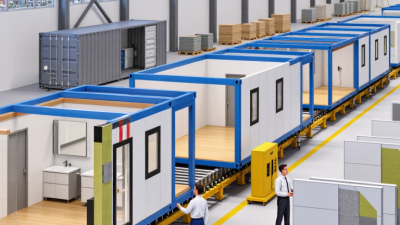
A prebuilt home is manufactured in sections or panels before reaching its final site. Workers complete much of the construction in a controlled facility. This process can reduce weather delays and material waste. It may also create more predictable scheduling. However, “faster” does not mean instant. Land preparation, permits, transport, utility connections, and foundation work still require careful coordination.

Global buyers often choose prebuilt homes for practical reasons. A compact factory-built unit may suit a narrow coastal plot or a remote rural location. Standardized components can make costs easier to compare across currencies. Energy-efficient insulation may also help in colder mountain regions or hot, humid climates. Yet specifications must match local building codes, wind conditions, fire rules, and seismic requirements. Imported designs are not automatically compliant.

Details matter.

Reliable buyers request structural documents, material specifications, delivery terms, and independent inspections. They also confirm who manages customs, unloading, installation, and post-installation repairs. A warranty sounds reassuring, but its coverage, duration, and response process deserve close reading. Exchange-rate changes can affect the final budget. Transport access can be a hidden problem. A narrow bridge or steep driveway may require special equipment.

The strongest choice is not always the largest or cheapest home. It is the model that fits the site, climate, budget, and long-term maintenance plan. Prebuilt housing can simplify construction, but it cannot remove every risk. That limitation deserves honest attention.

7 Best Prebuilt Homes for Global Buyers in 2026

What prebuilt homes are and why global buyers choose them

Prebuilt homes are manufactured partly or fully off-site and then transported for final assembly. The chart compares typical midpoint estimates for construction-time reduction versus conventional site-built housing. Faster delivery, more predictable quality, reduced on-site waste, and easier international procurement are key reasons global buyers consider these home types.

Data note: Values represent indicative midpoints of commonly reported industry ranges; actual results vary by design, permitting, site preparation, climate, logistics, and local labor conditions.

Seven Standout Prebuilt Home Types for International Buyers in 2026

For international buyers in 2026, seven prebuilt home types deserve close attention. A modular family home offers efficient rooms, factory-controlled construction, and faster site work. A compact studio suits urban plots, guest use, or a first overseas property. Panelized timber homes provide warm interiors and can reduce material waste, but moisture protection needs careful checking.

Light-gauge steel homes appeal to buyers in humid or windy regions. Their frames are precise, although insulation details can vary widely. A prefabricated bungalow supports single-level living, making daily movement easier for older residents. Duplex units may create two independent living spaces, which can support extended families or long-term rental plans. An off-grid-ready cabin can include solar wiring, rainwater storage, and improved insulation, but “ready” does not mean fully independent.

I have seen buyers focus on attractive renderings and overlook transport access. That mistake becomes expensive. Before ordering, request structural drawings, material specifications, energy data, and a realistic delivery schedule. Confirm that the design can meet local planning, fire, electrical, accessibility, and foundation requirements. Independent inspections remain valuable, even when a factory provides quality certificates. Ask who handles assembly, utility connections, repairs, and replacement parts after installation. Small details matter. Door widths, kitchen ventilation, roof drainage, and window orientation affect everyday comfort. The cheapest option may also require costly ground preparation. The most sustainable design may fail if local technicians cannot service its systems. Categories can mislead, too; one “modular” home may differ greatly from another in insulation, finishes, and climate performance.

7 Best Prebuilt Homes for Global Buyers in 2026

Seven Standout Prebuilt Home Types for International Buyers in 2026

Home Type Typical Finished Area Indicative Build Cost
2026, USD/m²
Factory Production On-Site Assembly Best Fit for Global Buyers Key Advantages Main Planning Consideration
Volumetric Modular Home 45–250 m² $1,500–$3,000 70–90% complete 1–4 weeks for modules; additional time for foundations and connections Buyers seeking a near-complete home with a predictable installation schedule High quality control, reduced weather delays, fast site completion, repeatable layouts Oversized transport, crane access, local code approval, and foundation engineering
Panelized Timber-Frame Home 60–300 m² $1,100–$2,400 40–70% complete 2–8 weeks for enclosure and structural assembly Cool and temperate regions where renewable wood construction is accepted Lightweight shipping, flexible floor plans, efficient insulation, and easy extensions Moisture protection, termite treatment, fire compliance, and local finishing labor
Structural Insulated Panel Home 50–220 m² $1,200–$2,600 Wall, roof, and floor panels cut to design 2–6 weeks for the weather-tight shell Energy-conscious buyers in cold, hot, or mixed climates Continuous insulation, low thermal bridging, accurate factory cutting, and reduced site waste Ventilation design, panel joint sealing, moisture control, and specialist installation
Light-Gauge Steel Frame Home 50–250 m² $1,300–$2,800 Frames or wall panels precision-manufactured 3–8 weeks for framing and enclosure Coastal, seismic, humid, or high-wind locations requiring durable framing Dimensional accuracy, resistance to rot and termites, and strong structural performance Thermal bridging, corrosion protection, insulation detailing, and regional engineering rules
Prefabricated Concrete Home 60–300 m² $1,400–$3,200 Panels or room elements cast in controlled conditions 3–10 weeks, depending on panel size and finishing level Hot, windy, fire-prone, or noise-sensitive sites needing mass and durability Long service life, acoustic performance, fire resistance, and strong thermal mass Heavy transport, lifting equipment, foundation capacity, and embodied-carbon management
Flat-Pack Kit Home 20–180 m² $800–$2,000 Cut, labeled, and packaged components 4–12 weeks, often requiring local trades Remote landowners, holiday-home buyers, and projects with limited road access Compact shipping, lower entry cost, design flexibility, and staged self-build potential The kit may exclude foundations, utilities, windows, interior finishes, and local labor
Repurposed Steel-Module Home 15–150 m² $700–$1,800 Basic modification, insulation, openings, and service preparation 2–8 weeks for placement, joining, and finishing Compact urban plots, short-term accommodation, and small secondary dwellings Modular dimensions, rapid deployment, strong frame, and potential material reuse Corrosion inspection, thermal bridges, condensation control, transport permits, and planning approval

Planning note: Cost figures are broad 2026 planning ranges in USD per m² for the building package and typical installation. They generally exclude land, taxes, design fees, permits, foundations, utility connections, site preparation, shipping, customs, landscaping, and loose furniture.

Actual suitability depends on local building codes, climate, seismic and wind requirements, import regulations, transport access, insurance rules, and the availability of qualified installers.

How the Featured Homes Differ in Design, Materials, and Construction

7 Best Prebuilt Homes for Global Buyers in 2026

How the Featured Homes Differ in Design, Materials, and Construction

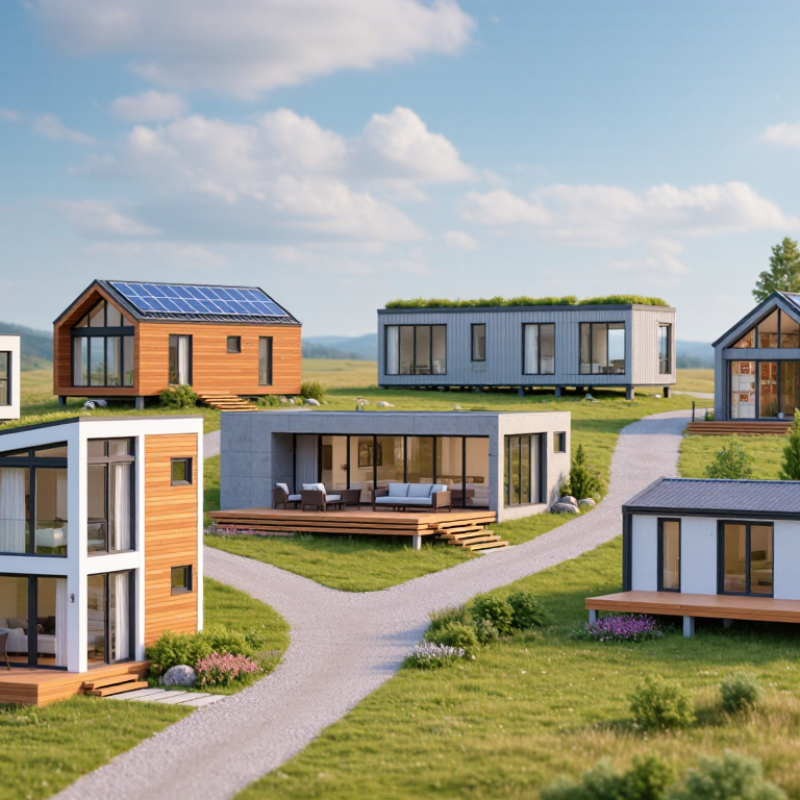
Prebuilt homes differ most in how they respond to climate, transport, and local building rules. Compact Scandinavian-style layouts often use large windows, pale timber, and steep roofs for snow. Tropical models may include shaded verandas, raised floors, and cross-ventilation. Coastal buyers should inspect corrosion-resistant fixings, not only attractive renderings. Details matter.

Material choices also shape performance and maintenance. Engineered timber can reduce weight and speed assembly, while light-gauge steel offers dimensional stability in humid regions. Concrete panels provide thermal mass but demand stronger foundations and careful shipping plans. The 2023 Global Status Report for Buildings and Construction linked the sector to 34% of global energy demand and 37% of energy- and process-related carbon emissions in 2022. That makes insulation, airtightness, and efficient windows practical priorities.

Factory production can improve consistency, yet it is not automatically cheaper. McKinsey Global Institute’s 2019 modular-construction analysis found that modular methods could shorten schedules by 20–50% and reduce costs by up to 20% in suitable projects. The wording matters: suitable projects. Remote sites, import duties, crane access, and local inspections can erase those gains. I would compare wall build-ups, warranty coverage, replacement parts, and installer qualifications before comparing floor plans. A beautiful home may still perform poorly when its materials cannot be serviced locally.

Key Costs, Regulations, Delivery Times, and Site Requirements

7 Best Prebuilt Homes for Global Buyers in 2026

Key Costs, Regulations, Delivery Times, and Site Requirements

Buying a prebuilt home is not only a factory decision. Buyers should price the foundation, transport, crane hire, local labor, utility connections, taxes, and insurance. These extras can quietly add 15–30% to the advertised home price. McKinsey Global Institute reports that modular construction may reduce project time by 20–50% and costs by up to 20%. That is a useful benchmark, not a promise. Remote sites, currency changes, and port delays can erase those savings.

Regulations vary sharply between countries and even between municipalities. The International Code Council’s 2024 residential code covers structural, fire, energy, and safety principles, but local authorities may add wind, snow, seismic, or flood requirements. Buyers should confirm planning permission before paying a deposit. Energy rules also matter. The International Energy Agency reports that buildings consume about 30% of global final energy. Insulation, glazing, ventilation, and heating systems can therefore affect both approval and long-term costs.

Delivery may take several months after design approval. The factory schedule is only one part. A qualified surveyor should check soil stability, drainage, road width, turning space, overhead cables, and foundation levels. A 4.5-meter-wide module may reach the property, but not pass the final bend. That detail is easy to miss. In practice, the most expensive mistake is often buying a suitable house for an unsuitable site. Forecasts remain estimates, and every quotation should separate manufacturing, shipping, installation, and local compliance fees.

How to Select the Right Prebuilt Home for Your Country and Lifestyle

Choosing among the seven best prebuilt homes for global buyers starts with your country, not the floor plan. Local building codes can control insulation, wiring, foundations, fire safety, and storm resistance. A coastal home may need corrosion-resistant fittings and raised foundations. A cold-region model needs sealed windows, strong insulation, and reliable heating space.

Consider how the home will actually be used. A compact studio suits a single remote worker, while a modular family house needs storage, private bedrooms, and flexible rooms. Panelized timber homes can offer warmth and faster assembly. Steel-frame homes may suit humid regions when moisture protection is carefully designed. Concrete systems can perform well in hot climates, but transport and installation may cost more. Tiny homes look efficient. Their storage limits can become frustrating.

Ask an independent architect or licensed surveyor to review the design before payment. Confirm land access, foundation requirements, utility connections, delivery limits, and local approval procedures. Request test certificates and a written warranty. Visit a completed home if possible; photographs rarely show noise, airflow, or winter condensation. I would also keep a contingency budget of 10–20 percent. Delays happen. My own preference can be too optimistic when judging construction schedules, so local professional advice should outweigh attractive online promises.

Enter search term below