7 Best Prefab Home Kits for Global Buyers?

Prefab home kits are attracting global buyers seeking shorter build times, predictable costs, and practical housing solutions. Yet the right choice depends on more than a polished catalog image.

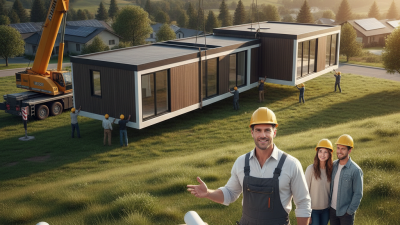
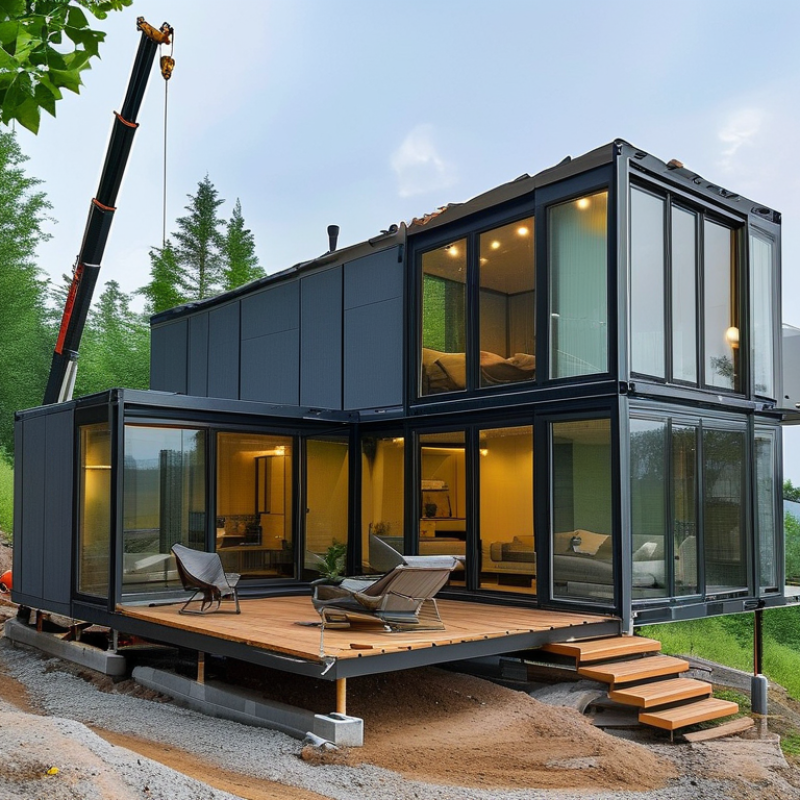
McKinsey & Company’s 2019 report, “Modular construction: From projects to products,” suggests modular building can reduce timelines by 20–50% and lower costs by up to 20%. These figures are promising, but they are not guaranteed results. Site access, local labor, foundation work, and permitting can change the final budget significantly. A remote hillside site may require expensive cranes before the first wall arrives.

The housing need is also substantial. UN-Habitat reports that about 1.6 billion people live in inadequate housing worldwide. Meanwhile, the International Energy Agency states that buildings account for roughly 30% of global energy demand. This makes insulation, ventilation, window quality, and long-term energy use important buying criteria, not optional upgrades.

This guide reviews seven prefab home kits for global buyers. Each option is considered through construction quality, climate suitability, customization, shipping practicality, warranty support, and likely ownership costs. Local building codes still matter. So does after-sales service.

No kit is universally best. A cheaper package may exclude foundations, utilities, taxes, or interior finishing. That detail can hurt later. Buyers should request technical drawings, material specifications, delivery terms, and independent cost estimates before committing. The comparisons ahead aim to be useful, though real-world pricing changes quickly and some assumptions may need revisiting.
7 Best Prefab Home Kits for Global Buyers?

Market Context: UN-Habitat’s 1.6 Billion-Person Housing Gap

UN-Habitat estimates that 1.6 billion people lack adequate housing worldwide. The gap is not only about empty homes. It includes unsafe materials, overcrowding, weak sanitation, and insecure land. Prefabricated home kits may help, but they are not a universal cure. Their value depends on local skills, transport routes, climate, and planning rules.

For global buyers, seven kit types deserve attention:

  1. insulated panel homes
  2. modular steel units
  3. timber-frame cottages
  4. flat-pack container homes
  5. precast concrete systems
  6. compact studio kits
  7. disaster-resilient elevated homes

Each solves a different problem. Insulated panels can reduce construction time in cold regions. Elevated designs suit flood-prone communities. Compact studios use less material, but they may feel cramped for families. Concrete systems offer durability, yet shipping heavy components can raise costs sharply.

Practical evaluation should begin with the site, not the brochure.

Check soil conditions, rainfall, wind exposure, road access, water connections, and local approval requirements. Ask for tested thermal, fire, and structural data. A low purchase price can hide foundation work, customs fees, installation labor, and replacement parts. That matters.

The housing gap also exposes a difficult weakness. A kit may arrive quickly, while affordable land remains unavailable. Some designs look efficient on paper but depend on imported tools and trained crews. That assumption can fail. Buyers should compare lifecycle costs, repair access, and community needs before choosing a layout. A safe home must fit real life, not just a shipping container.

Efficiency Benchmark: MBI Reports Modular Builds Can Be 30–50% Faster

For global buyers comparing the 7 best prefab home kits, construction speed deserves serious attention. The Modular Building Institute reports that modular construction can finish 30–50% faster than conventional building. Factory production runs beside site preparation, reducing weather delays and repeated subcontractor visits. A wall panel may be assembled indoors while workers pour foundations outside.

That advantage is measurable, but not automatic. A kit with clear drawings, standardized connections, and local code documentation usually moves faster. The U.S. Census Bureau’s manufactured-housing data also shows the value of factory-controlled production, where repeated processes support consistent scheduling and quality checks. Still, transport permits, customs clearance, utility approvals, and foundation work can erase time savings. Geography matters.

I would compare each kit by delivered scope, not its advertised floor area. Does the price include windows, insulation, wiring, plumbing, and engineering stamps? A 30–50% faster build may describe the construction phase, not the entire buying journey. That distinction is easy to miss. Buyers should request a regional timeline, moisture-control details, replacement-part access, and documented testing. MBI’s efficiency benchmark is encouraging, yet real performance depends on preparation, local trades, and honest project management. A beautiful digital model proves very little.

7 Best Prefab Home Kits for Global Buyers? – Efficiency Benchmark: MBI Reports Modular Builds Can Be 30–50% Faster

A practical comparison of common prefab kit formats, indicative specifications, and construction-efficiency factors for international buyers.

Rank Prefab kit format Typical usable area Typical bedroom layout Factory production On-site assembly Best climate fit Global-buyer advantage
1 Compact studio module 18–35 m² Open-plan studio 4–8 weeks 1–3 weeks Most climates with suitable insulation Small shipping footprint, simple foundation, and lower initial material volume
2 One-bedroom cabin 35–60 m² 1 bedroom 6–10 weeks 2–4 weeks Temperate, coastal, and dry climates Balanced size for holiday use, rental housing, or an accessory dwelling
3 Two-bedroom panelized home 60–95 m² 2 bedrooms 8–14 weeks 3–6 weeks Temperate and cold climates with upgraded envelope options Flat-packed wall and roof panels can reduce transport volume and support local labor
4 Three-bedroom family kit 90–140 m² 3 bedrooms 10–18 weeks 4–8 weeks Temperate, cold, and high-rainfall regions with local code adaptations Provides a familiar family layout while retaining standardized components
5 Expandable modular home 45–120 m² after expansion 1–3 bedrooms 6–16 weeks 2–6 weeks per phase Most climates when expansion joints and insulation are correctly detailed Allows staged investment and future capacity increases without rebuilding the entire home
6 High-insulation cold-climate kit 50–110 m² 1–3 bedrooms 8–16 weeks 3–7 weeks Cold, alpine, and subarctic regions Factory-controlled air sealing and insulation installation can improve envelope consistency
7 Multi-module courtyard home 100–180 m² 2–4 bedrooms 12–22 weeks 5–10 weeks Temperate, warm, and dry climates; shading may be required in hot regions Flexible room zoning, phased delivery, and strong potential for passive daylighting
Efficiency benchmark: Modular construction is commonly reported as approximately 30–50% faster than comparable conventional building approaches when design approvals, site preparation, logistics, and utility connections are properly coordinated. The time ranges above are indicative planning ranges, not guaranteed delivery schedules.
Important buying checks: Confirm local planning permission, structural standards, wind and seismic requirements, thermal performance, fire safety, utility connections, import duties, shipping dimensions, foundation design, warranty coverage, and availability of qualified local installers before purchase.

Evaluation Framework: ICC 700, ISO 21930, Cost, Carbon, and Lead Time

Choosing among the seven best prefab home kits requires more than comparing floor plans. ICC 700 can help assess resource efficiency, durability, and indoor environmental quality, but it is mainly a North American reference. ISO 21930 supports environmental product declarations and life-cycle carbon reporting. It does not certify a complete house. Buyers should request verified data for insulation, steel, timber, transport, and replacement cycles.

Carbon deserves careful checking. The 2023 Global Status Report for Buildings and Construction reports that buildings consumed about 34% of global energy and produced 37% of energy and process-related emissions in 2022. A compact kit may reduce material use, yet long-distance shipping can weaken that advantage. McKinsey’s Reinventing Construction report found that modular methods could reduce project schedules by 20–50%, although site preparation and approvals can erase part of the gain. Cost comparisons must include foundations, utilities, customs, local labor, and assembly.

Tips: Ask for an ISO 21930-aligned carbon declaration and an itemized landed-cost estimate. Require test evidence for wind, fire, moisture, and seismic performance. Lead times should show factory production separately from permits and site work. Be cautious with impressive carbon claims. They may exclude transport or future maintenance. My practical view is imperfect: a cheaper kit is not better if replacement windows arrive months later. A spreadsheet with three scenarios—local, regional, and overseas sourcing—often exposes the real risk.

Indicative planning benchmarks for seven non-branded prefab home kit archetypes. Cost is shown in USD per m² of finished floor area, embodied carbon in kgCO₂e per m², and lead time in weeks. ICC 700 and ISO 21930 are evaluation references: ICC 700 addresses residential sustainability criteria, while ISO 21930 provides core rules for construction-product environmental declarations. Actual results vary by country, foundation, transport distance, local code approval, and project specification.

Seven Best Kits: Compare Size, Price, Materials, Delivery, and Assembly

7 Best Prefab Home Kits for Global Buyers?

Seven Best Kits: Compare Size, Price, Materials, Delivery, and Assembly

Choosing a prefab kit is easier when the comparison stays practical.

Kit One offers a compact 28-square-meter studio, often suitable for a garden or short-stay unit.

Kit Two provides about 45 square meters, with a separate bedroom and stronger storage capacity.

Kit Three reaches 65 square meters and usually needs a more substantial foundation.

Kit Four uses insulated timber panels, while Kit Five relies on light-gauge steel framing.

Timber can feel warmer, but steel may resist termites better.

Kit Six is designed for 80 square meters and requires careful transport planning.

Kit Seven exceeds 100 square meters, yet its lower advertised price may exclude windows, plumbing, or interior finishes.

Prices should be compared as complete project estimates, not headline figures. Ask whether the package includes insulation, doors, wiring, roofing, and foundation drawings. Delivery costs can change sharply between ports, rural roads, and remote islands. Assembly also varies. Some kits use numbered panels and basic tools, while larger designs need certified tradespeople and lifting equipment. Local building codes still apply, even when the kit arrives with engineering documents.

Tips: Request a written quote with taxes, shipping, unloading, and assembly listed separately. Check moisture ratings before ordering for humid climates. Inspect the material samples, not only digital images. My practical concern is after-sales support; a missing connector can delay construction for weeks. Also, a cheaper kit may become expensive after insulation upgrades, local permits, and weatherproofing corrections.

Global Buyer Checks: Codes, Freight, Duties, Warranty, and Financing

7 Best Prefab Home Kits for Global Buyers?

A strong prefab home kit starts with local building codes, not attractive floor plans. Ask for structural calculations, wind ratings, snow-load data, fire performance, and insulation values. Your local engineer or permitting office should review these documents before payment. Requirements can change between a coastal town and an inland district. Verify electrical voltage, plumbing fittings, emergency exits, and foundation tolerances. Small mismatches become expensive site work.

Freight quotes need careful reading. Confirm the packed dimensions, container count, port charges, inland delivery, unloading equipment, and storage fees. A narrow road may require a smaller truck or a temporary crane. Request a delivery schedule with weather delays stated clearly. Duties also vary by product classification, destination, and declared value. Ask an independent customs broker for a written estimate. The cheapest quote may exclude local taxes.

Warranty language deserves equal attention. Check coverage periods, exclusions, response times, and who pays for replacement parts or site visits. Get installation responsibilities in writing. Financing can be harder for imported kits because lenders may require approved plans, staged inspections, insurance, and proof of land ownership. Avoid relying on verbal promises. My early assumption was that factory quality guaranteed a smooth build. It did not. Local approvals, drainage, and foundation preparation caused the real delays. Leave a contingency fund, and question every unclear line.

Enter search term below