
Found a design you like or need custom guidance? We can help. Fill in the form about your project, and we’ll contact you to discuss options and answer questions.
Choosing the best Dancing Water Fountain is not simply about finding the tallest spray or brightest light. Buyers need a system that fits the site, budget, maintenance plan, and audience. A small hotel courtyard may need quiet pumps and elegant movement. A public plaza may require stronger flow control, durable materials, and reliable programming. Mark Fuller, founder of WET Design, once described this design philosophy clearly: “We look at water as a material.” That view matters because every nozzle, light, and pump shapes the final experience.
The right fountain should combine visual rhythm with dependable engineering. Examine pump efficiency, nozzle adjustability, lighting performance, control software, filtration, and drainage before comparing prices. Stainless steel components can resist corrosion, but water quality still affects service life. Ask suppliers for performance data, installation references, warranty terms, and a realistic maintenance schedule. Do not trust dramatic videos alone. They may hide noise, splash loss, or complicated repairs.
There is no universal winner.
A beautiful fountain can still become an expensive burden if replacement parts are unavailable. I have also seen buyers focus on height while ignoring wind, nearby surfaces, and visitor safety. That is an easy mistake. The best Dancing Water Fountain is the one that performs consistently in its actual environment, not merely in a showroom demonstration. This guide will compare practical designs, operating costs, control features, and long-term reliability, while admitting one uncomfortable truth: even expert recommendations may change after the fountain meets real weather, real users, and real maintenance teams.
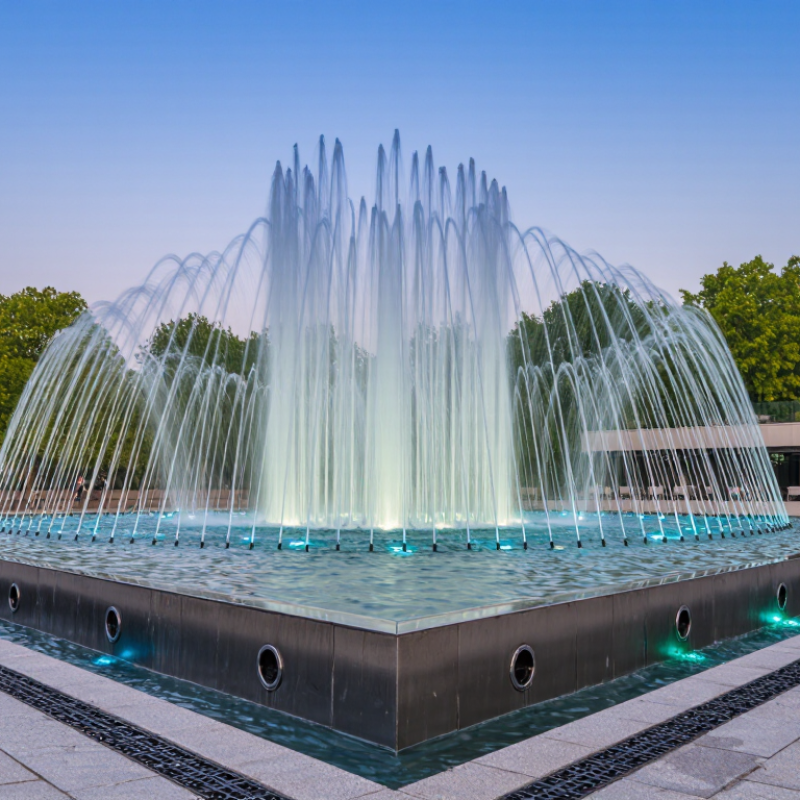
A high-quality dancing water fountain begins with controlled water movement, not dramatic height. The nozzle should produce stable arcs, even spacing, and clean choreography across changing wind conditions. In practical inspections, I check the pump housing, seals, filtration access, and electrical protection before admiring the lights. Small details matter.
Pump efficiency deserves careful attention. The U.S. Environmental Protection Agency estimates that household leaks waste nearly 1 trillion gallons of water annually in the United States. A public fountain is different, but the lesson remains relevant: poor seals and unnoticed losses become expensive quickly. Choose a recirculating system with level sensors, automatic refill control, and visible leak detection. The U.S. Department of Energy also identifies properly selected, maintained pumps as an important route to reducing energy use in water systems. Oversized pumps can create louder operation and unnecessary power demand.
Materials must match the installation environment. Marine-grade stainless steel is usually more dependable near salt air, while robust coated steel may suit sheltered locations. Ask for measured noise levels, flow rates, maintenance intervals, and documented safety testing. These figures are more useful than attractive renderings. The Hydraulic Institute’s pump standards provide a professional reference for performance and testing practices. Still, specifications can hide weaknesses. I have seen impressive displays with difficult filter access and fragile control panels. That is the part buyers should question. A beautiful first season proves very little.
A high-quality dancing water fountain should combine visual performance with dependable engineering. This buyer-evaluation framework gives the greatest importance to water movement and lighting effects, followed by long-term reliability, energy efficiency, safety, maintenance, customization, and installation practicality.
The percentages represent a practical purchasing-weight framework rather than company or brand data. Buyers should adjust the weighting according to site size, climate, operating hours, budget, and public-safety requirements.
Choosing the best dancing water fountain starts with the buyer’s setting, not the spray height. Indoor tabletop fountains suit apartments, reception desks, and quiet wellness rooms. They need compact reservoirs, low-noise pumps, and simple cleaning access. Outdoor jet fountains create stronger visual impact for gardens, hotels, and civic spaces. However, they require wind protection, drainage planning, and weather-resistant electrical equipment.
Programmable musical fountains fit venues seeking movement, lighting, and timed performances. They offer higher engagement but demand skilled installation and regular software checks. A 2024 Grand View Research analysis estimates the global water feature market will grow steadily through 2030, supported by commercial landscaping and hospitality projects. That trend does not mean every buyer needs automation. Sometimes, a fixed-height fountain performs better because it has fewer failure points.
For narrow courtyards, laminar fountains produce clear, glass-like streams with controlled splashing. Floating fountains suit large ponds and can improve surface circulation, but operators must inspect cables, anchors, and intake screens. The U.S. Environmental Protection Agency notes that undetected leaks can waste more than 10,000 gallons annually in a household; fountain leaks can also inflate maintenance costs. Choose pumps by flow rate, head height, duty cycle, and energy demand, not appearance alone. Energy use is easy to underestimate. I have seen elegant installations lose appeal after noisy pumps, algae growth, or difficult filter access became everyday problems. A buyer’s checklist should include replacement parts, winter protection, water treatment, and technician availability.
Choosing the best dancing water fountain requires more than admiring attractive spray patterns.
Design should match the space, viewing distance, and maintenance conditions. For a hotel entrance, layered arcs may create a welcoming movement. A small courtyard may suit a compact vertical jet. Look for corrosion-resistant materials, stable supports, and adjustable nozzles. I prefer designs with accessible service panels, because hidden pumps can turn simple cleaning into a frustrating task.
Performance deserves careful comparison.
Check the pump’s flow rate, pressure, operating noise, and energy use. Stronger output is not always better. Excessive spray can wet nearby walkways and stain surrounding surfaces.
Ask whether the fountain maintains steady height during extended operation. In practical testing, observe the display after thirty minutes, not only during its first few minutes. That detail matters.
Also inspect filtration and drainage arrangements. Weak filtration often causes uneven streams and frequent nozzle cleaning.
Display features should support the fountain’s purpose rather than distract from it.
Programmable timing, adjustable brightness, and synchronized lighting can create distinct scenes for daytime and evening viewing. Color temperature matters; harsh white light may reduce the feeling of movement.
Remote controls are convenient, but manual access remains valuable when technology fails. I once favored a fountain with many visual effects, then reconsidered after seeing its complicated setup. More options can mean more maintenance.
Buyers should compare warranty terms, replacement access, and installation guidance from qualified suppliers. A beautiful display still needs dependable daily operation.
Buying a dancing water fountain means planning beyond lights, music, and moving jets. Installation starts with a level, reinforced base that can support the basin, pumps, piping, and electrical equipment. I have seen small foundation errors create uneven water patterns and constant splashing. The site should include safe drainage, nearby service access, and protection from falling leaves. A qualified electrician should install weather-resistant connections and appropriate ground-fault protection. Local requirements can vary, so buyers should confirm permits, noise limits, and water-use rules before delivery.
Expect several days for installation if the basin and control system require careful alignment. Large projects may need lifting equipment and temporary site barriers. The installer should test every nozzle individually before final programming. Maintenance usually includes daily visual checks, weekly filter cleaning, and periodic pump inspections. Remove leaves before they reach the intake screen. Sediment can reduce flow and strain the pump. Water chemistry also matters. Follow the equipment’s treatment guidance and test the water regularly. Too much chemical treatment may damage seals, while too little may encourage cloudy water and deposits. In cold climates, drain exposed lines and protect pumps before freezing weather arrives.
A maintenance log makes recurring problems easier to identify. Record filter changes, pump noise, water levels, and unusual spray. Keep access panels clear; technicians work faster when valves and controls are reachable. I once underestimated access space and regretted it during a late repair. That mistake still influences my buying advice. Ask for written cleaning schedules, replacement intervals, and service responsibilities. A fountain may look simple. It is not. If those details are vague, reconsider the installation plan.
| Fountain Type | Typical Best Use | Installation Requirements | Typical Water Depth | Electrical and Plumbing Needs | Maintenance Requirements | Main Buyer Consideration |
|---|---|---|---|---|---|---|
| Floating Dancing Fountain | Large ponds, lakes, reservoirs, and open water features | Requires adequate water depth, anchoring, access for servicing, and protection from boat traffic or strong currents. | Usually requires approximately 0.6–1.5 m, depending on equipment and intake design. | Often uses a submersible pump, underwater power cable, control equipment, and suitable electrical protection. | Inspect anchors, cables, pumps, screens, and nozzles; remove leaves and debris; check the float assembly for leaks or damage. | Best for large open water |
| Basin-Based Dancing Fountain | Plazas, gardens, hotels, commercial entrances, and public spaces | Needs a structurally sound waterproof basin, level foundation, drainage, access covers, filtration space, and safe perimeter design. | Commonly about 0.3–0.8 m, subject to pump, nozzle, and safety requirements. | Needs a recirculating pump system, underwater or concealed pipework, electrical controls, isolation switches, and residual-current protection. | Clean the basin, filters, strainers, and nozzles; inspect waterproofing; monitor water level and pump performance. | Best for permanent installations |
| Interactive Dry-Deck Fountain | Public squares, parks, family attractions, and pedestrian areas | Requires a reinforced non-slip deck, below-grade collection tank, drainage, splash management, service access, and accessibility planning. | Usually uses shallow surface outlets with a concealed collection system. | Needs pumps, valves, lighting controls where applicable, drainage pumps, filtration, and protected electrical equipment. | Frequent cleaning is necessary because users introduce dirt and debris; inspect grates, drains, sensors, nozzles, and surface seals. | Best for interactive public use |
| Indoor Dancing Fountain | Shopping centers, reception areas, entertainment venues, and interior displays | Needs waterproof construction, humidity control, slip-resistant surfaces, splash containment, ventilation, and convenient service access. | Generally shallow, with water retained in a sealed basin or internal reservoir. | Requires a recirculating pump, filtration, protected control cabinet, drainage, and electrical equipment suitable for wet locations. | Clean glass, stone, metal, and nozzles regularly; control humidity; inspect seals, filters, pump noise, and water quality. | Best for controlled indoor environments |
| Musical or Programmable Fountain | Landmarks, entertainment venues, resorts, and event spaces | Requires accurate hydraulic design, coordinated lighting and control systems, service access, drainage, and professional commissioning. | Varies according to nozzle height, basin design, and hydraulic equipment. | Needs variable-speed pumps or individually controlled valves, programmable controls, lighting circuits, sensors, and surge protection. | Requires routine nozzle calibration, software and control checks, filter cleaning, pump inspection, and testing of light and music synchronization. | Best for programmed shows |
| Architectural Jet Fountain | Courtyards, entrances, landscaped areas, and decorative water features | Needs a stable base, correctly positioned nozzles, splash control, underground pipework, drainage, and protection from wind where necessary. | Depends on basin geometry and the selected jet height; the system must prevent excessive splash outside the basin. | Usually requires a recirculating pump, distribution manifold, valves, filtration, and protected electrical controls. | Clean and align nozzles, remove mineral deposits, inspect pipe connections, clean filters, and maintain the correct water level. | Best for focused visual effects |
Buyer reminder: Final requirements depend on fountain size, local electrical and building regulations, water quality, climate, wind exposure, public-access conditions, and the selected pump and nozzle configuration. Electrical work and structural waterproofing should be completed by appropriately qualified professionals.
Choosing the best dancing water fountain starts with the setting, not the catalog image.
Measure the available space, viewing distance, ceiling height, and nearby pedestrian paths. A compact courtyard may need narrow jets and gentle height changes. A hotel entrance can support wider arcs, synchronized lighting, and stronger visual movement. Leave enough clearance around the basin for cleaning and safe foot traffic.
Wind changes everything. Test the site during different weather conditions before selecting powerful nozzles. Fine mist can drift onto walkways, floors, or electrical equipment.
For indoor spaces, confirm drainage capacity, humidity control, and splash protection. Outdoor fountains need weather-resistant materials, reliable filtration, and pumps sized for continuous operation.
Ask an experienced installer for hydraulic calculations, electrical documentation, and maintenance requirements. Guesswork becomes expensive.
Lighting should match the setting rather than overpower it. Warm white light suits quiet gardens, while controlled color changes may fit public plazas or entertainment venues. Consider noise from pumps, especially near restaurants, offices, and residences.
A beautiful design can still fail. One overlooked service panel may force workers to remove decorative flooring later. Review cleaning access, replacement parts, water treatment, and operating costs before approval.
The “best” fountain is the one that performs reliably in its real environment.