What Are the Best Farm Tarps for All Weather Protection?
Protecting crops, livestock areas, equipment, and stored feed requires more than a heavy sheet of fabric. Weather changes fast. Strong Farm Tarps must handle rain, wind, sunlight, dust, and repeated handling without becoming brittle or stretched. A reliable choice begins with the farm’s actual conditions, not a tempting product label.
This guide examines the best Farm Tarps for all-weather protection through practical, measurable features. Material strength matters, especially when a tarp covers sharp-edged machinery or stacked hay. Waterproof coatings help during steady rain, while UV resistance slows damage under long summer exposure. Reinforced corners, rust-resistant grommets, and secure tie-down points also deserve close attention. Details matter. A tarp can be thick, yet poorly finished.
Real farm use often reveals weaknesses that product descriptions overlook. A loose tarp may flap loudly through the night, rub against equipment, and collect pockets of water. An oversized tarp may become difficult to secure during sudden wind. No tarp is perfect. Even the strongest option needs correct sizing, regular inspection, and safe installation. Checking seams after storms can prevent a small tear from spreading across the entire cover.
The recommendations ahead balance durability, weather resistance, handling convenience, and long-term value. They also recognize that a coastal farm, a dry ranch, and a snowy field face different demands. Choosing carefully can reduce replacement costs and protect valuable supplies. Still, conditions change, and personal experience should challenge any general recommendation.
Weather Challenges That Farm Tarps Must Withstand
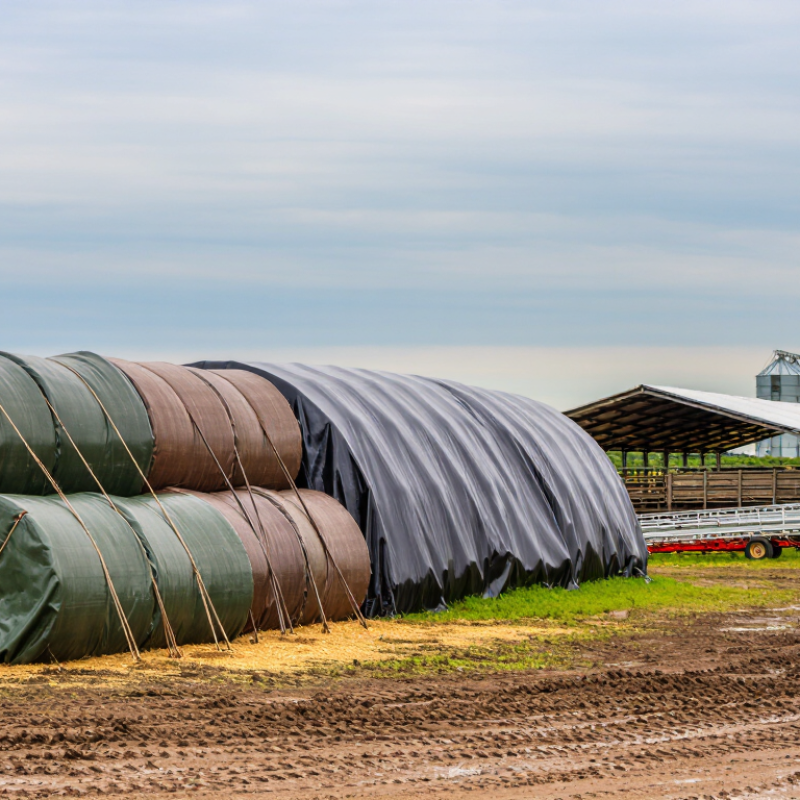
Farm tarps must handle more than a passing shower. Heavy rain can pool in low spots, stretch fabric, and stress seams. A slight slope helps water drain instead of collecting above stored hay or equipment. Check the cover after the first hard rain; small dips are easy to miss.
Wind is often the tougher test. Gusts can lift loose edges, rub fabric against sharp corners, or pull eyelets under uneven tension. Secure the tarp at several points, but avoid tightening one side much more than the other. Wind finds gaps. Even a well-made cover can tear if it flaps against a metal rail all night.
Sunlight, frost, and sudden temperature changes also wear on farm tarps. Ultraviolet exposure can make some materials brittle, while repeated freezing and thawing may worsen existing cracks. Snow adds weight, especially when it becomes wet and dense. Remove heavy buildup when it is safe to do so, and inspect seams, corners, and tie-down points each season. No tarp stays perfect forever; overlooking one worn grommet is an easy mistake. The right choice depends on local weather, how long the tarp stays outdoors, and what it covers.
Wind is a key weather challenge for farm tarps. The bars show the approximate upper wind speed for each Beaufort force, converted from knots to km/h. These are weather-scale reference values, not tarp performance ratings. Actual tarp performance depends on material, installation, exposure, and secure tie-downs.
How Tarp Materials and Weaves Affect All-Weather Protection
A farm tarp’s material determines how it handles rain, sun, and repeated handling. Woven polyethylene is common because its interlaced strands resist tearing while keeping the cover relatively light. A laminated coating helps shed water, but punctures and worn edges can still let moisture through. For hay or equipment stored outdoors, inspect seams and corners, not just the center panel.
There is no perfect weave. A tighter weave can limit wind-driven grit and reduce snagging, yet it may add weight and hold more heat beneath the cover. Check fabric weight and weave density together; neither number alone tells the whole story. UV-treated material generally lasts longer in exposed sun, though treatment quality and local conditions vary. PVC-coated polyester is often heavier and more abrasion-resistant, but it can be harder to fold in cold weather.
For windy fields, a tarp that flaps against a sharp rail may fail even when its fabric is strong. Secure it with evenly spaced tie-downs, and leave enough tension to prevent pooling without straining the eyelets. Small details matter. I would still check the cover after a hard storm; no material makes maintenance unnecessary.
Choosing the Right Farm Tarp for Each Agricultural Use
Choosing the right farm tarp starts with the job, not the color. For hay or grain, choose a water-resistant cover that sheds rain and allows secure, even tension. Trapped moisture can spoil stored crops, so leave airflow where practical. Check the forecast and inspect the stack after heavy rain. Small gaps matter.
For tractors, implements, and feed bins, prioritize tear resistance, reinforced edges, and sturdy tie-down points. A tarp that flaps against a metal corner can wear through surprisingly fast. Use smooth contact points and fasten the cover without pulling it drum-tight. Wind needs room to move, but loose fabric can become a problem. Balance matters.
For temporary shade or outdoor work areas, consider lighter fabric and ventilation rather than maximum waterproofing. A fully sealed cover may trap heat underneath on a still afternoon. Match the tarp’s size to the load, then make sure water can drain instead of pooling in a sag. Read the care and use information before buying, since weight and coating affect handling. Still, no tarp does everything. Recheck seams, grommets, and tie-downs through the season; wear often appears first at the edges. A quick inspection is easy to postpone, and that is worth reconsidering.
What Are the Best Farm Tarps for All Weather Protection? - Choosing the Right Farm Tarp for Each Agricultural Use
| Farm use | Suitable tarp type | Weather protection | Advantages | Things to consider |
| Covering machinery, feed, or supplies | UV-stabilized woven polyethylene tarp | Typically sheds rain; UV treatment can slow sun-related material degradation. Wind resistance depends on secure anchoring and tarp construction. | Lightweight, portable, and available in many sizes. | Check seams, hems, and grommets regularly. Avoid loose installation, which can cause flapping and tearing. |
| Long-term cover for equipment or storage areas | Coated polyester tarp | A coated fabric can provide strong water resistance; performance varies by coating, seams, and product specifications. | Often more abrasion-resistant and durable than lightweight covers. | Usually heavier and less compact. Confirm UV suitability and the manufacturer’s care guidance for outdoor use. |
| Covering hay or other stored crops | Purpose-made breathable hay tarp, where appropriate | Designed to shed precipitation while allowing some moisture vapor to escape; actual performance depends on the tarp and storage setup. | Can help reduce wetting from rain while limiting trapped moisture compared with a fully impermeable cover. | Use a raised, well-drained stack and follow the product instructions. A tarp cannot correct hay that was baled too wet. |
| Temporary shade for livestock or work areas | Shade cloth or knitted shade mesh | Reduces sunlight and heat exposure according to its shade rating; mesh is generally not a waterproof rain cover. | Allows airflow and provides filtered shade. | Select a suitable shade rating and anchor it securely. Provide livestock with adequate ventilation and access to water. |
| Temporary ground cover or debris collection | Heavy-duty woven polyethylene tarp | Can shield the ground from rain and dirt when intact; it does not replace drainage or erosion-control measures. | Easy to move and useful for short-term farm tasks. | Smooth surfaces may become slippery. Keep water from pooling and avoid use where runoff could cause erosion. |
| Covering silage or a silage bunker | Purpose-made silage film or oxygen-barrier cover with suitable protective sheets | Designed to limit oxygen entry and protect stored forage when installed and weighted according to guidance. | Made specifically for preserving ensiled forage rather than general-purpose covering. | A standard farm tarp is not a substitute for a silage cover system. Repair holes promptly and follow safe handling practices. |
| Covering items that need to dry or ventilate | Breathable canvas or mesh, depending on the task | Canvas may resist light moisture but is not necessarily waterproof; mesh allows airflow and offers little rain protection. | Can reduce condensation compared with an impermeable cover when ventilation is needed. | Choose only when airflow matters more than complete rain exclusion. Check whether the material is treated for outdoor exposure. |
Selection tip: Match the tarp to the crop or equipment, expected exposure, ventilation needs, and installation method. No tarp is completely weatherproof if it is damaged, poorly fitted, or inadequately secured.
Installation, Maintenance, and Replacement Guidelines
What Are the Best Farm Tarps for All Weather Protection?
Installation, maintenance, and replacement determine whether a farm tarp truly protects equipment, hay, and livestock areas. NOAA recorded 28 billion-dollar weather disasters in the United States during 2023. That figure shows why wind, hail, and intense rain deserve serious planning. Choose a UV-resistant, waterproof fabric with reinforced edges and corrosion-resistant grommets. ASTM D751 provides recognized methods for testing coated fabrics, including tensile strength and tear resistance.
Install the tarp with the slope facing away from stored materials. Keep fabric tight, but avoid excessive tension around the grommets. Use evenly spaced tie-down points and inspect every anchor after strong wind. Allowing water to pool creates heavy, sagging pockets. That mistake is common. Leave enough airflow beneath the cover to reduce condensation, especially over hay or machinery. USDA guidance on stored hay emphasizes moisture control because excess moisture can reduce quality and increase heating risks.
Tips: Inspect seams, edges, and grommets monthly. Remove sharp branches before installation. After hail, check for tiny punctures, not only visible tears. Wash dirt with mild soap and clean water; harsh chemicals can weaken coatings. Replace the tarp when UV cracking, brittle fabric, stretched holes, or repeated leaks appear. A patched tarp may survive another season, but that is not always wise. Keep inspection dates and storm damage in a simple log. Records make replacement decisions less emotional and more defensible.