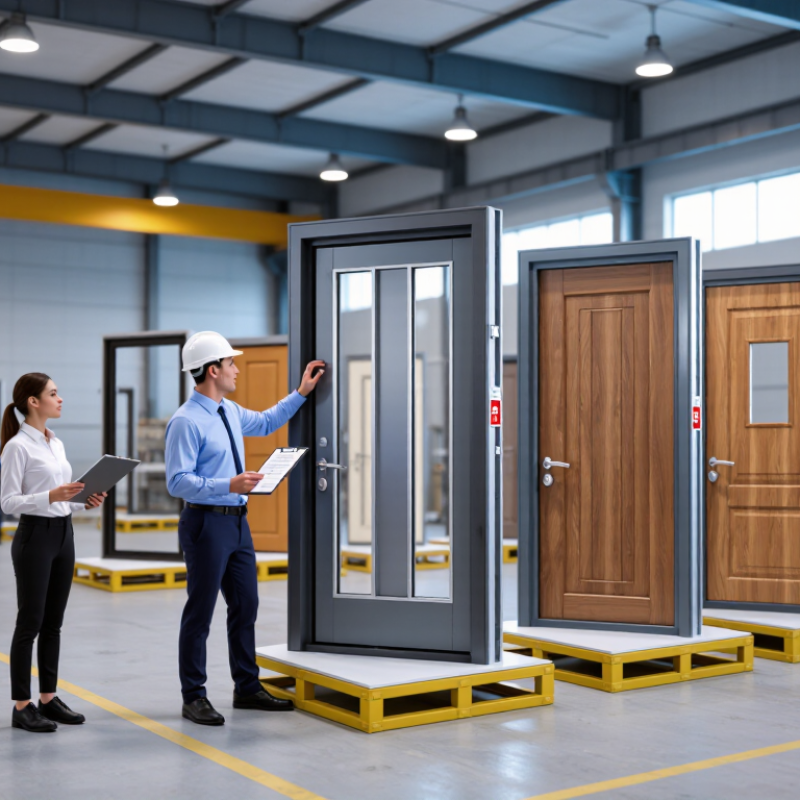
Found a design you like or need custom guidance? We can help. Fill in the form about your project, and we’ll contact you to discuss options and answer questions.
Choosing a fire door supplier is not simply a price comparison. It is a safety and performance decision. Product quality, certification, testing records, delivery reliability, and after-sales support all affect the final result. A low quotation may look attractive, yet missing hardware or unclear testing documents can create unexpected costs later.
Lori Greene, a recognized fire door consultant and industry educator, has repeatedly emphasized: “A fire door is only as good as its inspection, testing, and maintenance.” This principle should guide every Fire Door Quotation. Buyers should examine the door’s fire-rating period, core material, frame construction, glazing, hinges, closers, seals, and optional vision panels. These details are physical, not decorative. A door may appear strong but still perform poorly if the frame or hardware is unsuitable.
This guide reviews China’s top 10 fire door suppliers and explains how their quotations are commonly structured. It considers factory experience, export capability, customization, documentation, production capacity, and communication quality. Prices can vary because specifications vary. That sounds obvious, but it is often ignored. A quotation for a basic steel door cannot be compared fairly with a tested timber assembly or a stainless-steel hospital door. Buyers should request itemized pricing, sample approvals, packaging details, lead times, and warranty terms. Some comparisons remain imperfect because suppliers use different testing standards and quotation formats. That limitation deserves attention. Careful verification is still better than a rushed purchase.
Fire doors are engineered barriers that slow flames, heat, and smoke from spreading. They protect escape routes, rooms, and people during a fire. A complete door set includes the leaf, frame, hinges, closer, latch, seals, and sometimes fire-rated glazing. Each part must work together. A strong door can still fail when its frame is poorly fitted or its seals are damaged.
In practical inspections, small details often matter most. The door should close fully without force. Gaps should remain even, and the hinges must hold the weight correctly. Smoke seals need careful checking because they can look intact while losing flexibility. Quotation prices usually reflect the fire rating, size, materials, hardware, testing records, installation method, and maintenance needs. The lowest quotation may exclude essential components. I once underestimated the cost of suitable hardware, which changed the project budget. That mistake was avoidable.
Tips: Ask for a complete door-set quotation, not only the door leaf. Confirm the tested configuration and installation instructions. Check whether the supplier provides inspection support and replacement seals. Local building requirements should also be reviewed by a qualified professional. Fire safety is not the place for assumptions.
Evaluating China’s top fire door suppliers requires more than comparing unit prices. Global Market Insights valued the worldwide fire door market at over USD 14 billion in 2023, showing strong demand but also intense competition. A low quotation may exclude certified hardware, testing documents, packaging, or delivery charges. Ask for a complete cost sheet.
Check the door leaf, frame, core material, hinges, closer, and smoke seals. Each component should match the tested assembly. Request factory test reports, product certificates, batch traceability, and installation instructions. China’s GB 12955 standard provides a useful reference, while projects overseas may require EN, UL, or other destination-market testing. Certificates alone are not enough.
Visit the production line when possible. Observe steel cutting, welding quality, coating thickness, and storage conditions. A serious supplier should explain fire ratings, testing scope, tolerance limits, and replacement procedures clearly. Request samples before placing a large order. Small details matter.
Review the quotation line by line. Confirm dimensions, finish, glazing, hardware grade, minimum order quantity, lead time, Incoterms, and warranty coverage. Industry purchasing reports repeatedly identify delivery reliability and quality consistency as major supplier risks. My own practical concern is simple: suppliers often quote perfectly, then change specifications during production. Written approval for every change is essential. Price should support compliance, not replace it.
China’s top fire door suppliers are best compared by product strength, not advertising. Steel doors usually lead in durability, impact resistance, and large-project consistency. Timber doors offer warmer interiors and better design flexibility. Glazed doors improve visibility, but their tested glass, seals, and hardware require closer review. Some suppliers also provide acoustic ratings, thermal insulation, oversized doors, and custom finishes.
NFPA 80 requires fire door assemblies to be inspected at least annually, making maintenance support a practical supplier advantage. Reports from Grand View Research also show continued growth in fire-resistant construction materials, driven by stricter building safety requirements. However, market reports often group several product categories together. Their figures should guide planning, not replace technical verification. A reliable quotation should state the fire rating, door size, core material, frame type, test standard, hardware, finish, packaging, and delivery terms. A cheap quote may omit essential components.
Tips: Request complete test reports, not only certificates. Check whether the tested assembly matches the proposed door. Compare hinge grades, closer performance, smoke seals, and replacement availability. Ask for a sample before approving bulk production. Factory experience matters, but documentation matters more. One weakness is easy to miss: a strong door can still fail when installation is careless. Include installation guidance, inspection records, and after-sales response time in the quotation.
China Top 10 Fire Door Suppliers and Fire Door Quotation
Fire door quotations in China rarely depend on the door leaf alone. Steel thickness, core material, frame design, and fire-rating duration can change the price quickly. A 90-minute door usually requires different construction from a 30-minute model. Hardware also matters. Closers, panic bars, hinges, vision panels, and locks may add substantial costs. Custom sizes, wood-grain finishes, stainless-steel skins, and special colors create further differences. Quantity affects factory pricing, but small orders may include setup and packaging charges. Freight, insurance, export packing, and delivery terms should appear separately. Otherwise, a low quotation can look better than it really is.
Tips: Ask for a line-by-line quotation. Request drawings, material specifications, test reports, and hardware schedules. Confirm whether the quoted fire rating matches your project’s required standard. Check the frame, seals, and installation method, not only the door panel. A certified product can still perform poorly when installed incorrectly. Incomplete details cause delays.
Before comparing suppliers, prepare one clear specification sheet. Include opening sizes, swing direction, wall type, quantity, finish, accessories, and destination port. Ask each supplier to quote the same configuration. This makes comparison more reliable. Review lead time carefully; custom doors may need extra production days. Also clarify sample approval, inspection procedures, replacement terms, and payment stages in writing. Some quotations omit small items, and those omissions become expensive later. Even experienced buyers miss details occasionally. That is why a second technical review is worthwhile.
Indicative China ex-factory quotation ranges for commonly specified fire-door categories. Final prices vary according to fire-resistance rating, door size, core material, hardware, surface finish, testing requirements, order volume, and shipping terms. The figures exclude installation, taxes, and international freight.
When comparing the top 10 fire door suppliers, score evidence rather than website rankings. Compare identical specifications: door leaf, core, frame, glazing, hardware, dimensions, and finish. Request a line-item quotation with freight, installation, taxes, testing, and replacement parts shown separately. A low price may hide missing hardware or unsuitable glazing.
Certification deserves careful checking. NFPA’s Fire Loss in the United States report recorded about 1.50 million fires and 16.2 billion dollars in property damage in 2023. This makes traceable fire performance more than a marketing phrase. Ask for current test reports under standards such as NFPA 252, UL 10C, or EN 1634-1. Confirm the report matches the proposed size, construction, hardware, and rating. ISO 9001 can support factory control, but it does not prove a door’s fire resistance.
Service often separates capable suppliers from merely cheap exporters. Check sample approval, shop drawings, lead time, packaging, site guidance, warranty terms, and after-sales response. The International Building Code requires listed and labeled assemblies in relevant applications, so local approval must be confirmed before ordering. My own comparison method is useful, but not perfect. Suppliers may quote different assumptions. Ask technical questions in writing, keep revisions, and inspect seals, labels, hinges, and closing gaps on delivery. Experiences and prices vary sharply by project location.
| Anonymous Supplier Profile | Common Product Range | Typical Specification | Indicative Export Quotation | Typical Compliance Documents | Estimated Lead Time | Typical MOQ | Service Capability | Best-Fit Application |
|---|---|---|---|---|---|---|---|---|
| Profile 01 Large integrated manufacturer | Steel fire doors, double-leaf doors, glazed fire doors, frames and hardware packages | 60–120 minutes; galvanized or stainless-steel skin; mineral or honeycomb core; single or double leaf | US$95–220 per m² Door leaf and frame, excluding freight | Fire-test report to EN 1634-1 or equivalent; material certificates; factory quality records; hardware schedule | 25–40 calendar days | 20–50 sets | Shop drawings, finish samples, customized dimensions, container loading plans and spare-parts support | Commercial buildings, warehouses and multi-project procurement |
| Profile 02 Steel security-door specialist | Heavy-duty steel fire doors, security-rated doors, acoustic fire doors and reinforced frames | 90–120 minutes; 1.2–2.0 mm steel skins; reinforced leaf; optional smoke seals and vision panels | US$150–320 per set Standard sizes and basic hardware | Fire-resistance test evidence; smoke-control test where applicable; steel grade report; welding and coating inspection records | 30–45 calendar days | 10–30 sets | Security and fire-performance coordination, custom locking preparation, installation guidance and inspection checklists | Industrial facilities, utility rooms and restricted-access areas |
| Profile 03 Architectural door fabricator | Wood veneer fire doors, laminate doors, glazed timber doors and matching frames | 30–90 minutes; engineered timber core; veneer, laminate or painted finish; concealed or surface hardware options | US$180–420 per set Finish and hardware affect final cost | Timber fire-door test report; product construction details; surface-finish data; smoke-seal and hardware compatibility records | 35–55 calendar days | 10–20 sets | Color matching, mock-up production, architectural submittals, edge-detail review and project coordination | Hotels, offices, apartments and interior public spaces |
| Profile 04 Glazed fire-door specialist | Fire-rated steel, aluminum and timber doors with wired, ceramic or multi-layer fire-resistant glazing | 30–120 minutes; fire-rated vision panels; tested glazing beads, seals and frame assemblies | US$260–650 per set Glazing area and rating are major cost drivers | Complete assembly fire-test report; glazing specification; frame and bead details; safety-glass documentation where required | 40–60 calendar days | 5–15 sets | Glass-size review, sightline coordination, installation details and replacement-glass support | Corridors, stairwells, hospitals and buildings requiring visibility |
| Profile 05 Metal fire-door volume producer | Standard hollow-metal doors, frames, louvers and access panels | 60–90 minutes; galvanized steel; standard leaf thickness; factory-prepared hinge, lock and closer reinforcements | US$80–180 per set Higher volumes generally reduce unit cost | Fire-test report for the complete assembly; coating specification; dimensional inspection report; packing list | 20–35 calendar days | 50–100 sets | Fast production, standard-size optimization, private-label packaging and consolidated shipment planning | Large residential, education and commercial developments |
| Profile 06 Custom project-engineering supplier | Oversized doors, acoustic fire doors, curved or non-standard assemblies and special frames | 60–120 minutes; project-specific dimensions; enhanced seals, insulation or acoustic construction | US$350–900 per set Engineering complexity can substantially change the price | Project-specific test evidence or engineering assessment; structural calculations; drawings; method statements | 45–75 calendar days | 1–10 sets | Site measurement review, technical submittals, prototype approval, coordination with consultants and installation supervision | Transport hubs, industrial plants and technically complex projects |
| Profile 07 Certified fire-exit hardware integrator | Fire doors supplied with panic exit devices, closers, hinges, locks, seals and access-control preparation | 30–120 minutes; door, frame and hardware selected as a compatible tested assembly | US$220–580 per set Hardware package included in the benchmark | Door assembly test report; hardware conformity documents; installation instructions; maintenance recommendations | 35–60 calendar days | 10–30 sets | Hardware scheduling, compatibility checks, escape-route review and maintenance training | Schools, hospitals, shopping centers and public buildings |
| Profile 08 Cost-focused standard-product supplier | Basic steel fire doors, standard frames and selected painted finishes | 30–60 minutes; standard sizes; powder-coated or primer finish; basic hinges and lock preparation | US$65–140 per set Usually excludes premium hardware and glazing | Available fire-test documentation; material declaration; dimensional inspection; packing and labeling records | 20–30 calendar days | 50–200 sets | Simple drawings, standard color selection, quantity-based pricing and export packing | Budget-sensitive projects using standard dimensions |
| Profile 09 OEM and private-label supplier | Custom-labeled steel or timber fire doors, cartons, labels and project-specific documentation | 30–120 minutes; customer-defined dimensions, finishes, labels and hardware preparation | US$110–360 per set Branding, packaging and documentation may add cost | Product test evidence; private-label artwork approval; quality-control plan; batch traceability documents | 30–50 calendar days | 30–100 sets | Artwork review, barcode or label customization, neutral packaging and distributor support | Importers, distributors and regional building-material programs |
| Profile 10 Export-service and installation-support supplier | Mixed fire-door packages with doors, frames, hardware, accessories and site-support services | 30–120 minutes; package selected according to project specification and destination code | US$180–520 per set May include documentation and project coordination | Applicable fire-test report; packing and inspection records; installation manual; certificate-of-origin support where needed | 30–55 calendar days | 10–50 sets | Pre-shipment inspection, consolidated procurement, export documentation, remote installation guidance and after-sales coordination | Overseas contractors and projects requiring one-point coordination |
| Comparison note: The quotations above are indicative China export-market benchmarks in USD, not binding offers. Final pricing depends on fire rating, tested door-and-frame assembly, size, glazing, hardware, finish, packaging, quantity, Incoterms, freight, taxes and destination requirements. Certification should be verified for the complete assembly—not only for the door leaf—and should match the project’s applicable standard, such as EN 1634-1, BS 476-22, UL 10C, NFPA 80 or the relevant local code. | ||||||||