
Found a design you like or need custom guidance? We can help. Fill in the form about your project, and we’ll contact you to discuss options and answer questions.
Choosing a reliable Galvanized Wire Manufacturer starts with more than comparing prices. The right partner should understand your application, whether you need wire for fencing, mesh, binding, or industrial fabrication. Small differences matter. A coating that looks even under bright factory lights may still vary in thickness, so ask how coating weight and wire diameter are checked during production. Request recent test reports, product specifications, and samples that match the grade you plan to order. Then inspect the surface, flexibility, and consistency across the coil—not just one convenient section.
A dependable manufacturer can explain its process clearly, from drawing and galvanizing to packing and shipment. Ask how it tracks batches and responds when a sample or order falls outside the agreed specifications. A clear answer is useful; vague promises are not. Look for relevant experience, documented quality procedures, stable production capacity, and references you can verify. If possible, compare sample results with the stated tensile strength and coating requirements, and confirm that packaging will protect coils from moisture and handling damage. Details matter.
A low quote can look attractive. It is not the whole story. Lead times, communication, inspection methods, and corrective actions affect the real cost of a supply relationship. No supplier is perfect, and a polished website alone proves little. Use practical questions, written specifications, and careful sample checks to judge whether a manufacturer can deliver consistently. The aim is not to find the biggest factory, but one whose capabilities fit your needs—and whose claims stand up to scrutiny.
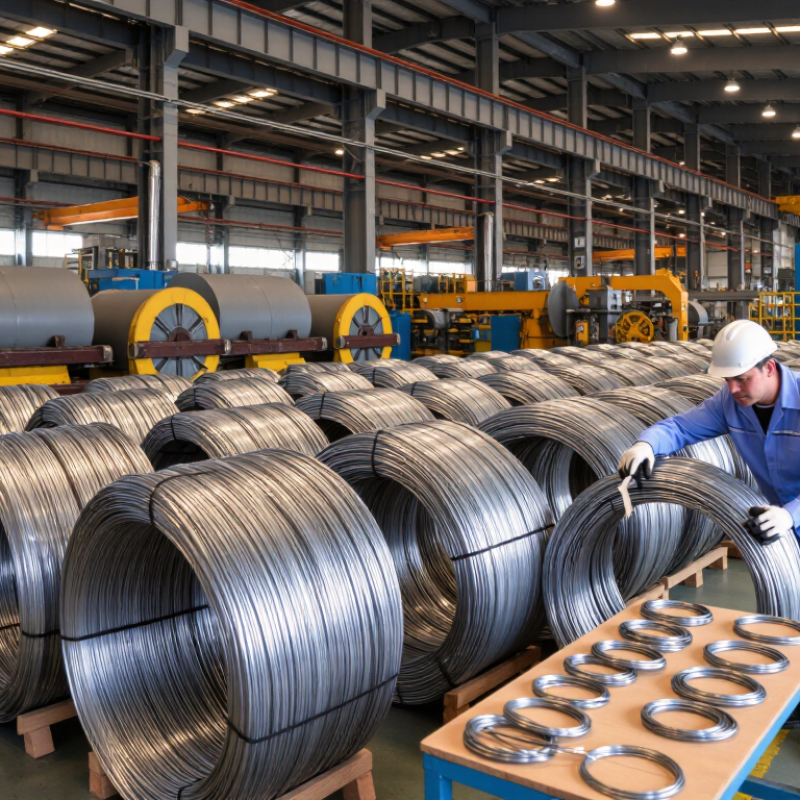
Before comparing manufacturers, define the conditions the wire must handle.
Will it support an outdoor fence, form mesh, bind components, or run through a machine? Note exposure to rain, salt spray, soil, chemicals, and abrasion; each can change coating and service-life requirements. Specify nominal diameter, allowable tolerance, tensile-strength range, coating type, and coating mass where needed. Small details matter. A thin wire may suit light ties, while a heavier gauge may be needed for tension or repeated handling.
Describe the application, not just “galvanized wire.”
With welded mesh, consistent diameter and clean weld areas support even panels. On a bending line, ductility and steady coil payoff may matter more. Ask how coating weight, diameter, and tensile properties are checked. Request a sample or inspection record tied to your specification. That can reveal mismatches early. Also decide coil weight, inner diameter, winding direction, and packaging, so the wire arrives ready for your equipment. One point is easy to miss: the thickest coating is not automatically best if forming damages it or adds cost without practical benefit. A short trial may reveal gaps in your brief.
A reliable galvanized wire manufacturer should demonstrate capacity beyond a large advertised monthly figure. Ask how many drawing and galvanizing lines operate, and whether they run concurrently. Request recent output records for wire diameters and coating classes matching your order. A full workshop is not proof. Observe changeover time, coil labeling, and how finished rolls are protected from moisture. These details can show whether quoted lead times reflect normal production or an unusually quiet week.
Technical expertise appears in process control. The manufacturer should explain how it selects wire rod, reduces diameter through dies, and applies zinc evenly. Ask for documented checks on tensile strength, diameter tolerance, coating mass, and adhesion. Compare the methods with your specification. Good answers include test frequency and what happens when a result falls outside limits. “We check every batch” is not enough. Ask directly. Review a sample report and traceability from coil number to inspection record.
Production flexibility matters too. A supplier may handle standard sizes well but struggle with small runs, tighter tolerances, or changed packaging. Discuss realistic capacity for your order, maintenance downtime, and backup equipment before agreeing on delivery dates. If possible, review a recent production sample or arrange a remote line walkthrough. I would not treat polished machinery as a guarantee; records and repeatable results matter more. Some gaps may remain, so note assumptions in writing and confirm them against the first shipment.
How to Choose a Reliable Galvanized Wire Manufacturer?
Ask for the applicable product specification before comparing prices. For example, ASTM A641/A641M covers zinc-coated carbon steel wire, but requirements depend on wire grade and intended use. Check the stated wire diameter, coating class, tensile strength, and permitted tolerances. Ask to see records. A polished certificate alone proves little unless its details match the actual product batch.
Review how the manufacturer tests its wire. Useful checks include measuring diameter at several points, testing tensile strength, and assessing zinc coating mass or adhesion. Request a recent test report that identifies the batch number, test method, results, and inspection date. If an independent laboratory is involved, verify its relevant accreditation, such as ISO/IEC 17025. Small details matter. A report with no traceable batch link deserves a closer look.
Check quality certifications in context. ISO 9001 indicates a quality management system; it does not certify every coil of wire. Ask how nonconforming material is recorded, corrected, and prevented from recurring. If possible, compare paperwork with sample wire: inspect the coating for bare spots, uneven buildup, or flaking after handling. Even a careful supplier can have variation. That is worth discussing openly, not overlooking.
A reliable galvanized wire manufacturer should make its capabilities easy to verify. Ask for recent test reports showing wire diameter, tensile strength, zinc coating, and batch identification. Check that sample results match the specifications on the quotation, not just a general product brochure. Ask for proof.
Delivery promises need practical detail. Confirm production lead time, minimum order quantity, packaging method, and how delays are communicated. For a large order, request a written schedule with inspection and dispatch dates. Compare it with your installation or inventory plan, allowing time for port handling and inland transport. A confident estimate is useful; a precise date without room for disruption may not be.
Customer support is part of product reliability. Send a specific question about coating thickness or coil weight and note how clearly the supplier responds. Can staff explain tolerances, share inspection records, and route a technical issue to someone qualified? Details matter. You might also ask how damaged coils or specification mismatches are handled, and what evidence they need to investigate. A checklist cannot predict every problem, and I would not treat a polished reply as proof of performance. Consistent records, clear ownership, and realistic updates offer stronger signals.
| Evaluation Dimension | What to Check | Practical Acceptance Benchmark | Evidence to Request |
|---|---|---|---|
| Product specification control | Confirm wire diameter, tensile strength, zinc-coating requirement, coil weight, packaging, and dimensional tolerances. | All requirements are stated clearly in the quotation and purchase order; no key specification is left to assumption. | Product data sheet, technical quotation, and a written specification confirming the applicable standard and coating class. |
| Quality management | Review how incoming wire rod, drawing, galvanizing, inspection, and final release are controlled. | Documented procedures and traceable inspection records are available for the product and production lot. | Quality-management documentation, inspection plan, sample inspection records, and any current third-party certification claimed by the supplier. |
| Standards and compliance | Check that the offered wire meets the standard and coating requirements specified for the intended application. | The supplier identifies the applicable standard and confirms the required grade or coating class in writing. Requirements should be matched to the destination market and end use. | Compliance statement and lot-specific test report. For example, ASTM A641/A641M covers zinc-coated carbon steel wire; confirm the relevant edition and product requirements for the order. |
| Zinc-coating verification | Ask how coating mass or coating class is measured and how uniformity and adhesion are assessed. | Test results meet the coating requirement stated in the order; there is no single coating-mass threshold suitable for every wire diameter and application. | Lot-specific coating test results, test method, sampling details, and acceptance criteria agreed before production. |
| Mechanical properties | Verify tensile strength, elongation, and any other properties required for forming, tying, fencing, or fabrication. | Measured results fall within the agreed product specification, with the test method and units clearly stated. | Mill test certificate or inspection report identifying the production lot and reporting actual test results. |
| Production traceability | Check whether each coil or bundle can be linked to its production and inspection records. | Coil or bundle identification remains readable and corresponds to the shipping documents and test records. | Sample coil label, traceability procedure, and a sample certificate showing lot or batch identification. |
| Delivery capability | Assess stated production lead time, order capacity, dispatch planning, and experience handling the required shipment format. | The supplier provides a written delivery schedule with production and dispatch milestones and identifies assumptions that may affect timing. | Production schedule, capacity confirmation for the requested quantity, and shipment plan. Treat quoted lead times as order-specific rather than guaranteed industry averages. |
| On-time performance | Ask how delivery performance is measured and whether delays are recorded and reviewed. | Recent performance data is available with a clear definition of “on time” and the measurement period. | Redacted delivery-performance summary or references that can confirm comparable order experience. |
| Packaging and transport protection | Confirm protection against handling damage, moisture exposure, and movement during transit, based on the route and shipping method. | Packaging details are agreed in advance and suit the product, transport conditions, and unloading arrangements. | Packaging specification, photographs of comparable shipments, and written confirmation of labels and handling requirements. |
| Customer support and communication | Evaluate response time, technical knowledge, language capability, and escalation arrangements. | A named contact responds clearly to specification and order questions, with a defined route for urgent issues. | Written communication during the quotation process, contact and escalation details, and an agreed update schedule for production. |
| Nonconformance and claims handling | Review how the supplier investigates quality complaints, documents corrective actions, and manages replacement or credit discussions. | The process defines how to submit a claim, what evidence is needed, and how findings and corrective actions are communicated. | Written claims procedure, sample corrective-action report with confidential details removed, and agreed inspection or dispute-resolution terms. |
| Commercial and order transparency | Check that price, quantity tolerance, payment terms, delivery basis, documentation, and change-control terms are unambiguous. | The quotation and contract identify responsibilities, charges, and conditions that could affect the final delivered cost or schedule. | Detailed quotation, draft purchase terms, and confirmation of required export or transport documents. |
| Trial order and final decision | Where practical, validate product quality, packaging, documents, and communication with a small or initial order before scaling up. | Approval is based on received-product inspection and document review against the agreed specification, not on price alone. | Incoming inspection results, certificate review, and a written record of any corrective actions or specification changes. |
When comparing galvanized wire quotations, align the specifications before comparing prices. A lower figure may cover thinner zinc coating, wider diameter tolerance, or different tensile strength. Ask for coating mass, test method, coil weight, packaging, and inspection records in writing. Check whether freight, sampling, and replacement of rejected coils are included. Small omissions add up.
Price terms matter because zinc costs move. The World Bank Commodity Markets Pink Sheet reports average zinc prices of about $2,776 per metric ton in 2024, up from roughly $2,647 in 2023. That change does not translate directly into wire prices, but it makes quote validity periods and surcharge rules worth checking. Get payment milestones, lead times, and remedies for delays stated clearly. Read the fine print.
For long-term value, compare expected service conditions with the coating actually offered. The American Galvanizers Association’s time-to-first-maintenance data show that coating thickness and exposure affect service life; its figures are not a warranty for every wire product or process. Request lot-specific test results, not only a general certificate. A clean document can still describe a different production batch. Then estimate landed cost over the intended service period, including inspection and replacement risk. The cheapest coil may still be the wrong one.