
Found a design you like or need custom guidance? We can help. Fill in the form about your project, and we’ll contact you to discuss options and answer questions.
Choosing Food Bristol Paper for global sourcing is not simply a matter of comparing prices. The right grade must protect food, support printing, and perform reliably during packing, transport, and storage. A bright paperboard may look impressive under showroom lights. However, it can fail when exposed to moisture, grease, folding pressure, or rapid production lines.
This guide examines the practical factors behind a dependable purchasing decision. It considers paper weight, stiffness, surface finish, coating type, whiteness, printability, and converting performance. Food-contact suitability also deserves close attention. Buyers should request current technical data, compliance documents, test reports, and traceable production information from each supplier. Requirements may differ between markets, so one certificate should not be treated as universal proof. That assumption can create costly delays.
Samples matter. A small trial can reveal cracking along fold lines, uneven coating, ink adhesion problems, or odor after printing. Ask suppliers how they control pulp quality, coating consistency, moisture, and batch variation. Their answers often show more than a polished product brochure.
Cost still matters. Yet the lowest quotation may hide higher waste, slower packing, or expensive replacements. A better comparison includes delivered cost, minimum order quantity, lead time, pallet protection, and communication reliability. Some details are easy to overlook. I have found that sourcing decisions become stronger when buyers record test results instead of relying on memory. Still, no checklist is perfect. Unexpected humidity, port delays, and changing production schedules can challenge even careful plans. The goal is not to find flawless Food Bristol Paper, but to select a documented, tested, and suitable option for the intended application.
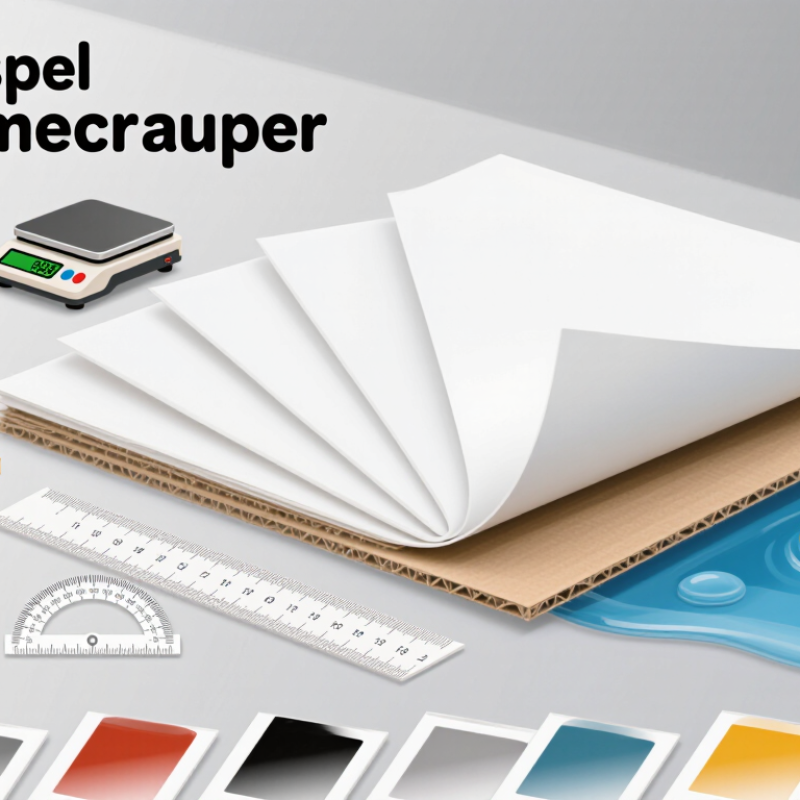
Food Bristol paper is a smooth paperboard commonly used for food packaging and printed presentation. It offers a clean surface, useful stiffness, and reliable folding performance. Depending on the grade, it may be coated on one or both sides. This affects printing quality, moisture resistance, and surface feel. It is often selected for bakery boxes, takeaway sleeves, food trays, menu covers, and product cartons.
In global sourcing, the paper should match the application, not just the price. Check the paper weight, thickness, folding strength, and grease resistance. Food-contact documentation is also essential. Ask suppliers for test reports, coating details, origin information, and production samples. A small sample can reveal cracking around folds or ink scuffing. These issues are easy to miss in digital files. I have found that packaging specifications sometimes sound clear, yet remain incomplete. Confirm every measurement in writing.
How to Choose Food Bristol Paper for Global Sourcing?
Food safety should guide every Bristol paper decision. In practical sourcing work, I check food-contact suitability before comparing price or appearance. Ask for material declarations, migration test results, and traceable production records. These documents should match the intended food type, contact time, and storage temperature. Dry biscuits, oily pastries, and chilled foods need different risk assessments. Do not assume “food grade” covers every application.
Barrier performance must fit the product. Grease resistance helps prevent stains and weak spots. Moisture resistance protects crisp foods from humidity. For aromatic products, odor transfer also matters. Test the paper with the real food, not only water. Heat exposure can change coating behavior. This is often missed. Recycled fiber may offer environmental benefits, but its composition and food-contact controls require careful verification.
Performance affects factory efficiency and customer experience. Check stiffness, folding accuracy, print adhesion, die-cutting, and compression strength. Request samples from several production batches. A smooth sample can hide inconsistent caliper or curling. I have seen specifications that looked complete but ignored packing-line speed. That mistake created jams and waste. Share the final structure with converters and testing laboratories. Local food-contact rules may differ across markets, so confirm requirements in each destination country. Keep test dates, batch numbers, and corrective actions in one sourcing file.
How to Choose Food Bristol Paper for Global Sourcing?
Comparing Paper Grades, Coatings, and Sustainable Options
Food Bristol paper combines a smooth surface with useful stiffness for cartons, sleeves, and food presentation. During sourcing, I check the grade against the package shape, filling weight, and folding depth. A lighter board may suit dry snacks, while thicker stock supports heavier boxes. Do not judge quality by thickness alone.
Coatings change both performance and recycling behavior. A water-based coating can resist light moisture and preserve printed details. A plastic film offers stronger grease protection, but it may complicate fiber recovery. For chilled or oily foods, request practical migration and barrier test data. Laboratory results matter more than attractive samples. Still, a sample can hide problems. Folded corners often reveal cracking before production does.
Sustainable options include recycled fiber, certified virgin fiber, and fiber blends. Recycled content may create a softer surface or slight color variation. That difference is sometimes acceptable, but premium graphics may need tighter specifications. Ask about fiber origin, bleaching methods, coating composition, and mill-level documentation. Also confirm whether the board remains recyclable in the target market. Collection systems vary widely. I have seen a promising material fail because local recyclers could not process its coating. A small pilot run helps expose these gaps, although it adds time and cost. geschniegelt
| Paper or Coating Option | Typical Basis Weight | Surface and Print Performance | Food-Packaging Suitability | Barrier Performance | Recycling and End-of-Life | Recommended Applications | Key Sourcing Checks |
|---|---|---|---|---|---|---|---|
| Uncoated virgin-fiber Bristol board | 200–400 g/m² | Natural paper texture; suitable for offset, flexographic, and digital printing when the surface is properly sized. | Can be used for direct food contact only when the mill’s grade and additives comply with the destination-market requirements. | Low resistance to water, oil, grease, and moisture vapor without an additional treatment. | Generally compatible with paper recycling where local facilities accept the format and no incompatible coating or laminate is added. | Dry-food sleeves, bakery boxes with an internal liner, tags, cards, and secondary packaging. | Ask for food-contact declarations, fiber-source information, odor and taste test results, and migration-test documentation. |
| Coated one-side Bristol board (C1S) | 200–400 g/m² | Gloss, silk, or matte coated face provides smoother graphics, higher ink detail, and more consistent color reproduction. | The coated side may be suitable for food-contact packaging only if the coating and board structure are specifically approved for that use. | Improved print-surface protection; ordinary mineral or polymer coatings are not automatically grease- or moisture-proof. | Paper recycling is usually more straightforward than with plastic-laminated board, but local acceptance and coating composition must be confirmed. | Dry-food cartons, confectionery sleeves, premium labels, and printed outer packs. | Confirm coating chemistry, coat weight, recyclability assessment, rub resistance, caliper tolerance, and printing-side requirements. |
| Recycled-fiber Bristol board | 200–450 g/m² | Good for many packaging graphics; shade, formation, cleanliness, and surface smoothness can vary by recycled-fiber content. | Direct food contact requires strict control of recycled-fiber quality, contaminants, functional barriers, and applicable regulatory compliance. | Usually limited unless supported by a suitable coating or barrier layer. | Supports circular material use; actual recyclability depends on adhesives, coatings, inks, and the recycling system in the target country. | Secondary cartons, dry-food packaging, retail sleeves, and non-direct-contact inserts. | Verify post-consumer content, chain-of-custody claims, deinking behavior, heavy-metal limits, odor, and batch consistency. |
| Aqueous-coated Bristol board | 220–400 g/m² | Provides a smooth printable surface and moderate scuff protection while preserving a paper-based appearance. | Potentially suitable for food packaging when the formulation, application side, and intended-contact conditions are documented as compliant. | Can improve resistance to light moisture and surface abrasion; performance varies widely and is not equivalent to a full plastic barrier. | Often more compatible with fiber recovery than plastic film laminates, but recyclability must be validated for the actual coating weight and structure. | Takeaway cartons, bakery packaging, dry snacks, and printed food sleeves. | Request coating composition, coat weight, Cobb or water-resistance data, grease testing, drying requirements, and recyclability evidence. |
| Polymer-laminated Bristol board | 250–500 g/m² | Strong visual quality and good protection against scuffing; lamination can affect creasing, folding, and converting. | Can support direct-contact applications when the polymer, adhesive, and board are approved for the intended food and temperature conditions. | Good moisture and grease resistance, depending on polymer type, thickness, seal design, and pinhole control. | Paper recovery may be reduced because plastic and fiber must be separated; multilayer structures are often difficult for standard recycling systems. | Greasy foods, chilled products, frozen-food cartons, and packaging requiring stronger moisture protection. | Specify polymer type and thickness, heat-seal performance, migration data, recycling route, crease cracking, and import labeling requirements. |
| Fiber-based board with certified compostable coating | 220–450 g/m² | Print quality depends on the coating and surface treatment; some grades require adjusted ink, drying, or sealing settings. | May be suitable for food contact when the complete structure complies with food-contact rules and the coating is certified for the claimed composting environment. | Can provide grease and moisture resistance, but barrier performance must be tested for the specific food, shelf life, and storage conditions. | Compostability is environment-specific; industrially compostable material may not break down in home composting or ordinary paper recycling. | Food-service trays, takeaway cartons, bakery packs, and applications with an established commercial composting route. | Check certification scope, industrial versus home composting claims, disintegration time, PFAS status, local waste infrastructure, and labeling rules. |
| Unbleached kraft Bristol board | 250–500 g/m² | Brown or natural appearance with strong package presence; print colors may appear less bright than on white coated board. | Suitable for food packaging when the grade, additives, inks, and barrier system meet the intended food-contact requirements. | Good structural strength; limited inherent resistance to grease and water without a functional coating or liner. | Typically fiber-recyclable if unlaminated and accepted by local facilities; darker fiber can limit brightness after recycling. | Dry-food boxes, produce packaging, bakery packs, carry cartons, and natural-look retail packaging. | Confirm strength values, moisture conditioning, fiber origin, food-contact compliance, print color expectations, and any required barrier treatment. |
When sourcing food Bristol paper, evaluate the supplier before comparing price. Ask for recent food-contact declarations, migration test reports, and material traceability records. Requirements differ by destination, so reports should match your intended market and food type. Certifications can support trust, but they do not replace technical verification. Check certificate scope, expiry dates, issuing bodies, and covered production sites. A current audit report is more useful than a polished presentation.
Production capacity needs practical testing. Request samples from the same machine and grade planned for mass production. Measure GSM, thickness, stiffness, moisture, surface smoothness, and odor. Inspect the sheets after transport, not only inside the factory. Rolls may develop curl or edge damage during humid shipping. Small details matter. Ask about machine width, monthly output, minimum order quantities, lead times, and backup equipment. Confirm whether the supplier can reserve capacity during seasonal demand.
“ I once treated a strong sample as proof of stable supply. That was too optimistic. A later batch showed different moisture performance after storage. Now I request retained samples, batch records, and a written corrective-action process. Suppliers should explain how they control pulp sources, coating consistency, and packaging protection. Video calls help, but an independent factory audit offers stronger evidence. Capacity figures also need context; theoretical output may not equal food-grade output. Leave room for doubt, and test before committing.
Choosing food Bristol paper for global sourcing starts with a complete landed-cost calculation. Ask suppliers to separate paper, coating, cutting, packing, testing, and freight charges. A low unit price can hide high minimum orders or expensive pallet handling. Request the basis weight, sheet size, moisture level, and quotation terms in writing. Small differences matter when thousands of sheets are stacked on pallets.
Logistics should match the paper’s sensitivity. Use moisture-resistant wrapping and inspect pallet stability before shipment. Confirm the delivery port, transit time, insurance, and import documents early. A practical quality plan should compare approved samples with production batches. Check grammage, caliper, surface appearance, stiffness, odor, and print performance. For food-contact use, arrange suitable migration or chemical testing through a competent laboratory. Keep retained samples and inspection records. They make disputes easier to investigate.
Import compliance depends on the destination market and the intended food contact. Confirm whether the paper touches dry, wet, oily, hot, or frozen food. Ask for a current declaration of compliance, test reports, material composition, and traceability information. Verify the correct customs classification with a qualified broker. Do not assume a certificate from one country works everywhere. That assumption can delay clearance. In practice, buyers sometimes approve attractive samples too quickly, then discover poor curl control or missing documents after shipment. A slower approval process is often cheaper than correcting a full container.
Confirming costs, logistics, quality control, and import compliance
This planning chart compares the typical share of landed cost with the expected time contribution for major sourcing stages. Material and converting usually form the largest cost share, while ocean freight and import clearance can create the greatest schedule uncertainty. Final figures should be confirmed through supplier quotations, freight bookings, laboratory reports, and the destination market’s food-contact regulations.