
How to Choose the Best Agricultural Track?

Choosing the best Agricultural Track can influence soil health, fuel use, machine stability, and daily productivity. A suitable system should match the farm, not merely the tractor. Clay fields, sandy ground, steep slopes, and wet harvesting conditions create different demands. A track that performs well on dry soil may struggle after heavy rain.

Begin with measurable conditions. Record field moisture, average load, turning space, travel distance, and seasonal working hours. Speak with experienced operators and qualified agricultural machinery technicians. Their observations often reveal problems that brochures overlook. Check ground pressure, traction, vibration, maintenance access, and compatibility with existing equipment. Rubber tracks may reduce soil compaction and improve comfort, while steel options can offer durability in demanding environments. The right choice depends on use, maintenance habits, and budget.

Cost deserves careful attention. Compare purchase price with fuel savings, replacement intervals, downtime, and service availability. Ask suppliers for performance data, warranty terms, and references from farms with similar soil. If possible, test the Agricultural Track during ordinary field operations. Watch how it handles turns, muddy areas, and loaded trailers. Small details matter.

No option is perfect.

A thoughtful decision also requires honest reflection. Farmers sometimes choose familiar equipment without checking whether conditions have changed. That habit can create avoidable costs. This guide examines practical selection criteria, common compromises, and expert-backed questions. Its aim is not to promote one product, but to help readers choose confidently, based on evidence, field experience, and realistic farm priorities.
How to Choose the Best Agricultural Track?

Define the Purpose and Requirements of an Agricultural Track

An agricultural track should begin with its purpose, not its appearance. A route for tractors needs different requirements from one used by workers, carts, or harvest vehicles. Record the heaviest expected load, daily traffic, turning points, and seasonal weather. A muddy track in October may become a frozen surface in January. Small details matter.

Walk the proposed route after heavy rain. Note soft ground, standing water, steep sections, and narrow gates. Measure the width of the widest vehicle, then allow extra space for safe passing and turning. Consider soil strength, surface material, drainage, and slope together. A firm surface can still fail when water collects beneath it. Soil tests and advice from a qualified agricultural engineer can prevent expensive mistakes.

I once underestimated a short incline beside a field. It looked harmless in dry weather, but loaded equipment struggled there after rain. That experience changed how I assess farm routes. Plan visible drainage channels, stable edges, and access for maintenance equipment. Check whether the track crosses irrigation lines or seasonal water flow. Leave room for future machinery, even if today’s equipment seems smaller. Perfect planning is difficult. Farmers often revise tracks after one hard season.

How to Choose the Best Agricultural Track?

Define the purpose and requirements of an agricultural track by comparing typical ground-pressure levels. Lower ground pressure generally helps reduce soil compaction, while tire systems may provide higher road speed and transport flexibility.

Typical operating values: pneumatic tires approximately 100–200 kPa, rubber tracks approximately 30–80 kPa, and steel tracks approximately 30–60 kPa. Actual pressure varies with machine weight, load, inflation, track width, soil moisture, and operating conditions.

Compare Track Types for Different Farming Applications

How to Choose the Best Agricultural Track?

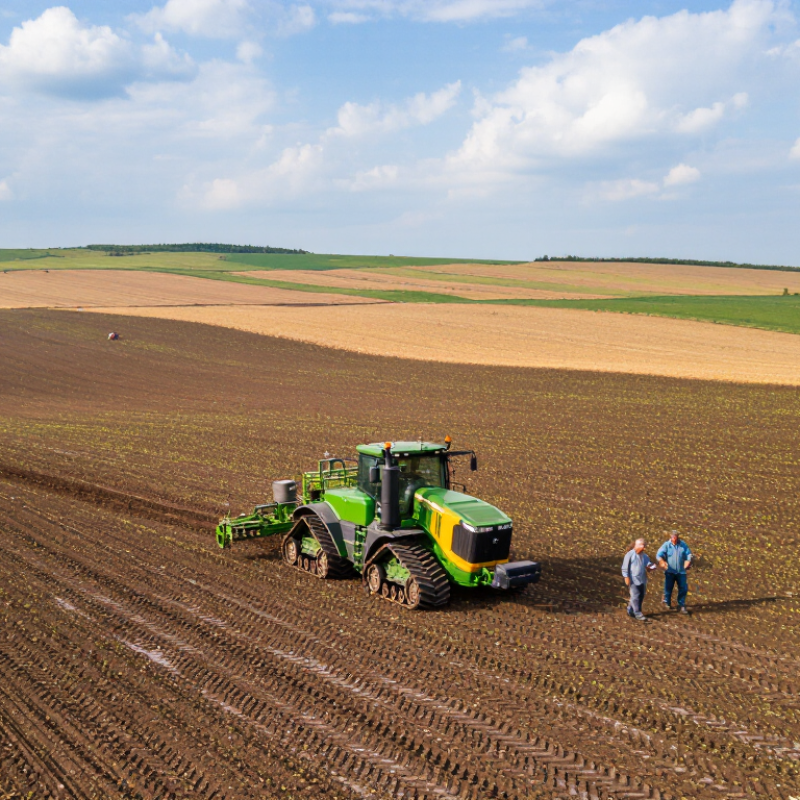
Track choice should match the field, machine, and daily workload. Rubber tracks suit vegetable beds, orchards, and wet fields because they reduce soil compaction. They also create a smoother ride on paved farm roads. However, sharp stones, stubble, and excessive heat can shorten their service life. Steel tracks handle rocky ground, steep slopes, and heavy loads more confidently. Their traction is excellent, but they may disturb fragile soil and increase vibration.

Track width changes the result. Wide tracks spread machine weight across a larger area. This helps during spring planting when soil remains soft. Narrow tracks fit between crop rows and reduce plant damage. For combines and heavy tractors, check the track’s load rating, tension system, and turning clearance. A track that fits mechanically may still perform poorly in muddy corners. That detail is easy to miss.

Tips: Walk the actual route before buying. Measure row spacing, slope angles, and the narrowest gate. Compare wet and dry conditions, not only showroom performance. Review the machine’s operating weight and the track maker’s load chart. Keep spare time for inspections; field work rarely follows the plan. I would also test one track configuration for a full working day. Short demonstrations can hide heat buildup, uneven wear, or uncomfortable vibration. Reliable decisions come from records, not assumptions.

Assess Soil, Terrain, Load Capacity, and Operating Conditions

How to Choose the Best Agricultural Track?

Assess Soil, Terrain, Load Capacity, and Operating Conditions

Choosing an agricultural track starts with the soil, not the machine. Sandy ground needs flotation to prevent deep ruts and wasted pulling power. Wet clay requires careful attention to traction, drainage, and surface damage. Measure soil firmness after rain, when possible. A track that performs well in dry soil may slip badly in saturated fields. That difference matters.

Terrain changes the decision. Slopes demand stable contact and predictable braking. Uneven ground may require a flexible system that keeps more surface area engaged. Check clearances around axles, guards, and steering components before installation. Measure twice. Small fitment errors can create expensive wear. I would also inspect field entrances, because sharp transitions often stress track edges more than open farmland.

Load capacity must match the heaviest realistic operation, including tools, materials, and fuel. Do not rely only on average loads. Operating speed, turning frequency, temperature, and road travel also affect service life. Review verified load ratings and maintenance requirements from technical documents. Keep records of pressure, wear, and slippage during early use. A practical test on familiar ground is valuable, but it is not perfect. Soil moisture can change within hours, so one successful trial should not become a permanent assumption.

How to Choose the Best Agricultural Track? - Assess Soil, Terrain, Load Capacity, and Operating Conditions

Track Configuration Recommended Soil Conditions Terrain Suitability Typical Ground Pressure Load and Traction Capability Operating Conditions Best-Fit Agricultural Applications
Standard rubber track Firm loam, cultivated soil, and moderately moist ground Flat fields, gentle slopes, and prepared farm roads Approximately 25–45 kPa, depending on machine weight and track width Balanced flotation, traction, and road mobility; suitable for moderate loads General seasonal use with limited exposure to sharp stones Planting, spraying, light tillage, and routine utility work
Wide low-pressure track Soft clay, wet loam, peat, and recently irrigated fields Low-lying fields and areas with a high risk of rutting Approximately 15–30 kPa with adequate track width and correct inflation or tension High flotation and reduced soil compaction; heavy drawbar loads require suitable ballast Wet-season work where minimizing ruts and preserving soil structure is important Early-season field preparation, seeding, fertilizing, and crop protection
Heavy-duty reinforced track Firm soil containing gravel, crop residue, or occasional embedded stones Uneven ground, farm lanes, and moderately rugged terrain Approximately 30–55 kPa, depending on the machine and application Higher resistance to cuts and carcass damage; appropriate for high drawbar demand Long operating hours, abrasive surfaces, and frequent transport between fields Heavy tillage, baling, forage handling, and trailer pulling
Deep-tread traction track Sticky clay, wet soil, and surfaces where wheel slip is common Slopes, headlands, and fields requiring strong forward or lateral grip Approximately 25–50 kPa, influenced by tread design and contact area High traction and improved self-cleaning; may increase soil disturbance during sharp turns High-torque operations and variable moisture conditions Heavy draft work, hillside operations, and wet-soil recovery work
Narrow row-crop track Firm, well-drained soil with clearly defined crop rows Flat or gently rolling fields with restricted row spacing Approximately 35–60 kPa because of the smaller contact area Precise row clearance and good steering response; lower flotation than wide tracks Dry-to-moderate moisture conditions and controlled traffic systems Inter-row cultivation, spraying, fertilizing, and specialty crop production
Rubber track with cleated or hybrid tread Mixed soil conditions ranging from firm fields to gravel farm roads Uneven terrain, moderate inclines, and mixed on-road/off-road routes Approximately 30–55 kPa, depending on track width and machine mass Compromise between traction, ride comfort, and transport capability Frequent transitions between fields, yards, paved roads, and unpaved surfaces Mixed farm duties, livestock operations, material handling, and transport
Extra-wide flotation track Very soft, saturated, or highly compressible soil where rut prevention is critical Marsh-edge fields, wetland-adjacent land, and low-bearing-capacity terrain Approximately 10–25 kPa when correctly matched to machine weight Maximum flotation with lower maneuverability and increased clearance requirements Short operating windows after rain; careful turning is needed to protect the soil Wetland-sensitive farming, peat soils, and operations requiring minimal ground disturbance

Note: Ground-pressure figures are indicative working ranges. Actual pressure depends on machine mass, ballast, track width, contact length, load distribution, soil moisture, and operating speed.

Evaluate Costs, Durability, Maintenance, and Compatibility

Choosing the best agricultural track starts with total operating cost, not purchase price. USDA ERS Farm Income and Wealth Statistics places machinery expenses at roughly 7% of U.S. farm production costs. That share can rise quickly when tracks require frequent replacement. Compare expected service hours, downtime, installation labor, and seasonal storage. A cheaper track is not always economical.

Durability depends on soil, load, speed, and heat. ASABE engineering standards emphasize matching ground-contact equipment with axle load and operating conditions. Check tread depth, carcass construction, wheel alignment, and heat resistance. Field inspections often find uneven wear before visible damage appears. That detail matters. Measure tension daily during heavy work, remove trapped stones, and inspect guide lugs after transport. USDA NRCS soil-management guidance identifies axle load and repeated traffic as major compaction factors. A track that spreads load can protect soil, but only when inflation, ballast, and operating speed remain appropriate.

Compatibility deserves a written checklist. Confirm frame dimensions, drive-wheel engagement, hydraulic capacity, clearance, braking requirements, and manufacturer-approved load ratings. European Tyre and Rim Technical Organisation procedures also stress correct dimensions and load-speed matching. Do not rely on appearance alone. I would test the system on the actual field, including wet headlands and sharp turns. One limitation remains: published durability figures rarely match every farm. Soil texture changes the result. That is why maintenance records, fuel use, and repair time should guide the final decision.

Select the Track That Best Matches the Farm’s Needs

Choosing the right agricultural track starts with the farm, not the machine. Soil, field size, slopes, rainfall, and road travel should guide the decision.

The 2022 USDA Census of Agriculture recorded about 1.9 million farms across the United States. Their average size was 463 acres, but averages can mislead. A compact vegetable farm may need low soil disturbance and precise turning. A large grain operation may value traction, long working hours, and reduced rutting. Rubber tracks can spread machine weight across a wider area. This may protect wet soil, although results depend on ballast, speed, and operating conditions.

FAO land-use data shows agriculture occupies roughly 4.8 billion hectares worldwide. Conditions vary sharply. Dry fields may favor durable tracks with stable traction. Wet clay requires careful attention to ground pressure and cleaning access. Sloping land also demands reliable braking and operator visibility. Check the track’s load rating against real implements, not brochure estimates. Measure field entrances, transport routes, and turning spaces before purchasing.

Field experience matters here. A track that performs well in deep soil may feel inefficient on paved roads. Maintenance can also be underestimated. Mud packed inside the undercarriage is costly and time-consuming. I would test the system during the farm’s most difficult season, not its easiest week. That choice may reveal uncomfortable facts.

Article Source:

Enter search term below