
China Top 10 Commercial Overhead Doors Suppliers?

China’s commercial door industry has become a serious sourcing option for warehouses, logistics parks, factories, and retail facilities. Commercial Overhead Doors now compete on more than price. Buyers also examine cycle life, thermal performance, wind resistance, safety controls, and after-sales support.

Recent industry reports show why this market deserves careful attention. Fortune Business Insights estimates continued growth in the global industrial doors market, supported by logistics expansion, manufacturing investment, and warehouse automation. MarketsandMarkets also identifies high-speed operation, energy efficiency, and smart access control as important development trends. These findings align with practical procurement experience: a busy distribution center may open a door hundreds of times daily, exposing weak springs, poor seals, and unreliable sensors quickly.

This guide examines ten Chinese suppliers through a buyer-focused lens. The comparison considers product range, manufacturing capability, certifications, customization, export experience, and service responsiveness. Company websites and public materials provide useful evidence, but they should not be treated as complete proof. Some claims remain difficult to verify without factory audits, sample testing, and customer references. That limitation matters.

The best supplier is not always the largest one. A regional manufacturer may provide faster engineering support, while a larger exporter may offer stronger documentation and broader production capacity. Buyers should request wind-load calculations, test records, warranty terms, spare-part lists, and installation guidance before signing contracts. Standards and certification requirements also vary by destination. Careful verification protects both project performance and long-term operating costs.
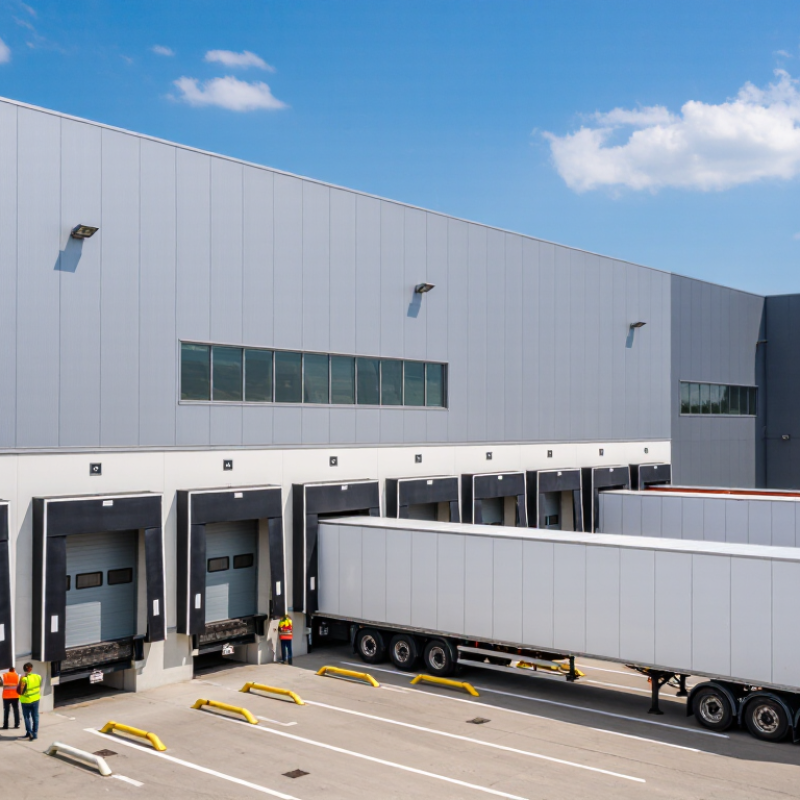
China Top 10 Commercial Overhead Doors Suppliers?

Commercial Overhead Doors: Types, Standards, and 2024 Market Data

China Top 10 Commercial Overhead Doors Suppliers?

Commercial overhead doors now serve warehouses, loading bays, workshops, and fire-control zones. Common types include sectional doors, rolling steel doors, high-speed doors, and insulated models. Each suits different traffic, temperature, and security demands.

Market figures vary by research method. Grand View Research estimated the global industrial doors market at about USD 5.4 billion in 2023, with growth continuing through 2030. Another 2024 industry report projected a similar mid-single-digit annual growth rate. These figures suggest steady demand, but they should not replace project-level cost checks. Installation, maintenance, controls, and insulation can change the final price sharply.

Standards matter more than catalog photos. Buyers should check ANSI/DASMA 102 for sectional door performance, UL 325 for monitored safety devices, and EN 13241 for applicable European markets. Fire-rated doors need tested assemblies, documented ratings, and compatible hardware. A reliable Chinese supplier should provide wind-load calculations, cycle-life testing, material thickness, and spare-parts support. Ask for test reports, not vague certificates. Small gaps around the seal can reduce energy performance. That detail is often overlooked. Supplier rankings also need caution: export volume does not always prove engineering quality, installation skill, or after-sales reliability.

Ranking Methodology: Market Share, Capacity, Certifications, and Export Data

China Top 10 Commercial Overhead Doors Suppliers?

A credible ranking should combine several measurable signals. Market share reveals commercial reach, but private suppliers rarely publish audited figures. Therefore, company revenue, verified project volume, and repeat orders should be cross-checked. Freedonia’s industrial doors research identifies commercial construction, logistics, and manufacturing as major demand sectors. Grand View Research also reports steady growth in the global commercial doors market. These findings support sector relevance, not a precise supplier ranking.

Production capacity needs physical evidence. Review factory area, forming lines, welding stations, testing equipment, and documented annual output. Export data adds another useful layer. UN Comtrade records can indicate international shipment activity through relevant HS codes, although these codes may include several door products. That is a limitation. It should not be ignored. Certifications also matter, including ISO 9001 quality systems, CE-related conformity where applicable, and tested wind, fire, or safety performance. Certificates must match the actual factory and product range.

Tips: Give market share 30% of the score, capacity 25%, certifications 20%, and export evidence 25%. Verify shipment records against customs descriptions and destination markets. Ask for recent audit reports, not only scanned certificates. A supplier with impressive machinery may still have weak installation support. Site experience matters. Rankings remain imperfect when financial data is private, so publish scoring dates, evidence links, and uncertainty notes. This approach is slower, but more reliable for commercial buyers.

China’s Top 10 Commercial Overhead Door Suppliers: Company Profiles

China’s Top 10 Commercial Overhead Door Suppliers: Company Profiles

China’s top ten commercial overhead door suppliers generally serve warehouses, factories, logistics hubs, and retail buildings. Their profiles differ in manufacturing scale, engineering depth, and export experience. Some focus on insulated sectional doors, while others specialize in high-speed fabric doors, fire-rated systems, or heavy-duty rolling doors.

The first supplier profile reflects a large factory with automated panel production and strict dimensional checks. The second focuses on customized doors for cold-storage facilities. The third develops high-speed doors for busy loading bays. Another supplier builds fire-rated systems and documents testing carefully. The fifth profile represents a specialist in dock equipment and vehicle access solutions. The sixth combines aluminum frames with insulated panels for cleaner commercial entrances. The seventh serves smaller projects with flexible production and shorter design cycles. The eighth emphasizes powder coating, corrosion resistance, and coastal applications. The ninth provides smart controls, safety sensors, and access integration. The tenth focuses on export packaging, installation guidance, and replacement parts.

Real purchasing experience shows that attractive catalogs can hide practical weaknesses. A door may look strong, yet its hinges, rollers, seals, or control panel may need closer review. Ask for load ratings, cycle-test records, material specifications, and project references. Check whether replacement parts remain available after installation. Factory audits also reveal useful details, including welding quality, storage conditions, and final inspection routines. No supplier profile is perfect. Buyers should compare evidence, not promises. That discipline reduces delays and helps match each door system with its working environment.

Product Comparison: R-Values, Wind Ratings, Cycle Life, and Safety Standards

Choosing among China’s top commercial overhead door suppliers requires more than comparing prices. R-value measures thermal resistance, but test methods matter. Current commercial specifications commonly show insulated sectional doors near R-10 to R-20, while high-speed doors often prioritize opening speed over insulation. ASHRAE Handbook—Fundamentals warns that U-value and air leakage should be assessed together. A high R-value alone can mislead.

Wind performance deserves closer attention. ANSI/DASMA 102 and ASCE 7 connect door design with site-specific wind pressure, opening size, and building exposure. Ratings may range from roughly 20 to 50 psf in commercial specifications, but the number needs engineering verification. Cycle life also varies widely. Standard-duty systems may list 10,000 cycles, while heavy-duty models can exceed 100,000. These are usually manufacturer ratings, not independent field results. That distinction matters.

Safety should be non-negotiable. UL 325 addresses entrapment protection for door operators, while ANSI/DASMA guidance supports installation and testing practices. Ask for documented test reports, not only catalog claims. Inspect photo-eyes, edge sensors, emergency release systems, and spring containment. My practical concern is simple: suppliers may present impressive figures without matching maintenance schedules. Door selection remains imperfect when local wind data, traffic frequency, temperature, and installer competence are ignored.

Supplier Selection Guide: Pricing, Lead Times, Warranties, and Global Service

China’s commercial overhead door market includes factories, exporters, and project-focused suppliers. A useful shortlist should compare evidence, not impressive catalog images. Ask for recent installation records, production capacity, test reports, and references from similar climates. A supplier serving cold warehouses may not understand coastal corrosion.

Pricing deserves careful inspection. Request an itemized quotation covering panels, tracks, motors, controls, packing, and delivery. The lowest offer can hide thinner steel, basic seals, or costly replacement parts. Confirm whether the price is based on EXW, FOB, or delivered terms. Calculate the full landed cost.

Lead times should be written clearly. Ask about drawing approval, production, inspection, and shipping separately. Customized or high-cycle doors may require longer schedules. Require progress photographs and a named project contact. Small delays become expensive when installers wait on site. Warranty language needs practical detail. Check coverage periods, excluded wear parts, response times, and freight responsibility. Global service should include remote troubleshooting, manuals, wiring diagrams, and trained local technicians where possible. Verify communication after payment, not only before it. That is often overlooked. Request a sample unit or video inspection before bulk production. It adds time, but prevents uncomfortable surprises. Supplier rankings change quickly, so audit them before every major purchase.

China Top 10 Commercial Overhead Doors Suppliers? — Supplier Selection Guide: Pricing, Lead Times, Warranties, and Global Service

Benchmark Supplier Profile Typical Product Focus Indicative FOB Price Range per Door Typical Production Lead Time Standard Warranty Practice Export Packaging Customization Capability Common Compliance Documentation After-Sales and Global Service Best-Fit Buyer Selection Rating
Supplier Profile 01 Insulated sectional overhead doors for warehouses and logistics facilities US$650–1,250 20–35 working days 12 months on hardware and manufacturing defects; shorter coverage may apply to wear parts Reinforced carton and steel-frame options Panel thickness, window layout, track configuration, colors, and dimensions Technical drawings, material list, installation manual, and test documentation when available Remote installation support; spare-parts supply generally available by shipment Standard distribution centers and industrial warehouses 4.5 / 5
Supplier Profile 02 High-speed fabric and rigid high-speed doors for internal traffic control US$1,800–4,800 25–45 working days 12 months standard; motor and control-system terms should be confirmed separately Moisture-resistant export packing Opening size, wind resistance, curtain material, safety sensors, and control logic Electrical diagrams, control parameters, operating instructions, and conformity files where applicable Remote commissioning and troubleshooting; local technician availability depends on market Factories, cold-chain facilities, and high-cycle openings 4.3 / 5
Supplier Profile 03 Fire-rated industrial doors and smoke-control door assemblies US$2,500–7,500 35–60 working days 12 months subject to approved installation and scheduled maintenance Fire-protection components separately protected Fire rating, door size, release mechanism, glazing, sensors, and control integration Fire-test reports and certificates must be matched to the exact construction and target market Engineering review is commonly required before production; certification support varies Industrial projects requiring documented fire performance 4.4 / 5
Supplier Profile 04 Cold-storage sectional doors and insulated freezer-room doors US$1,200–3,200 25–45 working days 12 months; sealing performance depends on correct installation and operating conditions Insulated and condensation-protected packing Panel insulation, heated frames, door hardware, windows, and temperature-range requirements Insulation specifications, installation details, electrical documentation, and material declarations Remote technical support; replacement seals and hardware are normally orderable Food processing, refrigerated logistics, and pharmaceutical storage 4.2 / 5
Supplier Profile 05 Heavy-duty sectional doors for workshops, hangars, and manufacturing plants US$1,000–2,800 30–50 working days 12–24 months depending on contract, excluding consumable components Steel skid or plywood crate for large assemblies High-cycle springs, reinforced tracks, vision panels, wind-load design, and automation Load calculations, drawings, maintenance schedules, and motor documentation Strong remote engineering support; field service commonly arranged through local contractors Automotive workshops, aviation facilities, and heavy industry 4.6 / 5
Supplier Profile 06 Dock equipment packages including dock shelters, levelers, and vehicle restraints US$1,500–5,500 per package 30–55 working days 12 months for equipment; hydraulic and electrical components require separate confirmation Componentized packing for container loading Platform size, lip length, loading capacity, dock height, and control-panel options Load ratings, hydraulic diagrams, installation manuals, and safety documentation Remote installation guidance; replacement hydraulic and electrical parts may be supplied Distribution centers and high-volume loading bays 4.1 / 5
Supplier Profile 07 Aluminum or glazed sectional doors for commercial and architectural applications US$900–2,600 25–45 working days 12 months; finish and glazing warranties should be stated separately Protective film, corner guards, and export cartons Glazing type, frame finish, panel design, vision area, and architectural colors Product drawings, glazing specifications, finish information, and installation instructions Design-stage support and remote troubleshooting; project supervision is usually extra Retail, commercial garages, showrooms, and public buildings 4.0 / 5
Supplier Profile 08 Rolling steel and security overhead doors for commercial premises US$450–1,600 20–35 working days 12 months for manufacturing defects; spring, lock, and finish coverage should be clarified Roll-protected curtain and moisture barrier Slat profile, security level, guide rails, motors, controls, and opening dimensions Material specifications, motor manuals, wiring diagrams, and available test reports Basic remote support and spare-parts ordering; local installation is commonly buyer-managed Retail units, storage facilities, and small industrial buildings 3.9 / 5
Supplier Profile 09 Motorized commercial doors with integrated access control and safety systems US$1,300–4,200 30–50 working days 12 months for the door assembly; electronic components may have separate terms Anti-static and impact-resistant electronic packing Voltage, control protocols, access readers, safety edges, radar sensors, and remote monitoring Wiring diagrams, software information, motor data, safety instructions, and commissioning records Remote software and electrical support; integration responsibility must be defined in the contract Smart factories, controlled-access sites, and automated logistics operations 4.2 / 5
Supplier Profile 10 OEM and private-label commercial overhead door programs US$550–3,800 35–65 working days, including artwork or engineering approval 12 months standard; extended terms may be negotiated for repeat programs Buyer-specific labeling and pallet configuration Product labels, manuals, packaging, finishes, component sourcing, and product revisions Technical files, private-label documents, inspection records, and market-specific paperwork Dedicated export coordinator and engineering contact; service level depends on order volume Importers, distributors, and regional building-material brands 4.4 / 5

Note: The figures are non-brand-specific China export market benchmarks for preliminary supplier screening. Actual quotations depend on door dimensions, panel or curtain specification, motor package, certification requirements, Incoterms, order quantity, packaging, and destination. Confirm final pricing, lead time, warranty exclusions, testing documents, spare-parts availability, and local service arrangements in the purchase contract.

Enter search term below