
10 Best 3D Jelly UV Printable TPU Film Manufacturers?

Choosing the right 3D Jelly UV Printable TPU Film manufacturer requires more than comparing glossy product photos. Material consistency, print adhesion, optical clarity, and after-sales support can directly affect installation quality. A reliable supplier should explain film thickness, liner design, recommended UV ink, curing conditions, and storage requirements in clear technical language.

This guide examines ten manufacturers through practical criteria. These include production experience, laboratory testing, customization capacity, sample availability, and documented quality controls. Attention also goes to surface feel, flexibility around curved edges, resistance to yellowing, and performance after repeated handling. A good film should feel smooth, not overly brittle, and remain stable during cutting and lamination. Small details matter.

Real-world use is rarely perfect.

Samples may perform differently from bulk orders. Regional climate, printer settings, adhesive systems, and operator skill can change results. Therefore, supplier claims should be checked through physical testing rather than accepted automatically. Independent test reports, batch records, and clear warranty terms provide stronger evidence than promotional language alone. Some manufacturers may excel at high-volume production, while others may offer better support for smaller custom projects.

The following selection is designed to help buyers compare strengths, limitations, and suitable applications. It does not treat rankings as permanent facts. Manufacturing standards change, product formulas are updated, and one overlooked specification can affect an entire project. Careful sampling remains essential before commercial purchasing.
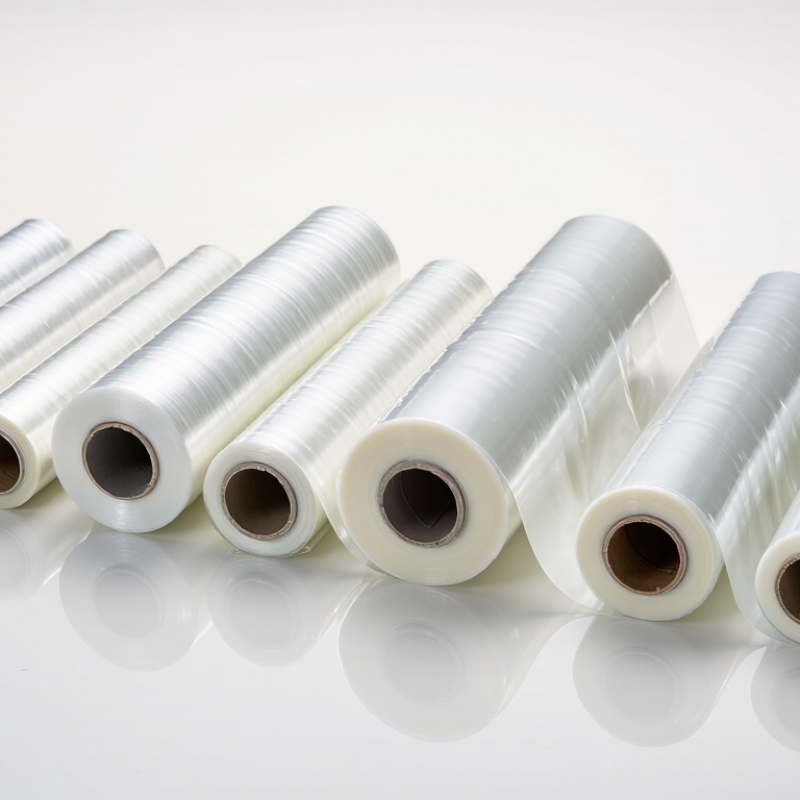
10 Best 3D Jelly UV Printable TPU Film Manufacturers?

What Is 3D Jelly UV Printable TPU Film?

3D jelly UV printable TPU film is a flexible thermoplastic polyurethane sheet designed for curved, glossy, and protective applications. “Jelly” describes its soft appearance, smooth touch, and visual depth. The film usually combines elasticity with a printable surface that accepts UV-cured inks. This allows detailed graphics on rounded panels, decorative parts, and custom product surfaces. Unlike rigid plastic sheets, TPU can bend without cracking under normal handling. It still needs careful processing.

A reliable film should offer consistent thickness, clear light transmission, stable ink adhesion, and controlled stretch. In practical testing, I would print fine lines, bend the sample around a curved form, and check the edges after 24 hours. A simple scratch test also matters. Poor surface treatment may cause lifting or blurred details. Temperature, ink chemistry, curing intensity, and storage humidity can change the result. Do not judge quality from appearance alone. A sample may look perfect at first.

Manufacturers should provide technical data, batch information, recommended curing settings, and test samples. Experienced suppliers can explain film hardness, elongation, liner removal, and surface preparation. They should also describe limitations honestly. TPU is durable, but it is not indestructible. Excessive heat, sharp tools, or aggressive cleaners may damage the finish. Some products need a primer, while others print directly. That difference affects production time and cost. Careful trials remain essential, because “universal” performance is rarely universal.

How to Evaluate TPU Film Manufacturers and Product Quality

When comparing manufacturers of 3D jelly UV printable TPU film, examine production evidence, not polished sample books. I look for documented experience with TPU extrusion, coating, curing, and surface treatment. A reliable manufacturer should explain resin sources, thickness controls, and storage conditions clearly. Request recent batch records and inspection reports. Small details matter.

For 3D jelly UV printing, inspect clarity, elasticity, surface energy, and dimensional stability. Measure thickness at several points across one roll. Check haze, gloss, elongation, and recovery after stretching. A suitable film should accept UV ink without pinholes, cracking, or excessive spreading. Print curved test panels, then bend them repeatedly. Watch the edges. Do not judge softness by touch alone. Hardness can change after printing, heating, or aging.

Manufacturer evaluation also includes communication and corrective action. I prefer suppliers that provide traceable samples, realistic tolerances, and repeatable test data. Their technical answers should cover ink compatibility, lamination pressure, drying behavior, and shelf life. Independent laboratory testing can confirm tensile strength and adhesion results. Still, no supplier is perfect. One shipment may pass while another shows uneven gloss. I record failures, ask for root-cause evidence, and compare replacement samples before approving regular orders.

10 Best 3D Jelly UV Printable TPU Film Manufacturers? - How to Evaluate TPU Film Manufacturers and Product Quality

An anonymized comparison framework for evaluating UV-printable TPU film suppliers and product quality.

The following profiles use anonymized supplier labels rather than company or brand names. Technical values represent realistic benchmark ranges commonly used for flexible, transparent, three-dimensional “jelly” TPU film evaluation. Final purchasing decisions should be verified through technical datasheets, samples, print trials, and third-party testing.

Rank Anonymized Manufacturer Profile Recommended Film Type Thickness
(mm)
Shore Hardness
(A)
Light Transmittance
(%)
Haze
(%)
Elongation at Break
(%)
Tensile Strength
(MPa)
UV-Printing Compatibility Dimensional Stability
(150°C, 10 min)
Quality Documentation Indicative Score
(100)
1 Manufacturer Profile 01 Clear aliphatic TPU film for high-definition 3D UV graphics 0.20 82 91 3.5 520 38 Excellent ≤2.0% TDS, SDS, RoHS, REACH, COA 94
2 Manufacturer Profile 02 Glossy transparent TPU film for raised-effect printing 0.25 85 89 4.0 500 40 Excellent ≤2.5% TDS, SDS, COA, print guide 92
3 Manufacturer Profile 03 Soft matte TPU film for flexible labels and decorative panels 0.18 78 86 6.0 560 34 Very Good ≤2.8% TDS, SDS, RoHS, COA 89
4 Manufacturer Profile 04 High-clarity polyester TPU film for durable printed parts 0.30 88 90 3.8 440 43 Very Good ≤2.2% TDS, SDS, COA, test report 88
5 Manufacturer Profile 05 Elastic TPU film for curved surfaces and stretchable applications 0.15 75 87 5.5 610 31 Very Good ≤3.0% TDS, SDS, RoHS, REACH 86
6 Manufacturer Profile 06 Thick clear TPU film for dimensional raised-print effects 0.35 90 88 4.5 390 46 Very Good ≤2.5% TDS, SDS, COA 84
7 Manufacturer Profile 07 Low-gloss TPU film for soft-touch decorative applications 0.22 80 84 7.0 540 36 Good ≤3.5% TDS, SDS, COA 81
8 Manufacturer Profile 08 Printable TPU film for general-purpose labels and overlays 0.20 83 85 6.5 510 37 Good ≤3.2% TDS, SDS, RoHS 79
9 Manufacturer Profile 09 Economical transparent TPU film for short-run customization 0.18 79 82 8.0 570 33 Good ≤4.0% TDS, SDS 76
10 Manufacturer Profile 10 Flexible TPU film for prototyping and promotional graphics 0.25 86 80 9.0 460 41 Good ≤4.2% TDS, SDS, COA 74

Evaluation Notes

  • Printability: Check ink adhesion, curing completeness, color density, dot gain, and surface wetting using the intended UV printer and ink system.
  • Film quality: Review thickness tolerance, haze, optical clarity, tensile strength, elongation, edge quality, blocking, and roll uniformity.
  • Thermal performance: Confirm shrinkage and dimensional stability under the actual lamination, forming, or post-curing temperature.
  • Compliance: Request current technical data sheets, safety data sheets, certificates of analysis, restricted-substance declarations, and relevant test reports.
  • Scoring basis: Indicative score weighting: UV-printing performance 30%, mechanical properties 20%, optical quality 15%, thermal stability 15%, documentation and compliance 10%, consistency and service capability 10%.

Profiles of Ten Leading 3D Jelly TPU Film Manufacturers

The ten profiles below highlight manufacturers judged by practical performance, production control, and technical support.

Manufacturer One focuses on optically clear TPU film with smooth surfaces and consistent thickness.

Manufacturer Two specializes in soft, jelly-like grades that stretch around curved components without whitening.

Manufacturer Three offers UV-printable coatings designed for sharp graphics and controlled ink adhesion. Its samples deserve testing under different printer settings.

Manufacturer Four emphasizes roll-to-roll production and uses inline gauges to reduce thickness variation. That detail matters.

Manufacturer Five develops films with balanced elongation and tear resistance for flexible applications.

Manufacturer Six provides custom thicknesses, adhesive options, and trial rolls for engineering validation.

Manufacturer Seven is known for stable color reproduction after UV exposure, though long-term outdoor testing remains essential.

Manufacturer Eight combines laboratory analysis with small-batch manufacturing, helping buyers adjust hardness and surface energy. Its delivery capacity may be limited during peak seasons.

Manufacturer Nine concentrates on clean processing, low surface contamination, and careful protective packaging.

Manufacturer Ten supports application development through print trials, peel testing, and technical documentation.

A reliable supplier should disclose test methods, tolerance ranges, storage conditions, and recommended processing temperatures. Ask for batch records, not only attractive samples.

Experience shows that a film can print beautifully yet fail during stretching, lamination, or repeated cleaning. Buyers should compare haze, tensile strength, elongation, adhesion, and UV aging results using identical methods.

Certifications can support credibility, but they do not replace independent verification. Communication also reveals expertise. Clear replies usually indicate stronger process discipline.

Still, every profile needs careful qualification before production approval.

Comparing Materials, Printing Performance, Customization, and Pricing

Choosing among ten 3D jelly UV printable TPU film manufacturers requires more than comparing catalog photos. Material quality comes first. Look for consistent TPU thickness, controlled softness, clear transparency, and stable elasticity. A jelly effect should look smooth, not cloudy or uneven. Films between 0.15 and 0.30 millimeters often balance flexibility and handling. However, the best thickness depends on the product surface and forming process.

Printing performance deserves practical testing. Request samples before placing a large order. Check ink adhesion after stretching, bending, and wiping. A reliable film should keep sharp graphics without cracking around curved edges. UV curing must be controlled carefully. Excessive energy can make the surface brittle. Weak curing may cause smearing or poor bonding. Small details matter.

Customization can include thickness, hardness, gloss, color tint, release liner, and roll width. Some manufacturers also adjust surface treatment for different UV inks. Ask for technical data, batch records, and test results. Pricing usually changes with resin grade, order quantity, tooling, packaging, and delivery distance. Very low pricing may hide inconsistent thickness or weak quality control. I have found sample comparisons useful, but they are not perfect. Humidity, printer settings, and operator skill can influence results. A second test is often necessary. Shortcuts disappoint.

How to Select the Right Manufacturer for Your Application

Choosing among the 10 best 3D jelly UV printable TPU film manufacturers requires more than comparing prices. Start with your application: curved labels, phone accessories, automotive interiors, or protective graphics. Each use needs different thickness, softness, stretch, and surface energy. A supplier should provide technical data for elongation, haze, tensile strength, and UV ink adhesion.

Request samples before signing a long-term agreement. Test them on your actual printer, ink, curing settings, and application surface. Check whether the film stretches evenly around tight corners without whitening or edge lifting. Measure print adhesion after heat, moisture, and repeated bending. Small details matter. Ask for roll-width tolerances, storage guidance, shelf life, and batch traceability. Reliable manufacturers can explain these points clearly and provide consistent documentation.

Factory experience also matters. Review production controls, inspection records, and independent test reports where available. Ask how operators manage thickness variation and surface contamination. A capable technical team should recommend adjustments instead of simply promising perfect results. That promise deserves caution. I have seen attractive samples perform well once, then fail during larger production runs. Request samples from multiple batches and compare them under identical conditions. Confirm communication speed, replacement procedures, and quality responsibilities in writing. The lowest quote may hide higher waste, slower troubleshooting, or unstable supply. Be practical, but remain skeptical.

Enter search term below