
Top 10 Types of Flex Neon Strip for Global Buyers?

Choosing the right Flex Neon Strip now requires more than comparing brightness or color. Global buyers must evaluate bending direction, silicone or PVC construction, voltage, control method, waterproofing, and installation conditions. A strip glowing beautifully in a showroom may fail on a hot façade, under constant sunlight, or beside salty coastal air. Small details matter.

The International Energy Agency has reported that lighting uses roughly 15% of global electricity, making efficient LED solutions commercially important. The U.S. Department of Energy also states that LED products can use at least 75% less energy and last up to 25 times longer than incandescent lighting. These figures do not guarantee every neon product performs equally. Drivers, heat dissipation, dimming systems, and installation quality still influence real results.

This guide examines ten practical types of Flex Neon Strip used by international buyers, including horizontal-bend, vertical-bend, RGB, RGBW, addressable, 12V, 24V, silicone, and outdoor-rated designs. The categories overlap. That is worth admitting. A 24V silicone strip may also be RGBW and addressable, so product names can confuse purchasing teams. Buyers should compare measurable specifications instead of relying on attractive photographs.

Relevant standards, including IEC 60598, IEC 62031, and applicable UL requirements, can help verify electrical and safety claims. IP ratings should also match the environment, not merely appear on a datasheet. This overview combines market awareness, engineering considerations, and practical sourcing experience. It is not a perfect classification, but it offers a clearer starting point for selecting reliable Flex Neon Strip products across commercial, architectural, retail, and hospitality projects.
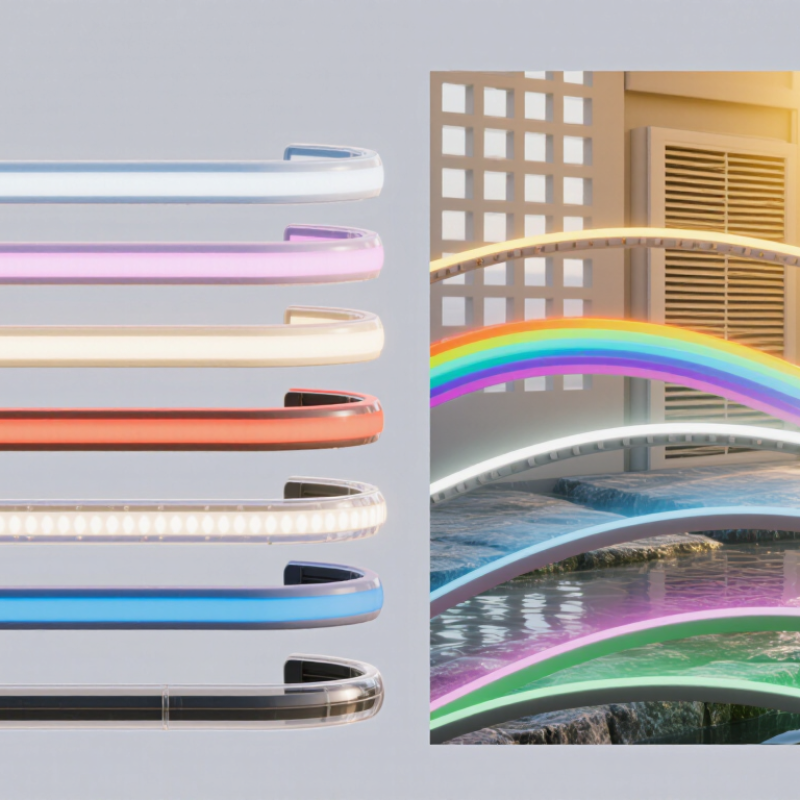
Top 10 Types of Flex Neon Strip for Global Buyers?

What Is Flex Neon Strip and How Is It Classified?

Flex neon strip is a flexible LED lighting product with a shaped silicone or PVC jacket. It produces a continuous glow, unlike exposed LED tape with visible light points. Its housing protects the circuit and softens harsh shadows. Common forms include top-bend, side-bend, round, square, and flat profiles. Each shape suits a different installation path.

Global buyers usually classify flex neon strip by bend direction, voltage, color, control method, and protection rating. Single-color versions support simple outlines and signage. RGB models create changing colors through a compatible controller. RGBW versions add a dedicated white channel for cleaner illumination. Low-voltage models often use 12V or 24V systems. Higher-voltage versions can cover longer runs with fewer power feeds. Check local electrical requirements before selecting either type.

IP ratings describe resistance to dust and water, not overall product quality. IP65 may suit covered interiors, while IP67 can support temporary outdoor exposure. It still needs correct sealing at cut ends and connectors. Measure the route before ordering. Small errors cause visible bends or unnecessary joints. In practical sampling, color consistency may vary between batches, even when specifications look identical. Request photometric data, bending limits, operating temperature, and a sample test. A brighter strip is not always better. Excessive brightness can reveal uneven surfaces and create uncomfortable glare. Installation experience often changes the best choice.

Top 10 Flex Neon Strip Types for Global Buyers

Top 10 Flex Neon Strip Types for Global Buyers

Global buyers usually compare more than brightness. They examine bending direction, weather resistance, control options, and installation conditions. The ten common types include top-bend, side-bend, mini-profile, high-brightness, RGB, RGBW, tunable white, addressable pixel, waterproof, and low-voltage flex neon strips. Each design serves a different project need.

Top-bend strips suit letters, frames, and smooth horizontal curves. Side-bend versions follow vertical outlines and narrow architectural edges. Mini-profile strips fit cabinets and compact signs. High-brightness models help outdoor displays, but they may create stronger heat. RGB strips offer color changes, while RGBW adds cleaner white light. Tunable white supports adjustable warmth for retail and hospitality spaces.

Addressable pixel strips create chasing effects and animated patterns. They require compatible controllers and careful wiring. Waterproof strips are useful around damp areas, yet their protection level must match the installation site. Low-voltage strips can simplify safer system design, but voltage drop still needs testing on long runs. In practical inspection, I check the silicone surface, connector seal, light consistency, and bending radius. A bright sample can mislead. Some strips look excellent in a small display but show uneven light after several meters. Buyers should request photometric data, IP test information, operating temperature ranges, and regional electrical documentation. I would also test a sample under real mounting conditions, because adhesive strength and heat management are easy to underestimate.

Top 10 Types of Flex Neon Strip for Global Buyers

A practical comparison of common flexible neon strip configurations, specifications, and suitable applications for international purchasing.

Rank Flex Neon Strip Type Typical Cross-Section Light-Emitting Direction Common Input Voltage Typical IP Rating Typical CCT / Color Options Common Cut Interval Best-Suited Applications
1 Top-Bend Neon Strip Approx. 6 × 12 mm to 10 × 20 mm Front-facing 12 V or 24 V DC IP65–IP68 2700–6500 K, RGB, RGBW, single colors Usually 25–100 mm, depending on PCB design Sign lettering, channel letters, storefront outlines, indoor feature lighting
2 Side-Bend Neon Strip Approx. 6 × 12 mm to 10 × 20 mm Side-facing 12 V or 24 V DC IP65–IP68 2700–6500 K, RGB, RGBW, single colors Usually 25–100 mm Curved signs, circular displays, edge outlines, architectural contours
3 360-Degree Round Neon Strip Approx. 13–18 mm diameter Omnidirectional 12 V or 24 V DC IP65–IP67 Single colors, tunable white, RGB, RGBW Usually 25–100 mm Suspended lighting, cylindrical signs, decorative columns, exposed installations
4 Mini Neon Strip Approx. 4 × 8 mm to 6 × 10 mm Top-facing or side-facing 5 V, 12 V, or 24 V DC IP54–IP67 2700–6500 K, single colors, RGB Typically 10–50 mm Compact signage, display cabinets, furniture details, narrow grooves
5 High-Brightness Neon Strip Approx. 8 × 16 mm to 12 × 20 mm Front-facing or side-facing 24 V DC is common; 12 V DC also available IP65–IP68 2700–6500 K, RGBW, saturated single colors Usually 25–100 mm Outdoor façades, large signs, commercial exteriors, high-visibility outlines
6 Addressable Digital Neon Strip Approx. 8 × 16 mm to 12 × 20 mm Front-facing, side-facing, or 360-degree 5 V, 12 V, or 24 V DC IP65–IP68 Individually controlled RGB or RGBW pixels Pixel-based; commonly 25–100 mm per control segment Animated façades, stage effects, media displays, interactive installations
7 Tunable White Neon Strip Approx. 8 × 16 mm to 10 × 20 mm Front-facing or side-facing 12 V or 24 V DC IP65–IP67 Adjustable white, commonly about 2200–6500 K Usually 25–100 mm Hospitality, retail, residential interiors, circadian and mood lighting
8 RGBW Neon Strip Approx. 8 × 16 mm to 12 × 20 mm Front-facing or side-facing 12 V or 24 V DC IP65–IP68 RGB colors plus a dedicated white channel, commonly 2700–6500 K Usually 25–100 mm Retail displays, entertainment venues, event décor, flexible architectural lighting
9 Low-Voltage COB Neon Strip Approx. 6 × 10 mm to 10 × 20 mm Top-facing or side-facing 5 V, 12 V, or 24 V DC IP54–IP67 2700–6500 K, single colors, selected RGB versions Often 25–50 mm Dot-free linear lighting, premium interiors, display and cabinet illumination
10 High-Temperature Silicone Neon Strip Approx. 8 × 16 mm to 12 × 20 mm Front-facing, side-facing, or round 12 V or 24 V DC IP65–IP68 2700–6500 K, RGB, RGBW, single colors Usually 25–100 mm Outdoor architectural projects, hot climates, industrial areas, long operating cycles
Specifications are representative industry ranges. Actual dimensions, power consumption, bending radius, cut interval, color accuracy, operating temperature, and certification status vary by construction and project requirements. Confirm the technical datasheet before purchase.

Key Specifications and Performance Differences

Top 10 Types of Flex Neon Strip for Global Buyers

Key Specifications and Performance Differences

The ten common formats include single-color, tunable white, RGB, RGBW, pixel-controlled, top-bend, side-bend, ultra-slim, high-output, and outdoor-rated neon strips. Single-color models offer stable brightness and simple wiring. Tunable white versions adjust from warm to cool tones, often between 2700K and 6500K. RGB creates color effects, while RGBW adds a dedicated white channel for better illumination. Pixel-controlled strips provide addressable sections, but they require compatible controllers and careful data wiring.

Check the technical sheet closely. Typical working voltages are 12V or 24V, and 24V systems usually reduce voltage drop across longer runs. Brightness depends on LED density, power consumption, and diffuser efficiency, not wattage alone. A high-output strip may exceed 15W per meter and need aluminum mounting channels for heat control. Color quality also matters; CRI above 90 is preferable for retail, hospitality, and residential interiors. Cut intervals can range from 25mm to 167mm, affecting layout accuracy.

Bend direction is often overlooked. Top-bend products suit curved lettering, while side-bend types follow horizontal contours. Outdoor versions should use sealed construction, suitable IP protection, and stable end caps. Silicone generally handles weather better than some lower-cost compounds, but material quality varies. Real installations rarely match catalog conditions. Long cables, tight corners, and poor ventilation can reduce performance. I would test a sample under the intended temperature and bending radius before ordering large quantities. Even then, color consistency may need rechecking after extended operation.

Top 10 Types of Flex Neon Strip for Global Buyers

Typical power consumption and minimum bend radius by flexible neon strip type.

Higher-output and RGBW products generally require more power per meter, while mini and 3D-bend designs offer a smaller bending radius. Outdoor silicone products commonly use IP65 to IP68 protection, but the final rating depends on construction, connectors, and installation quality. Values shown are typical market specifications and may vary by LED density, voltage, color temperature, and optical design.

How to Match Each Type With Its Intended Application

Top 10 Types of Flex Neon Strip for Global Buyers

How to Match Each Type With Its Intended Application

Choosing flex neon begins with the installation, not the color chart. Round silicone neon creates smooth outlines for signs, arches, and circular frames. Square profiles suit sharp lettering, retail shelves, and architectural borders. Flat profiles work well beneath cabinets, counters, and narrow display edges. They sit closer to the mounting surface.

Top-emitting neon directs light forward, making it useful for visible lettering and wall graphics. Side-emitting neon bends light toward the viewer, especially around curves and shallow channels. RGB neon fits event spaces and entertainment areas that need changing colors. RGBW versions add cleaner white light for restaurants, hospitality projects, and mixed lighting scenes. Tunable white neon supports adjustable color temperature in offices and residential interiors. High-density neon reduces visible dark gaps in close-up installations. It is valuable for premium signage.

Water-resistant outdoor neon belongs around façades, pathways, and sheltered landscape features. Check the sealing method, connector protection, and drainage conditions. “Waterproof” alone is not enough. I have seen attractive samples fail when installers ignored the cable entry points. That detail deserves more attention.

Match brightness to viewing distance, then confirm bending direction and minimum radius. A flexible strip can still crease under pressure. Also verify voltage drop across long runs, because distant sections may appear weaker. Some specifications look impressive on paper, but real walls are uneven. A small sample test is wiser than a large blind order.

International Buying, Safety, and Installation Considerations

Top 10 Types of Flex Neon Strip for Global Buyers?

International Buying, Safety, and Installation Considerations

The ten common types include silicone round, square, flat, side-bend, top-bend, mini, high-output, RGB, RGBW, and addressable neon strips. Each profile suits a different visual result. Side-bend strips follow curved signs, while top-bend models create clean ceiling lines. Confirm the bending direction before ordering. A beautiful sample can still be unusable on site.

Global buyers should check voltage, wattage, color consistency, and connector compatibility. Ask for test reports covering electrical safety, flame behavior, and ingress protection. Requirements vary by destination, so one certificate may not satisfy every market.

IP ratings help resist dust and water, but they do not automatically permit permanent underwater use. Confirm the test standard and actual application. Short samples can hide voltage drop, uneven brightness, or excessive heat.

Installation needs careful measurement and gentle handling. Follow the marked cutting points, use sealed end caps, and match the power supply with suitable reserve capacity. Keep aluminum channels straight and provide ventilation around high-output strips.

Never force a tight bend; the silicone may look flexible while internal components suffer. A common field mistake is ignoring the minimum bend radius.

I would also inspect every batch before shipment, because color and extrusion quality can change between production runs. The practical lesson is not glamorous: safer installation often begins with better purchasing questions.

Article Source:

Enter search term below