
Top 10 Fluorocarbon Coated Aluminum Window Manufacturers

Selecting a Fluorocarbon Coated Aluminum Window is about more than color or price. It means weighing coating durability, frame design, fabrication quality, thermal performance, and documented testing. The stakes are broad. The United Nations Environment Programme and Global Alliance for Buildings and Construction reported that buildings and construction accounted for 34% of global energy demand and 37% of energy- and process-related carbon dioxide emissions in 2022. Their 2023 Global Status Report makes building-product choices part of a larger efficiency conversation.

Coating claims deserve close inspection. AAMA 2605, published by the Fenestration and Glazing Industry Alliance, sets performance requirements for high-performance organic coatings on architectural aluminum. It offers a useful benchmark, but a standard alone does not prove that every finished window performs equally. Ask manufacturers for current test documentation, coating-system details, warranty terms, and project references. Check the actual assembly, too: glass, seals, drainage, and installation can matter as much as the finish.

This guide introduces ten manufacturers and compares the information buyers can verify, rather than treating a ranked list as a guarantee. Look for clear specifications, traceable quality controls, and examples suited to the intended climate and building type. A showroom sample may look flawless. Years of sun, rain, and handling are the harder test. And the evidence is not always easy to compare. That deserves a second look.
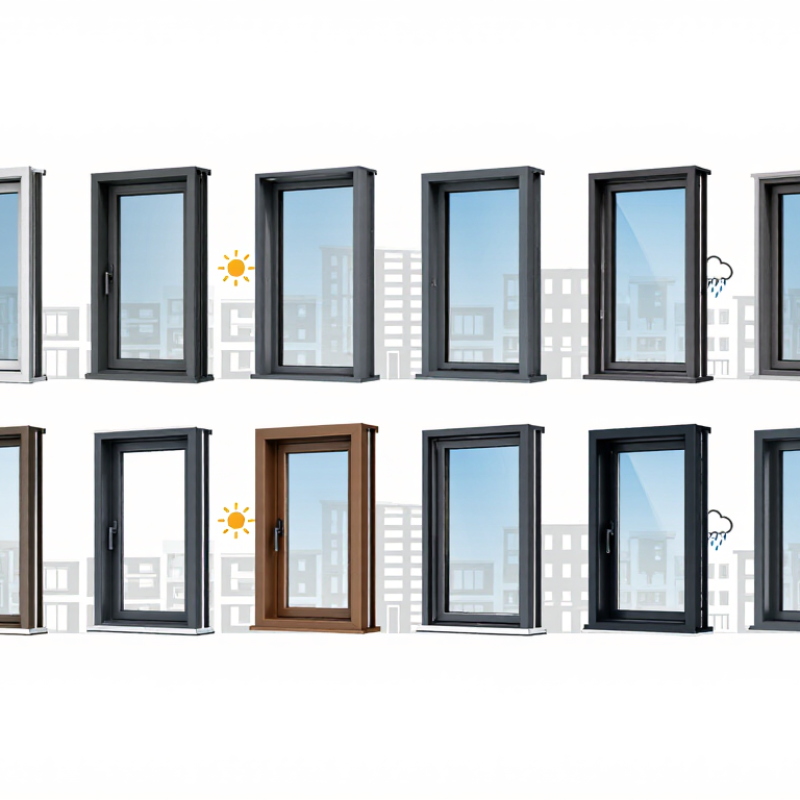
Top 10 Fluorocarbon Coated Aluminum Window Manufacturers

What Fluorocarbon-Coated Aluminum Windows Are

Fluorocarbon-coated aluminum windows use aluminum frames finished with a durable resin-based coating, often formulated with PVDF. Before coating, the metal is cleaned and prepared so the finish can bond evenly. After application and curing, the surface forms a thin, colored layer across the frame. It is not a separate protective shell. That distinction matters. Sunlight, rain, and airborne grime meet the coating first, rather than bare aluminum. Quality varies with resin content, pretreatment, coating thickness, and factory control. Those details are worth checking in product specifications.

The finish can help resist fading, chalking, and weathering while keeping slim frames visually consistent. A dark frame may feel warm under direct sun; color and orientation affect surface temperature. Cleaning usually needs mild detergent, water, and a soft cloth. Abrasive pads can scratch the finish. Still, the coating does not make a window waterproof or thermally efficient by itself. Glass, seals, drainage paths, hardware, and installation all shape actual performance. It is tempting to call the finish maintenance-free, but that overstates things. Inspect corners and joints occasionally. Small flaws can grow.

How Fluorocarbon Coatings Shape Window Performance

Top 10 Fluorocarbon Coated Aluminum Window Manufacturers

How Fluorocarbon Coatings Shape Window Performance

Fluorocarbon coatings help aluminum window frames resist weathering, fading, and surface wear. On a sunlit façade, this can mean steadier color and less frequent repainting. Performance depends on coating formulation, surface preparation, and application quality—not just the label. Small details matter. FGIA’s AAMA 2605 specification includes a 10-year outdoor exposure test in South Florida, offering a demanding benchmark for high-performance coatings.

A durable finish can protect the frame, but it does not make the window energy efficient by itself. The U.S. Department of Energy estimates that windows account for 25–30% of residential heating and cooling energy use. That figure covers the whole window system, not its coating alone. Thermal breaks, glazing, seals, and installation have greater influence on heat flow. It is easy to overrate the finish.

Tips: Ask for documented test results and confirm the coating system matches the project’s climate. Inspect corners and drainage paths, where water and dirt collect. Compare frame thermal-break details separately. A beautiful finish cannot correct a poorly designed frame.

Criteria for Selecting Leading Window Manufacturers

Selecting a leading fluorocarbon-coated aluminum window manufacturer starts with the coating specification, not a glossy sample.

Ask for the coating system, pretreatment details, and documented film thickness. Check whether test results cover adhesion, color retention, and resistance to corrosion. Ask for records tied to the actual production batch.

Details matter. A sample corner can reveal uneven coverage, sharp edges, or coating damage near fasteners.

The window itself needs equal scrutiny. Review frame and sash tolerances, thermal-break design, drainage paths, and hardware compatibility.

Request air, water, and structural test reports for a configuration close to your project, rather than relying on general claims. Ask how the manufacturer controls fabrication and protects finished frames during shipping and installation.

Inspect a completed project, if possible, and speak with the installer about fit and service response.

A polished sample can still hide weak quality control.

No checklist removes every risk; site handling can also damage sound work. Compare warranty terms carefully, including exclusions for coastal exposure, cleaning, and installation. If information is vague or difficult to verify, treat that as a reason to investigate further.

Profiles of 10 Fluorocarbon-Coated Aluminum Window Manufacturers

A useful profile of ten fluorocarbon-coated aluminum window manufacturers should look beyond finish color. Compare their control of extrusion, coating application, thermal breaks, corner joints, and drainage paths. These details shape whether a frame performs reliably after years of sun and rain. No coating fixes a poor thermal break.

For each manufacturer, check whether technical documents identify the coating system and reference AAMA 2605, a specification for high-performance organic coatings on aluminum. Ask for measured coating thickness, color-retention data, and clear warranty conditions. A showroom sample helps, but it cannot show how a frame handles wind-driven rain or repeated temperature changes. A glossy sample can still mislead.

Energy performance deserves equal attention. The International Energy Agency’s Tracking Buildings 2023 report estimates that buildings account for about 30% of global final energy use and 26% of energy-related emissions. Those figures cover buildings broadly, not windows alone. Profiles should therefore pair finish details with whole-window thermal ratings, air leakage data, and test methods. Ten manufacturers may publish impressive claims, yet comparisons remain difficult when test conditions differ. That gap deserves scrutiny.

Fluorocarbon-Coated Aluminum Windows: AAMA Exposure Benchmarks

AAMA 2604 and AAMA 2605 specify different durations of outdoor exposure in South Florida for evaluating organic coatings on aluminum. These benchmark durations can help inform a manufacturer’s coating-performance assessment; they are not manufacturer ratings.

Source: AAMA 2604 and AAMA 2605 performance specifications. Exposure duration is one part of coating evaluation and does not, by itself, establish a window’s service life.

How to Compare Manufacturers for Different Project Needs

Comparing fluorocarbon-coated aluminum window manufacturers starts with the project, not a ranking. A high-rise renovation, a coastal home, and a school may need different profiles, finishes, and delivery plans. Ask each manufacturer for coating specifications, pretreatment details, and quality-control records. A color sample beside the actual façade materials can reveal a mismatch that a screen cannot.

Look beyond the quoted coating thickness. Ask how the finish is tested, how color batches are checked, and what documentation accompanies production. For large orders, request sample units and confirm that frame dimensions, drainage details, and hardware suit the drawings. Small details matter. A polished sample is not proof that every delivered window will match it.

Compare lead times, installation support, replacement-part access, and warranty terms against your schedule and maintenance capacity. For exposed or humid locations, ask for relevant test data rather than relying on broad claims about durability. I would not treat a longer warranty as an automatic sign of better value; exclusions can change the picture. One comparison can feel awkward: manufacturers may describe similar finishes in different terms, so record the exact specifications before judging price.

Top 10 Fluorocarbon Coated Aluminum Window Manufacturers - How to Compare Manufacturers for Different Project Needs
No. Comparison Dimension What to Verify Useful Evidence to Request Best Fit
1 Coating specification Confirm the coating type, specified performance level, and whether the finish is factory-applied. AAMA 2605 is a performance specification for high-performance organic coatings on architectural aluminum. Current coating-system data sheet, test documentation, and written confirmation of the specification applicable to the quoted finish. Projects with demanding weathering or appearance requirements.
2 Coastal and corrosive exposure Check how the complete window system addresses salt exposure, drainage, dissimilar-metal contact, hardware, and finish maintenance. A coating specification alone does not establish corrosion performance for every component. Project-specific corrosion details, material and hardware schedules, care guidance, and applicable test reports. Marine, humid, or other corrosive environments.
3 Thermal performance Compare whole-window U-factor and solar heat gain coefficient (SHGC) for the specified frame, glazing, and configuration. Values depend on the complete assembly, not the coating alone. NFRC-certified ratings or project-relevant simulation results for the proposed window configuration. Energy-code compliance and projects with heating or cooling priorities.
4 Air, water, and structural performance Match tested air leakage, water penetration resistance, and structural capacity to the project’s code, wind loads, exposure, and window size. Test reports for the relevant series and configuration, plus project-specific calculations where required. High-rise, storm-exposed, or demanding building-envelope projects.
5 Window operation and configuration Confirm available operating styles, opening sizes, hardware options, screens, safety features, and compatibility with the specified glazing. Series drawings, approved size charts, hardware schedules, and samples or mock-ups of key details. Projects with unusual openings, access needs, or detailed architectural requirements.
6 Color and finish consistency Review available colors, gloss levels, texture, batch consistency procedures, and whether color matching is available across profiles and accessories. Physical finish samples, written color tolerances if specified, and confirmation of finish availability for each component. Large façades, phased construction, and projects with strict design coordination.
7 Glazing and acoustic options Verify permitted glass make-up, thickness, safety-glazing requirements, spacer options, and available sound-control configurations for the window series. Glazing tables, safety-glass documentation where applicable, and configuration-specific acoustic data when required. Roadside, urban, institutional, or safety-sensitive projects.
8 Installation and interface support Assess whether details address anchorage, perimeter sealing, sill drainage, movement, and integration with the wall and flashing system. Installation instructions, shop drawings, interface details, and access to technical review during design and installation. Complex retrofits and projects with nonstandard wall assemblies.
9 Quality control and traceability Look for documented inspection procedures for fabrication, glazing, finish handling, and final assembly, with traceability appropriate to the order. Quality-control plan, inspection records, product identification process, and procedures for reporting and resolving defects. Large-volume orders and projects with formal quality-management requirements.
10 Warranty, lead time, and service Compare written coverage, exclusions, maintenance obligations, quoted production schedule, delivery terms, and the process for service or replacement parts. Warranty documents, project-specific schedule, service contacts, and written confirmation of responsibilities and exclusions. Projects with tight handover dates or long-term maintenance planning.

Compare manufacturers using documents for the exact proposed window series, finish, glazing, size, and project conditions. Performance and availability can vary by configuration and jurisdiction.

Enter search term below