
Top Reinforcing Steel Bars Suppliers Worldwide

reinforcing steel bars are the quiet framework inside bridges, towers, tunnels, and foundations. They rarely attract attention after concrete covers them. Yet their grade, rib pattern, weldability, and corrosion resistance influence structural safety for decades. World Steel Association’s World Steel in Figures 2024 reports global crude steel production at approximately 1.89 billion tonnes in 2023. A significant share supports construction and infrastructure, where reinforcing steel remains essential.

The International Energy Agency identifies iron and steel as a major industrial emissions source, contributing roughly 7% to 9% of global energy-related emissions. This fact changes how suppliers should be evaluated. Price alone is not enough. Buyers should examine mill certification, recycled content, traceability, tensile performance, and delivery records. Supplier scale matters, but consistency matters more.

Lakshmi Mittal, a leading steel industry executive, once described steel as “the backbone of modern civilization.” His statement fits rebar, although it simplifies a complicated supply chain. Ore quality, electric-arc furnaces, billet control, port capacity, and local standards all affect the final bar. The World Bank’s commodity outlook also shows how energy and raw-material volatility can influence steel pricing. That uncertainty deserves attention.

This guide reviews top Reinforcing Steel Bars suppliers worldwide through a practical lens. It considers production capability, international reach, product quality, sustainability efforts, and project experience. No ranking is perfect. Regional strength can be overlooked. Smaller mills may also deliver exceptional service. Still, reliable evidence provides a stronger starting point than reputation alone.
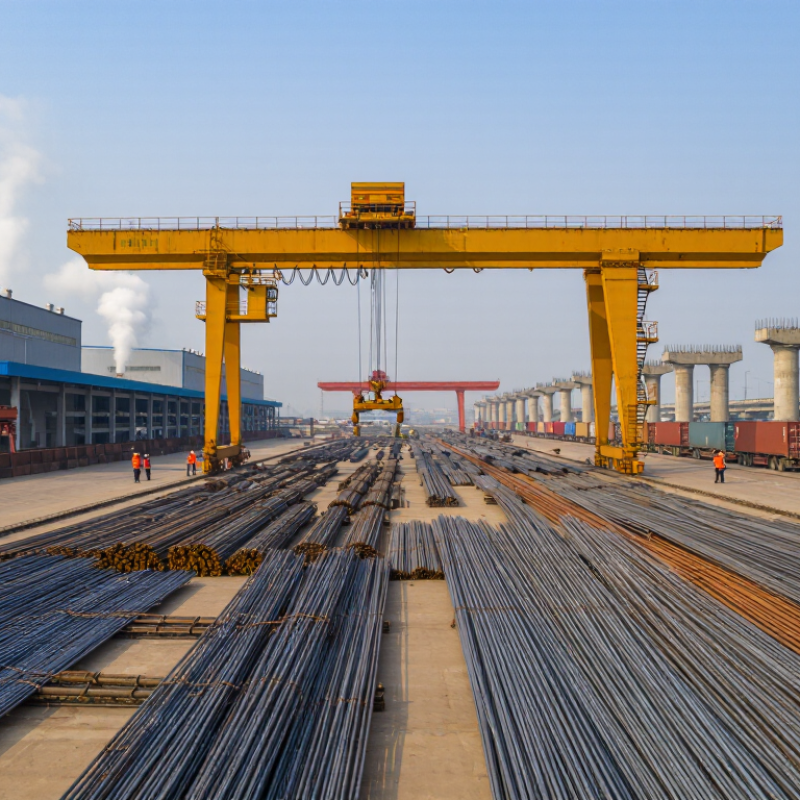
Top Reinforcing Steel Bars Suppliers Worldwide

Global Reinforcing Steel Bars Market and Supplier Landscape

Top Reinforcing Steel Bars Suppliers Worldwide

Global Reinforcing Steel Bars Market and Supplier Landscape

The global reinforcing steel bars market is shaped by construction cycles, infrastructure spending, and regional steel capacity. Demand remains strong where bridges, housing, ports, and renewable energy projects expand. However, supply conditions change quickly with scrap prices, energy costs, freight rates, and import policies.

The market is not a simple price list. Experienced buyers compare bar diameter, grade, yield strength, rib geometry, and production tolerance. Mill certificates should show heat numbers, chemical composition, test results, and applicable standards. Quality travels with paperwork. Independent testing can confirm tensile strength and bend performance before shipment reaches a project site.

Supplier selection also depends on location and delivery reliability. Regional mills may offer shorter lead times, while international suppliers can support large, complex orders. Port access matters. So does stock availability. Procurement teams should review factory capacity, quality systems, traceability, payment terms, and claims procedures. Environmental data is increasingly important, including recycled content and production emissions.

A low quotation may hide testing, storage, or delay risks. That assumption is risky. Some evaluations still focus too heavily on price. A better review connects technical compliance with total delivered cost. Weather disruptions, customs checks, and incomplete documentation can affect schedules. Even careful forecasts can fail. This is where practical site experience and independent verification become valuable.

The chart uses the standard nominal mass relationship for metric reinforcing bars: mass per metre ≈ diameter² ÷ 162, with diameter measured in millimetres. These size and mass references are widely used for international reinforcing-steel specification, procurement, and supplier comparison; actual delivered mass may vary within the tolerances defined by the applicable standard.

Key Types and Standards of Reinforcing Steel Bars

Reinforcing steel bars differ by grade, rib pattern, strength, and welding performance. The main international references include ISO 6935-2, ASTM A615, ASTM A706, and EN 10080. EN 10080 commonly identifies B500B and B500C grades, with a nominal yield strength of 500 MPa. ASTM A615 covers carbon-steel bars, while ASTM A706 adds controlled chemistry for improved weldability.

Performance matters on site.

The World Steel Association reported approximately 1.892 billion tonnes of crude steel production in 2023. This figure shows the scale of the supply market, but it does not confirm bar quality. Buyers should request mill certificates, chemical analysis, tensile results, bend-test records, and heat numbers.

For seismic projects, higher ductility grades can be more suitable. Grade selection still depends on the structural engineer’s design and local code.

A common weakness is treating “500 MPa” as a complete quality description. It is not. Rib geometry, elongation, traceability, and corrosion control also affect real performance.

Tips: Match the bar standard to the project code. Check diameter tolerance with calipers. Verify certificates against heat numbers. Store bars above wet ground, especially near coastal sites. Do not assume imported bars meet local welding requirements. Independent testing is wise when documents look incomplete. ASTM, ISO, and national standards may use different test methods, so comparison requires care. Mistakes happen here.

Leading Worldwide Suppliers and Their Regional Strengths

Reinforcing steel bar suppliers differ widely in capacity, standards, and delivery experience. East Asian producers often provide large volumes, automated rolling lines, and competitive export logistics. Their strength suits infrastructure programs with repeated bar sizes and long production schedules. European suppliers typically emphasize strict quality systems, documented traceability, and compliance with demanding construction codes. This can matter when engineers require consistent yield strength across several project phases.

North American suppliers often perform well in domestic distribution, project coordination, and just-in-time deliveries. Regional warehouses can reduce delays when bridge, commercial, or residential work needs frequent replenishment. Middle Eastern suppliers may offer practical advantages for nearby desert and coastal projects, including regional stock, heat-resistant specifications, and shorter shipping routes. African and South American suppliers can be valuable for local sourcing, especially where port access and employment requirements influence purchasing decisions.

Field experience shows that a low quotation is not always the lowest cost. Buyers should check mill certificates, heat numbers, bend-test results, chemical composition, and bundle markings before approval. Ask how rejected batches are handled. The answer reveals operational maturity. No region is perfect. Shipping disruptions, inconsistent documentation, or limited stock can still affect reliable suppliers. I would compare at least three quotations, then verify production capacity through recent inspection records. A supplier may promise flexibility, yet fail during a sudden demand increase. That possibility deserves honest attention.

Top Reinforcing Steel Bars Suppliers Worldwide - Leading Worldwide Suppliers and Their Regional Strengths

Note: Crude steel output is used as an indicator of national steelmaking scale; it is not equivalent to reinforcing-bar production. Output figures are rounded 2023 estimates compiled from publicly reported World Steel Association data.
Supplier Market / Region Approx. Crude Steel Output, 2023
(million tonnes)
Regional Strength in Reinforcing Bars Common Standard References Typical Supply and Logistics Advantage Typical Project Fit
China and East Asia 1,019.1 Very large domestic construction market, broad billet and long-product capacity, and extensive availability of common and high-strength deformed bars. GB/T 1499.2; selected projects may also require ASTM, BS EN, or other imported standards. Deep industrial supply base and major seaport network; export suitability depends on freight rates, duties, and project approvals. Large infrastructure, residential, industrial, and prefabrication projects.
India and South Asia 140.2 Strong demand and production of thermo-mechanically treated bars for housing, transport infrastructure, and urban development. IS 1786; project specifications may define Fe 500, Fe 500D, or higher-ductility grades. Large domestic distribution network and growing export access through Indian Ocean and Arabian Sea ports. Reinforced-concrete buildings, bridges, roads, metro systems, and general construction.
Japan 87.0 Strong emphasis on dimensional consistency, traceability, seismic design requirements, and controlled mechanical properties. JIS G 3112; project-specific seismic and weldability requirements may apply. Highly developed quality-control systems and efficient coastal logistics in East Asia. Seismic-resistant buildings, transport infrastructure, and quality-critical construction.
United States and North America 80.7 Mature electric-arc-furnace and merchant-bar network, with strong availability of weldable and seismic grades for domestic construction codes. ASTM A615/A615M; ASTM A706/A706M for enhanced weldability and ductility. Extensive inland distribution and regional rolling mills; cross-border shipments are influenced by trade measures and certification needs. Commercial buildings, bridges, seismic zones, public works, and infrastructure rehabilitation.
Russia and Eastern Europe 75.8 Integrated steelmaking base with established long-product production and broad supply for heavy construction and infrastructure. GOST 34028; additional conformity requirements depend on the destination market. Rail, river, and Black Sea logistics can support regional distribution, subject to current trade and compliance restrictions. Industrial facilities, housing, energy infrastructure, and large civil-engineering works.
South Korea 66.7 Advanced rolling technology, consistent bar dimensions, and strong production discipline for high-rise and infrastructure construction. KS D 3504; overseas projects may require ASTM or EN documentation. Efficient container and bulk shipping connections across Northeast and Southeast Asia. High-rise buildings, marine works, industrial plants, and export-oriented infrastructure projects.
Germany and Central Europe 35.4 Strong focus on European conformity, documentation, automated processing compatibility, and specialty grades for demanding projects. EN 10080; DIN 488 is commonly used for reinforcing-steel designation and requirements. Dense road, rail, and inland-waterway network serving the European construction market. European infrastructure, industrial construction, precast products, and specification-sensitive projects.
Türkiye and the Eastern Mediterranean 33.7 Well-established merchant-bar and construction-steel sector with strong experience supplying overseas building and infrastructure markets. TS 708; EN 10080 may be required for European or international projects. Strategic access to Mediterranean, Black Sea, Middle Eastern, and North African destinations. Housing, airports, ports, commercial developments, and large regional infrastructure projects.
Brazil and South America 31.9 Strong regional production base serving reinforced-concrete construction, mining infrastructure, energy, and urban development. ABNT NBR 7480; grade and ductility requirements are specified by the project or local code. Atlantic ports and established regional distribution, with freight economics varying substantially by destination. Residential construction, industrial facilities, mining, hydropower, and transport infrastructure.
Iran and the Gulf-Adjacent Market 31.1 Significant regional supply for construction bars, supported by domestic steelmaking and demand from residential and infrastructure development. ISIRI 3132; destination-country certification and chemical-composition limits must be checked. Geographic access to Central Asia, the Middle East, and selected maritime routes, subject to sanctions and payment restrictions. Housing, commercial construction, energy projects, and regional civil works.

Quality, Production Capacity, and Certification Criteria

Top Reinforcing Steel Bars Suppliers Worldwide: Quality, Production Capacity, and Certification Criteria

Choosing top reinforcing steel bar suppliers requires more than comparing tonnage or price. The World Steel Association reported about 1.89 billion tonnes of crude steel production in 2023. This scale shows why capacity claims need careful verification. Buyers should request mill capacity, monthly rolling output, furnace details, and delivery records. A large plant may still struggle with consistency during peak construction seasons.

Quality begins with controlled chemistry and stable mechanical performance. Test certificates should show yield strength, tensile strength, elongation, bend results, heat numbers, and dimensional tolerances. Standards such as ISO 6935-2 and ASTM A615 provide useful benchmarks, but compliance wording can be misleading. Independent laboratory testing remains valuable. Small differences in rib height or bar diameter can affect concrete bonding and site installation.

Certification should cover both management systems and the product itself. ISO 9001 supports process control, while ISO 14001 indicates structured environmental management. Product certification, third-party surveillance, and traceability from billet to bundle offer stronger evidence. The International Energy Agency identifies steel production as a major industrial emissions source, so emissions data and energy efficiency deserve attention. I have seen suppliers present impressive certificates with weak batch records. That is a warning sign. Buyers should also check certificate validity, laboratory accreditation, inspection frequency, and corrective-action history. Capacity matters, but repeatable quality matters more.

How to Evaluate and Select a Reliable Steel Bar Supplier

Choosing a reliable steel bar supplier requires more than comparing prices. Start with product consistency, traceability, and communication. Ask for mill certificates showing heat numbers, chemical composition, yield strength, and tensile strength. Confirm that each document matches the delivered bars.

Request samples when possible. Check diameter, surface condition, rib pattern, and bend performance. A dependable supplier should explain production capacity, inspection procedures, packaging, and delivery schedules clearly. Third-party testing can add confidence, especially for large or technically demanding projects.

I have learned that fast replies are useful, but detailed replies matter more.

Tips: Check recent customer references. Verify certificates independently. Clarify tolerances before ordering. Inspect the first shipment carefully. Do not rely on attractive quotations alone; hidden delays can cost more than a higher unit price. Supplier evaluation is never perfect. Records can be incomplete, and assumptions can survive too long without questioning. Keep written specifications, inspection photos, and agreed acceptance criteria for every order.

Enter search term below