
Found a design you like or need custom guidance? We can help. Fill in the form about your project, and we’ll contact you to discuss options and answer questions.
Choosing the right Floor Grating begins with understanding how a space will be used. Walkways, platforms, drainage channels, and industrial stairs each demand different performance. A busy factory floor may need strong steel bar grating with a serrated surface. Serrated edges improve traction around oil, rainwater, and loose debris.
Other projects may benefit from aluminum grating. It is lightweight, corrosion resistant, and easier to handle during installation. However, aluminum can be less suitable for heavy impact or extreme loading. Stainless steel offers excellent durability in wet, hygienic, or chemically demanding environments. It usually costs more, but replacement work can be far more expensive.
FRP grating deserves attention where electrical insulation and chemical resistance matter. Its molded surface feels different underfoot. Some users prefer its consistent texture, while others question its long-term stiffness under heavy equipment. That concern should not be ignored. Expanded metal grating can provide economical coverage and useful airflow, although its openings may not suit every foot or wheel.
The best selection depends on load capacity, span, opening size, support layout, environment, and maintenance access. Always check verified load tables and installation instructions. Local building requirements also matter. A supplier’s recommendation helps, but it should not replace engineering review.
Details decide performance.
This guide compares the top types of Floor Grating, including their strengths, limitations, typical applications, and practical installation considerations. Some choices appear obvious until moisture, noise, corrosion, or cleaning demands change the calculation. The perfect option rarely exists. Careful comparison usually produces the safer, more reliable result.
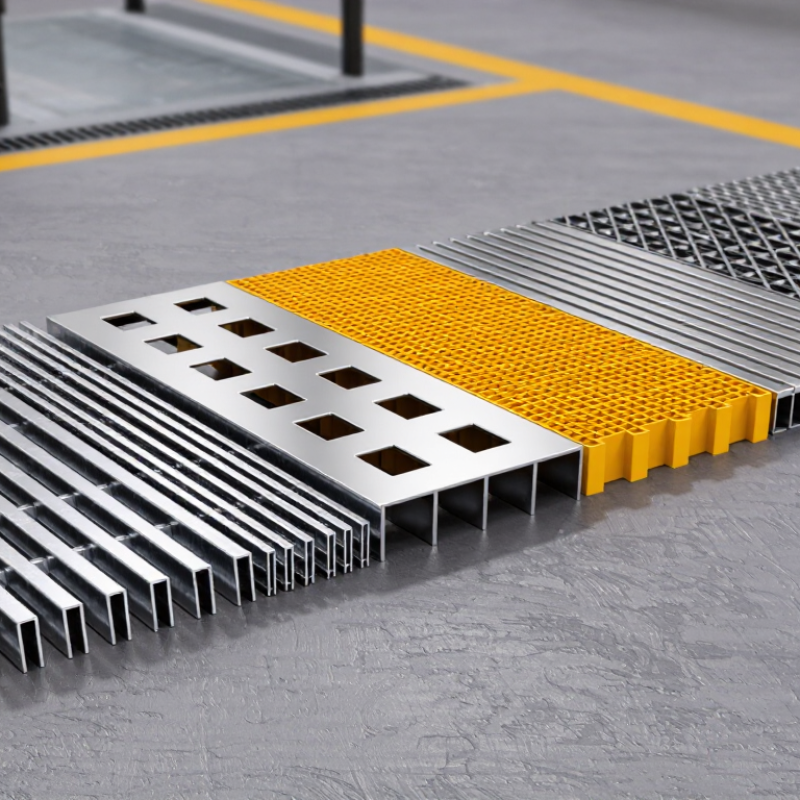
Floor grating is a load-bearing walking surface made from parallel bars, crossbars, or molded panels. It replaces a solid floor where drainage, airflow, and visibility matter. Openings let water, oil, heat, and fine debris pass below the walking line. That simple action can reduce pooling around pumps, platforms, and service trenches.
Bar grating carries weight through steel or aluminum bearing bars, while crossbars keep the panel stable. Press-locked grating uses tightly fitted bars and suits areas needing a clean, uniform appearance. Molded fiberglass-reinforced plastic grating resists corrosion and offers electrical insulation, although its stiffness and fire performance require careful checking. Expanded metal provides a lighter, continuous pattern, but it may feel less comfortable under heavy footwear. The right type depends on span, live load, opening size, corrosion exposure, and slip resistance. Small details matter.
Grand View Research reported continued growth in the global metal grating market, supported by industrial construction and infrastructure upgrades. Its market analysis also identifies steel as a major material segment. OSHA 1910.22 requires walking-working surfaces to support their maximum intended load and remain clean, orderly, and sanitary. In practice, engineers should verify load tables, deflection limits, fasteners, and support conditions instead of trusting appearance alone. A tidy drawing can still hide a weak edge. Designers sometimes overlook heel protection, drainage direction, or the awkward pressure of narrow heels. That oversight deserves another review.
The main types of floor grating differ by material, strength, weight, and resistance to harsh conditions. Steel grating is widely used in factories, walkways, platforms, and drainage areas. It handles heavy loads well and usually costs less than stainless steel. However, untreated steel can rust quickly in wet or chemical environments.
Stainless steel grating offers stronger corrosion resistance and a clean, durable surface. It suits food-processing rooms, water-treatment facilities, and coastal sites.
Aluminum grating is lighter and easier to install. It works well where reducing structural weight matters, although it may not support the same loads as steel.
Fiberglass reinforced plastic, or FRP, resists moisture, chemicals, and electrical conductivity. Its textured surface can improve traction near tanks and wet floors. Still, some FRP products may feel less rigid under concentrated loads.
Tips: Check the expected load, span, surface texture, drainage needs, and exposure before choosing a material. Ask for test data and confirm the relevant safety standards. A quick visual check is not enough.
A material choice can look obvious. Site conditions often prove otherwise. I have seen lightweight grating simplify installation, yet its deflection required extra support. Likewise, painted steel may appear economical, but maintenance costs can rise in salty air. Confirm dimensions, bearing bars, fasteners, and edge details with a qualified engineer before fabrication. Small gaps can affect safety, cleaning, and long-term performance.
Floor grating is not selected by appearance alone. Its design controls how people, tools, and vehicles move across a platform. Bar grating uses parallel bearing bars and suits walkways, stairs, and service platforms. Safety grating has raised surfaces that improve traction in oily or wet areas. Expanded metal grating offers continuous openings and can provide useful airflow. Each type handles loads differently.
Bearing bar depth, thickness, and span directly affect capacity. A deeper bar usually resists bending better than a shallow bar with the same width. Shorter spans also reduce deflection. For example, a panel crossing a 600-millimeter gap may perform very differently over a 1,200-millimeter gap. Support angles must remain level and provide enough seating. Loose or undersized supports can create movement under foot traffic.
Openings also influence safety. Small openings help prevent tools and footwear from dropping through. Larger openings improve drainage but may increase trip risks. Surface patterns matter near water, oil, dust, and ice. In practice, load tables are useful, but they are not complete answers. Engineers should check concentrated loads, impact, corrosion, and installation quality. A common mistake is rating the panel while ignoring the supporting frame. That oversight can weaken an otherwise suitable design. Even careful selections need review when actual site conditions differ from the original drawings.
Floor grating works best when its pattern matches the hazard below and the traffic above. Welded bar grating suits factories, platforms, stair treads, and drainage channels. Its open steel bars shed water, mud, and process spills. Press-locked grating offers a cleaner pattern for walkways and service areas. It can be easier to cut, but heavy impact requires careful load review. Molded fiberglass-reinforced plastic grating fits wastewater plants, chemical rooms, and coastal access routes. It resists corrosion and typically has low electrical conductivity. That benefit matters near wet equipment. Yet FRP can feel less rigid under concentrated loads.
Application decisions should consider measured loads, span, deflection, slip resistance, and maintenance conditions. The U.S. Bureau of Labor Statistics reported 888,220 private-industry cases involving days away from work in 2023. That figure covers many hazards, not grating alone, but it supports stronger walking-surface controls. OSHA 1910.22 also requires floors to remain clean, orderly, and sanitary. The EPA’s 2022 Clean Watersheds Needs Survey identified $630.1 billion in documented water-quality infrastructure needs. Treatment plants therefore need grating that tolerates moisture, chemicals, and inspection traffic. Stainless or galvanized steel may suit aggressive zones. FRP may reduce corrosion maintenance. Expanded metal works for guards and light platforms, though smaller openings can hold debris. One detail is easy to miss. A strong panel can still create a weak walkway when supports are spaced too far apart. Engineers should verify the full assembly, not only the grating panel.
Floor grating is commonly made from welded steel, press-locked steel, aluminum, or fiberglass-reinforced plastic.
Welded steel handles heavy carts and industrial loads well. Press-locked grating offers a cleaner appearance and flexible panel layouts.
Aluminum reduces weight, which helps on rooftops and elevated walkways. FRP performs well near moisture, chemicals, and electrically sensitive equipment.
Installation starts with accurate measurements and suitable bearing supports.
Each panel should sit firmly on its supports, without rocking or sharp height changes. Cut edges need proper treatment, especially on coated or galvanized steel.
Fasteners must resist vibration and corrosion. I have seen small alignment errors create noisy walking surfaces and trip hazards. That mistake is easy to underestimate.
Maintenance depends on the environment.
Inspect welds, clips, supports, and drainage paths at scheduled intervals. Remove mud, leaves, oil, and ice before they hide damage.
In coastal areas, rinse metal grating with clean water and check for rust around joints.
Select serrated surfaces where footwear may encounter rain or grease. However, aggressive serrations can complicate cleaning and increase discomfort.
Selection should match the load, span, opening size, slip risk, corrosion exposure, and access needs.
Leave room for inspection. A grating system is not truly reliable when its underside cannot be checked safely.