
Why Choose Fireproof Insulation for Global Projects?

Global construction is becoming more complex. Projects cross climates, borders, and regulatory systems. A wall assembly designed for a cold European site may face intense heat, humidity, or seismic movement elsewhere. These conditions can change how insulation performs during a fire.

Fireproof Insulation offers a more dependable approach when safety cannot depend on ideal conditions. Mineral wool, cellular glass, and other non-combustible materials can help limit flame spread, reduce heat transfer, and protect critical building zones. Behind a factory wall, around a steel column, or beside a service shaft, every layer matters. Small installation gaps can create serious weaknesses.

Dr. Guillermo Rein, a leading fire science researcher at Imperial College London, has stated, “Fire safety begins with understanding how materials behave in real conditions.” This principle deserves attention in global projects. Product labels alone are not enough. Designers must examine tested assemblies, fire ratings, moisture exposure, mechanical fixing, and local installation quality.

The choice is not always simple. Higher fire resistance may increase weight, cost, or construction time. Some products also require skilled handling and careful detailing. These limitations should be acknowledged, not hidden. A realistic specification balances safety, durability, availability, and project conditions.

This article explores why Fireproof Insulation is increasingly selected for international construction. It considers performance, compliance, lifecycle value, and practical risks. The goal is not to promise perfect protection. No material can replace sound design, inspection, and an effective emergency strategy.
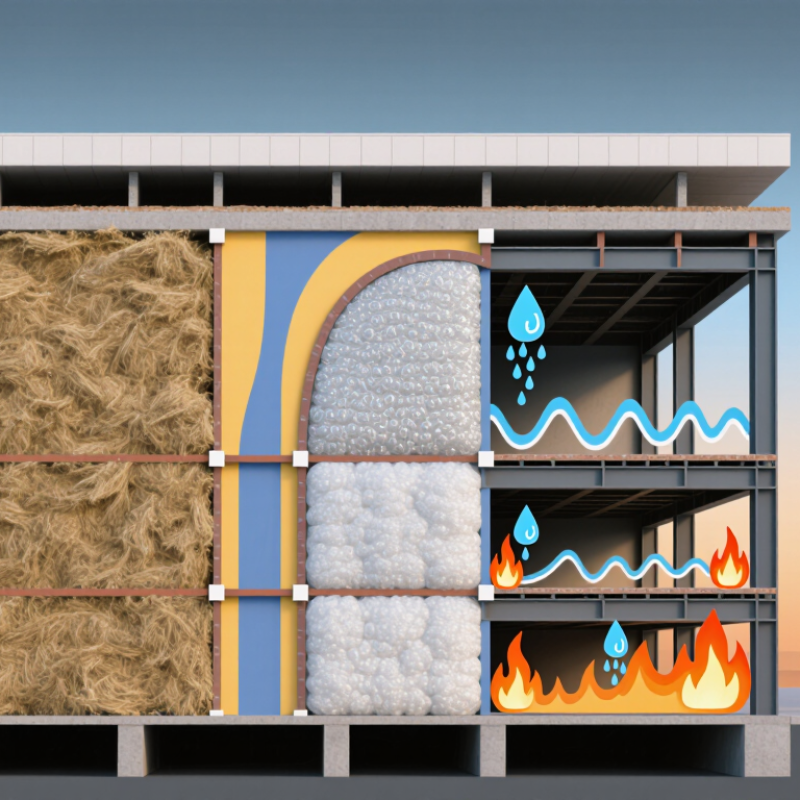
Why Choose Fireproof Insulation for Global Projects?

What Fireproof Insulation Is and How It Works

Why Choose Fireproof Insulation for Global Projects?

Fireproof insulation is designed to slow heat transfer and resist ignition during a fire. It is not truly fireproof. The term is imperfect, and that distinction matters. Mineral wool, calcium silicate, and ceramic fiber use different structures to protect walls, roofs, pipes, and equipment. Their low thermal conductivity limits heat movement. Non-combustible fibers can also resist flame without producing significant fuel for fire growth.

During exposure, insulation forms a thermal barrier between the fire and protected surfaces. It can keep steel cooler, delay temperature rise, and preserve compartment boundaries. Some systems remain stable at temperatures above 1,000°C, depending on composition and testing conditions. Site details matter. Gaps around penetrations can undermine excellent materials. Moisture can also reduce performance in some assemblies. Small failures become serious.

The need is measurable. The National Fire Protection Association reported 1,388,500 fires in the United States during 2023, with approximately 3,670 civilian fire deaths and 22.3 billion dollars in property damage. The International Energy Agency’s Global Status Report for Buildings and Construction 2024 states that buildings consumed about 32% of global energy and produced roughly 34% of global carbon dioxide emissions in 2022. Fire-resistant insulation can support both safety and energy control when thickness, density, joints, facings, and installation are specified together. A certificate alone is not enough. Project teams should compare tested assemblies, local climate exposure, maintenance access, and real installation quality before approving a global design.

Why Choose Fireproof Insulation for Global Projects?

What Fireproof Insulation Is and How It Works

Fireproof insulation is made from inorganic or mineral-based materials that resist ignition and maintain thermal protection at high temperatures. The chart compares representative upper continuous service temperatures for commonly used insulation types. Actual performance depends on density, product composition, installation quality, moisture exposure, and the tested fire-protection assembly.

Values are representative engineering ranges commonly published for these material categories and are intended for comparison, not project-specific design approval.

Key Fire Safety Benefits for Global Construction Projects

Fireproof insulation gives global construction projects a quieter layer of protection. During a fire, it can slow heat transfer through walls, floors, roofs, and service zones. This delay may protect escape routes and give emergency teams more time to act. Every minute matters.

A well-designed system can help maintain compartmentation around pipes, cables, and ventilation openings. It may also reduce the risk of structural elements reaching critical temperatures too quickly. On a hospital project, for example, carefully sealed service penetrations can limit fire and smoke movement between occupied areas. Fire does not wait. Installation quality does.

Global projects face different building codes, climate conditions, and inspection practices. Designers should compare local requirements with tested fire-resistance data. Product documentation, approved installation methods, and qualified inspections support reliable decisions. Moisture, vibration, and later maintenance also deserve attention, especially in transport hubs and industrial facilities.

No system is perfect. A strong specification can still fail at one neglected joint. That uncomfortable point deserves regular review. Site teams should check gaps, damaged sections, fixing methods, and changes made during construction. Clear records improve accountability and help future maintenance teams understand what protects the building. Fireproof insulation works best as part of a wider safety design, not as a substitute for sound planning.

How Fireproof Insulation Supports Different Building Requirements

Why Choose Fireproof Insulation for Global Projects?
How Fireproof Insulation Supports Different Building Requirements

Fireproof insulation helps projects meet varied safety, thermal, and acoustic requirements. In high-rise buildings, it can slow heat transfer through walls, floors, and service shafts. This extra time supports evacuation and firefighter operations. The NFPA reported 1,388,500 fires in the United States during 2023. That figure shows why passive fire protection deserves early design attention.

Different climates demand different insulation decisions. Mineral-based systems can support non-combustible construction in dense urban buildings, industrial facilities, and transport infrastructure. They also help reduce heat loss in cold regions and limit unwanted heat gain in hot climates. The 2023 Global Status Report for Buildings and Construction states that buildings consumed 34% of global energy in 2022. Fire safety and energy performance should therefore be assessed together, not separately.

Testing still matters more than attractive product claims. Project teams should review EN 13501-1 or ASTM E84 classifications, fire-resistance test assemblies, moisture behavior, and installation details. A wall may perform well in a laboratory but fail when joints are poorly sealed. Small gaps matter. Site experience often reveals this uncomfortable truth. Insulation can also support acoustic control, but thickness, density, and framing must match the design. Local codes, climate exposure, maintenance access, and contractor skill can change the final specification. No single insulation system fits every global project.

Material Selection, Performance Standards, and Compliance Factors

Fireproof insulation is not literally fireproof. The safer term is fire-resistant insulation, selected for a defined temperature and exposure period. Material choice must match the application. Mineral wool can provide non-combustibility and acoustic control, while calcium silicate suits high-temperature equipment. Aerogel systems reduce thickness, but they demand careful handling and cost review.

Performance standards create a common technical language. ASTM E119 and ISO 834 measure fire-resistance duration in tested assemblies. ASTM E84 evaluates flame spread and smoke development on exposed surfaces. European projects may require classification under EN 13501-1. These tests are not interchangeable. A wall that survives 120 minutes may still fail around joints, doors, or service penetrations. Small gaps matter.

Compliance should also reflect real project conditions. The NFPA report Fire Loss in the United States During 2023 recorded about 1.39 million fires and 22.2 billion dollars in property damage. The Global Status Report for Buildings and Construction 2023 identified buildings as responsible for about 34% of global energy demand. Insulation therefore affects both fire safety and operating efficiency. Site humidity, vibration, corrosion, and installer training must enter the specification. I have seen strong laboratory products underperform after poor sealing. That weakness deserves attention. A better process checks certified assemblies, local code acceptance, inspection records, and replacement access before procurement.

Why Choose Fireproof Insulation for Global Projects? - Material Selection, Performance Standards, and Compliance Factors

Insulation Material Typical Service Temperature Typical Thermal Conductivity
(W/m·K at approximately 20°C)
Combustibility and Fire Behavior Typical Applications Relevant Performance Standards Key Compliance Considerations
Mineral Wool Typically up to approximately 650–1,000°C, depending on product construction and binder content Approximately 0.035–0.045 Many products achieve Euroclass A1 or A2-s1,d0; non-combustibility must be confirmed for the specific product Building envelopes, fire-rated walls, industrial equipment, HVAC ducts, pipework, and tanks EN 13501-1; EN 13162; ASTM E84; ASTM E136; ASTM C612 Check density, facing, binder, moisture resistance, fire-rating assembly, and local building-code requirements
Calcium Silicate Typically approximately 650–1,100°C, depending on grade Approximately 0.050–0.100 Generally non-combustible and dimensionally stable at elevated temperatures High-temperature piping, furnaces, kilns, boilers, flanges, valves, and passive fire protection systems EN 14306; ASTM C533; ASTM E136; ISO 1182 Evaluate mechanical strength, shrinkage, water absorption, thermal cycling, and protection against impact or vibration
Perlite Board or Pipe Covering Typically approximately 650–1,000°C, depending on formulation and reinforcement Approximately 0.045–0.070 Inorganic grades are generally non-combustible; coatings, binders, or facings may change the classification Industrial pipe insulation, equipment casings, fire barriers, and high-temperature ducts ASTM C610; ASTM E136; EN 13501-1 where applicable Confirm dimensional tolerances, compressive strength, moisture behavior, and compatibility with metal cladding
Vermiculite Board Typically approximately 900–1,100°C, depending on grade and service conditions Approximately 0.060–0.120 Mineral-based products are generally non-combustible and provide good resistance to flame exposure Fireplaces, furnace linings, fire doors, heat shields, and localized fire-protection details ASTM E136; ISO 1182; EN 13501-1 where product certification is available Check brittleness, edge protection, fixing method, thermal-shock resistance, and installation clearances
Microporous Silica Panel Typically approximately 900–1,000°C, depending on the panel system Approximately 0.020–0.030 Usually classified as non-combustible when supplied without combustible facings; verify the complete assembly Space-constrained industrial equipment, battery systems, high-temperature appliances, and transport applications EN 13501-1; ASTM E136; ISO 8301 or ASTM C177 for thermal testing Account for compression, puncture resistance, dust control, edge sealing, and performance after thermal aging
Calcium Silicate Hydrate Board Typically approximately 600–1,000°C, depending on the product grade Approximately 0.050–0.090 Generally non-combustible and suitable for fire-resistant construction when tested as part of a complete system Fire-rated partitions, service shafts, ceilings, structural encasement, and penetration protection EN 13501-1; EN 1364; EN 1366; ASTM E119; ASTM E814 Fire-resistance duration applies to tested assemblies; confirm joints, penetrations, fasteners, thickness, and installation details
Data note: The performance ranges shown are typical indicative values for commonly specified inorganic insulation materials. Actual results vary with density, thickness, moisture content, binders, facings, temperature, aging, and test method. Final material selection should be based on the current product technical documentation, accredited test reports, and the fire and building regulations applicable in the destination country.

Installation, Maintenance, and Long-Term Project Considerations

Why Choose Fireproof Insulation for Global Projects?

Installation quality determines whether fireproof insulation performs as designed. Before work begins, engineers should check climate, substrate moisture, service temperatures, and local fire classifications. EN 13501-1 and ISO 1182 provide useful benchmarks, but certificates alone cannot correct poor detailing. Joints must remain tight around pipes, cable trays, and expansion gaps. A small unsealed opening can become a serious weakness. On-site teams should record batch numbers, thickness measurements, fixing patterns, and photographs. Independent inspection adds credibility, especially across multilingual project teams.

Maintenance is less visible, yet it protects performance for decades. Insulation should be inspected after flooding, vibration, corrosion, or mechanical impact. Damaged sections need compatible repairs, not improvised patches. NFPA’s Fire Loss in the United States During 2023 reported about 1.39 million fires, showing why passive protection deserves regular attention. Maintenance intervals should follow exposure conditions, not only calendar dates. This is where many projects fall short.

Long-term planning also requires energy and carbon awareness. The 2022 Global Status Report for Buildings and Construction found that buildings consume about 34% of global energy and produce roughly 37% of energy-related emissions. Fireproof insulation can support safer, more efficient envelopes when its thermal properties remain stable. However, material selection should consider service life, local availability, repair access, and end-of-life handling. Real projects are rarely perfect. Design reviews should revisit assumptions when weather, occupancy, or construction methods change.

Enter search term below