Why Are Resin Insects Popular with Buyers?
Resin Insects attract buyers because they make small details easy to see and display. A beetle’s ridged wing case, a butterfly’s patterned wings, or a tiny arrangement of leaves can become a desk-sized object of interest. Clear resin gives these pieces a polished, glasslike appearance, while colored backgrounds and compact shapes suit shelves, study desks, and gift displays. They can appeal to collectors, curious children, and people who simply enjoy nature-inspired decor. The appeal is visual, but also tactile: the smooth surface contrasts with the intricate forms inside.
Buyers should still look beyond appearance. “Resin Insects” can describe different products, from realistic replicas to pieces containing preserved specimens, so product descriptions and close-up photographs matter. Ask what is embedded, how it was sourced, and whether the seller provides care guidance. Details vary. Good craftsmanship usually means clear casting, visible features, and few distracting bubbles or cloudy patches. Resin can also scratch or discolor under strong sunlight, so placement affects its appearance over time. These objects are not substitutes for responsible field study, and a decorative specimen may offer limited scientific information. That distinction deserves attention. Their popularity is understandable: they combine natural form with a durable display format. Yet quality, sourcing, and personal meaning differ from piece to piece. A careful buyer considers all three before choosing one.
What Are Resin Insects?
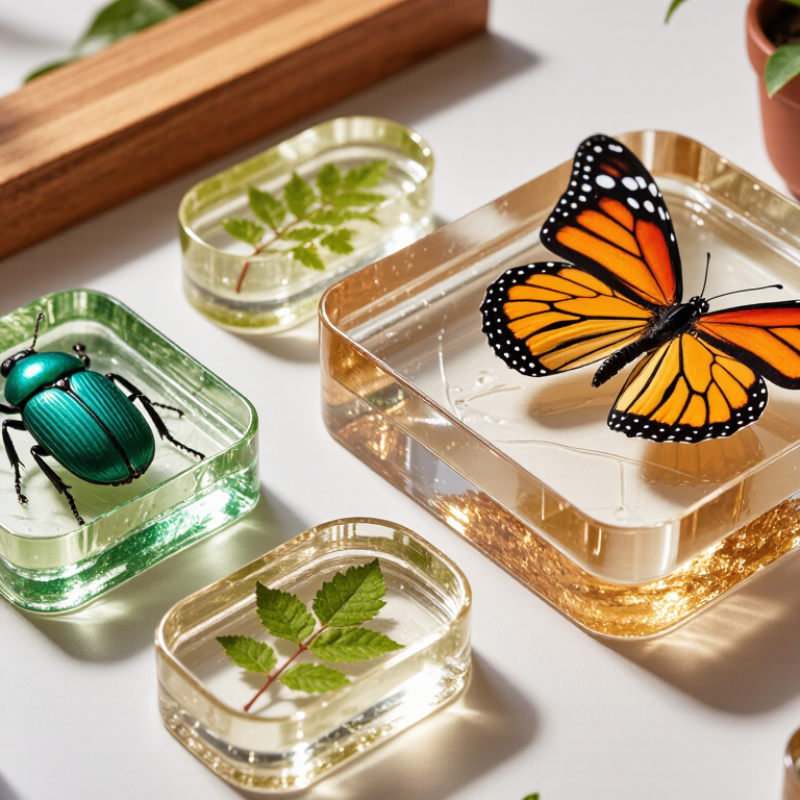
Resin insects are insect specimens or carefully made replicas sealed inside clear casting resin. The block acts like a small display case, showing details from several angles. A beetle’s ridged shell, a moth’s powdery-looking wings, or a grasshopper’s folded legs become easy to inspect without handling the specimen. Tiny, but visible. Some pieces use real insects; others use molded or printed forms, so buyers should check the product description rather than assume.
The material matters. Grand View Research’s Epoxy Resin Market Size report estimated the global epoxy resin market at US$13.9 billion in 2023, with projected annual growth of 6.7% from 2024 to 2030. Fortune Business Insights also reported a growing global epoxy resin market, while using different estimates and methods. These figures describe resin broadly, not sales of resin insects. They help explain why clear casting materials are widely available, but they do not prove demand for this specific product. In a finished piece, look for clear edges, limited bubbles, and a specimen positioned so its features remain visible. Still, clarity is not everything. Uneven placement or a trapped bubble can distract, and a perfect-looking block may feel less natural. A small flaw can invite a second look.
How Are Insects Preserved in Resin?
A resin insect begins with a dry, carefully positioned specimen. Any trapped moisture can cloud the casting or encourage deterioration. The insect is usually dried and inspected before it is placed in a mold. Delicate legs and antennae may need gentle adjustment with fine tools. Small details matter.
The resin is mixed in measured proportions, then poured slowly to limit bubbles. Many makers use thin layers: the first holds the insect in place, while later pours build depth. Each layer must cure as directed by its technical data sheet. Heat can warp a specimen, and rushing the process may leave soft spots. It is not foolproof.
Good ventilation and gloves are sensible precautions during mixing. Once cured, the clear block protects the specimen from handling, though sunlight may still fade its colors over time. The scale of the material industry offers context, not proof of demand for insect pieces: Allied Market Research reported a global epoxy-resin market value of $9.1 billion in 2020 and projected $16.4 billion by 2030. Careful preservation still depends on patient preparation, not market growth.
Why Are Resin Insects Popular with Buyers? How Are Insects Preserved in Resin? | Topic | What Buyers Should Know | Practical Detail |
| Visual appeal | Clear resin can display an insect’s body shape, wings, legs, and coloration from multiple angles. | Clarity depends on the resin, casting quality, specimen condition, and how the insect is positioned. |
| Educational interest | An enclosed specimen can help viewers examine visible features without handling a loose insect. | A label identifying the specimen can add context; identification should be checked rather than guessed from appearance alone. |
| Decorative and collectible use | Resin insect pieces are often chosen as desk objects, display items, or additions to nature-themed collections. | Size, shape, clarity, and presentation vary by piece, so buyers should review the item’s description and photographs. |
| Specimen preparation | For a stable casting, the insect is generally prepared and dried before it is embedded. | Residual moisture can contribute to cloudiness, bubbles, or deterioration. Resin alone does not reliably preserve a wet specimen. |
| Positioning | The prepared specimen is arranged in a mold before or during casting. | Some makers use an initial thin layer of resin to hold the insect in place, then add further resin after it has set sufficiently. |
| Resin casting | Pouring resin in stages can help control the specimen’s position and the finished shape. | Mixing and curing must follow the resin manufacturer’s instructions. Poor mixing or unsuitable conditions can leave a piece tacky or imperfect. |
| Bubbles and finish | Air bubbles may appear around the specimen or in the resin. | Careful pouring and appropriate casting techniques can reduce bubbles, but a completely bubble-free result is not guaranteed. |
| Long-term care | Resin creates a solid enclosure, but it does not make an item immune to aging or damage. | Prolonged sunlight, heat, and scratching can affect resin. Displaying the piece away from direct sunlight and harsh conditions can help maintain its appearance. |
| Ethical sourcing | Buyers may wish to understand how the insect was obtained and whether its collection was lawful and responsible. | Check the seller’s sourcing information and any applicable local rules, especially for protected species or specimens transported across borders. |
What Features Make Resin Insects Appealing?
Resin insects are appealing because they turn tiny details into something easy to see. A clear, polished block can reveal the ridges on a beetle’s wing case, the fine veins in a butterfly wing, or the curve of an ant’s legs. These details make each piece feel like a small display specimen. Some items contain preserved insects, while others are carefully made replicas, so buyers should check the description before choosing.
The material also makes these objects simple to display. A small block can sit on a bookshelf, desk, or classroom table without needing a special case. Light passes through the resin, helping the insect remain visible from different angles. That matters. A cloudy finish or trapped bubble can obscure the very features people want to examine. Resin is sturdy, but it can scratch or change color after prolonged exposure to strong sunlight. I like the neat look, though it can feel a little too perfect; natural specimens vary, and resin cannot show every part of their story. A closer look helps.
Why Are Resin Insects Popular with Buyers?
Features that make resin insect specimens appealing
Clear resin can make insect details visible while enclosing the specimen for display. The ratings are a qualitative assessment of each feature’s appeal, not results from a buyer survey; individual preferences vary.
Who Buys Resin Insects and How Are They Used?
Resin insects attract buyers who want nature close at hand, without maintaining live specimens. Parents and teachers use clear blocks to show wing veins, segmented legs, and body shapes during lessons. Collectors often choose beetles or butterflies for a desk, cabinet, or study shelf. They can inspect the details without glass cases or special care. Small details matter.
These buyers sit within a much larger play and gift market. Grand View Research estimated the global toys market at USD 324.6 billion in 2023, but its report does not isolate resin insects. That distinction matters: broad market growth cannot prove demand for this niche. Still, it helps explain why compact, display-ready objects appeal to gift shoppers and hobbyists. Some buyers also use them as conversation pieces or visual aids in classrooms and nature clubs. A teacher might pass around a palm-sized specimen while comparing wing patterns. Yet resin can obscure fine features or create reflections, so these pieces are not perfect substitutes for natural history specimens. I would not treat every cast as a precise teaching tool. Choose pieces with clear labels and visible detail.
What Factors Influence Their Value and Quality?
Resin insect value starts with the specimen, not the shine. Buyers look for intact legs, wings, and antennae, plus a clear, credible identification. A small crack near a wing can matter more than a few trapped bubbles. Ethical sourcing and basic provenance records also build confidence, especially when the species is unfamiliar. Small details matter.
The casting itself affects both appearance and durability. Clear resin should reveal the insect without a cloudy cast, harsh seams, or yellowing; even curing and careful polishing help preserve fine features. Buyers should check for bubbles near the body, loose debris, and sharp edges. A glossy surface alone is not proof of quality. It is an easy shortcut, and sometimes a wrong one. Grand View Research estimated the global epoxy resin market at US$12.7 billion in 2023, with a projected 6.5% annual growth rate from 2024 to 2030. That report describes the broader material market, not insect specimens specifically, so it cannot establish their resale value. For an individual piece, size, workmanship, specimen condition, and transparent documentation remain more useful checks. Not just shine.